
Citizens ask county commissioners not to raise taxes
J.D. Sumner
A handful of local residents asked Dougherty County Commissioners Monday to reconsider a proposed 2-mill property tax increase for the unincorporated area, arguing now is the not the time to add another financial burden to the local citizenry.
The comments came as a part of three public hearings that are required by law any time that a local government proposes increasing property taxes. The second hearing is set for tonight at 6 p.m. with the third coming just before the commission’s vote on the proposed millage increase at 10 a.m., July 16.
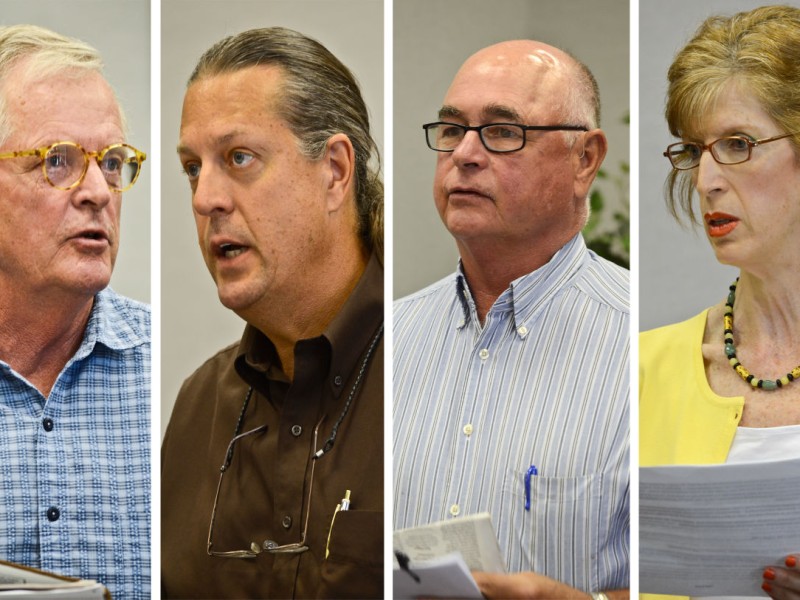
Jim Horn, who said he lives on Flowing Well Road in the unincorporated part of Dougherty County, said he was concerned with what he said were the financial and social decline of the county over the last 15 years and cited the “gate theory,” during his comments.
“People are either standing in line to move into your community or they’re standing in line to move out of your community. I think we all know which way that gate is swinging,” Horn said. “I just don’t think that we’re getting our money’s worth when we talk about our taxes and services.”
Local businessman Chuck Knight, asked the commission re-dedicate itself to finding areas to cut spending or risk driving more people out of the county.
“As a business owner, I’ve made some tough decisions and thankfully I haven’t had to get rid of any employees,” Knight said. “This is not the time to raise taxes… It’s going to be a hardship that many just won’t be able to afford and you’ll see a spike in foreclosures and the decay of our neighborhoods if you keep this up.”
Dinorah Hall, who has been one of the few people in the community to sit in on the commission’s finance committee meetings and many of the commission’s budget deliberations, asked commissioners to weigh the impact a potential tax increase could have on those who own investment property.
“There are millions of dollars worth of investment property in the county that will theoretically have lower-property values,” Hall said, pointing to the hardship that investment property buyers would have either offloading taxable property or purchasing it.
While commissioners have adopted a Fiscal Year 2013 budget, they haven’t officially adopted a resolution setting the millage rate — the mechanism that levies property taxes based on the value of your home, the amount of the budget and the size of the tax digest.
Commissioner Ewell Lyle, a member of the finance committee who has argued against a tax increase at each public meeting, said Monday that he would rather the county’s budget revert back to last year’s amounts than the commission adopt an increase in the millage rate.
“We keep saying that there is nothing else that we can do. No, there is nothing else we’re willing to do,” Lyle said.
Pointing to a recent story in the Herald about how officials at River Point Golf Club filed for Chapter 11 bankruptcy protection from the U.S. Bankruptcy court, Lyle said that the club’s high taxes was one of the reasons for the move.
“He’s telling us exactly what we’re talking about here is true,” Lyle said. “That his taxes, as is, are too much for him to afford.”
Commissioner Muarlean Edwards who said Monday that she left the previous budget meeting before the vote for a “matter of life or death,” said that she would’ve voted against the budget because she trusts the two members of the finance committee who voted against it — Lyle and Commission John Hayes.
“When two fellow commissioners who are on the finance committee vote against (the budget), it’s a cause for concern,” Edwards said.
Hayes reiterated his concern for raising the millage, saying that he’s worried if the county doesn’t change its way of thinking that they’ll find themselves right back in the same situation next year.
“We have to be proactive so that we aren’t in this same boat next year,” Hayes said.
Chairman Jeff Sinyard reiterated previously made comments that no one at the commission’s table wants a tax increase, but that currently it’s what needs to be done to meet the obligations of the county. Sinyard also restated his call that the finance committee have a year-round, involved role in finding alternative sources of revenue other than property taxes while looking for additional places to cut.
“Growing the tax base is half of the proposition we have going forward, the other half is cutting spending,” Sinyard said. “I think there’s no doubt that we have to be proactive.”
To that end, the county has reversed a downward-trend in its healthcare program that was teetering on the edge of insolvency, which was, at its worst, nearly $2 million in the red. By shifting more of the financial burden away from the taxpayers and onto its employees, re-examining its plans and performing a services audit, the county is now saving money on its healthcare expenses.
It’s a formula Sinyard said he wants to use on the county’s overall financial problem.
Related Articles

New commander takes helm as Marine Corps logistics adapts to evolving battlefield
Brig. Gen. Kevin G. Collins assumed command of Marine Corps Logistics Command during a change of command ceremony at Marine Corps Logistics Base Albany, succeeding Maj. Gen. Keith D. Reventlow after four years leading the organization responsible for sustaining Marine forces around the globe.
DOT says delay in Oglethorpe Bridge opening should be brief
“We know it’s not going to be July 22. We don’t think it’s going to be much later than that.”

City of Albany has big July 4 celebration planned for Saturday
“It’s going to be a lot of moving and shooting them off in a short time. It’s going to be a big show.”
