
County plans to revisit consolidation
City, county leaders have mixed feelings on unified government
By Carlton Fletcher
ALBANY — When consolidation of the Dougherty County and Albany city governments was considered some 10 years ago, the word itself became symbolic of misinformation passed along by the community’s self-serving and its uninformed.
In large pockets of the community, consolidation was declared an attempt to strengthen the growing stronghold black politicians held on local government, while in others it was declared an attempt by whites to usurp blacks’ political strength.
Some city officials declared consolidation a ploy by their county counterparts to “get their hands on our golden goose,” while county officials accused city leaders of trying to squeeze them out of the picture altogether.
Given that backdrop, it was no surprise, despite the recommendation of a blue-ribbon panel that convened for months to draw up a consolidation charter, that attempts to get majority support from both the Dougherty County and Albany City commissions ultimately failed. The city voted, 5-2, in 2009 to move the consolidation process to the Local Legislation level in the state Legislature. But the county, whose 3-3 vote in 2007 had stopped momentum on the matter, left it dead in the water with a 4-3 vote against consolidation shortly after the city took its vote in ‘09.
“As long as I’m alive and serving on this commission, I will never support consolidation,” long-time District 6 County Commissioner Jack Stone (who died last year shortly after losing his final re-election bid), said as the controversy raged around him. “The people in my district don’t want it.”
Ward VI City Commissioner Tommie Postell, who still serves on that board, said while the consolidation discussion was such a hot topic that county officials only wanted to get their hands on the city’s access to funding from the then-Water, Gas & Light Commission.
“The county wanted to get their hands on our golden goose, but they didn’t want to give up any of the SPLOST money that should have gone to the city,” Postell said earlier this week. “I was never against the city and county governments coming together, I was against the way they wanted to structure things financially.”
Republican state Rep. Ed Rynders, whose House District 152 then included parts of Dougherty County, decided, after the city and county’s 2009 votes, that the consolidation issue deserved further consideration. He convinced then-Rep. Carol Fullerton, a Democrat, to join him in supporting the issue in the House. Their vote, which represented a majority of the House delegation needed for approval in that body, moved the matter to the Senate, but state District 12 Sen. Freddie Powell Sims rejected the measure outright, and it died there.
“It wasn’t a matter of supporting or not supporting consolidation, it was a matter of the commissions in Albany and Dougherty County not being able to exercise their responsibility,” Sims said of her action.
With that bit of history as a backdrop, the Dougherty County Commission decided at its yearly retreat last week that it would bring consolidation back up as a topic of discussion at some point during 2016. There are conflicting views on how the process might work, at what point the local governments might pick up the issue.
House District 154 Rep. Winfred Dukes offered insight Friday on that part of the process.
“One commission cannot bind another commission on an issue like this, so the process would restart from the beginning,” Dukes said.
As word has trickled out about the County Commission’s plan, some of the old arguments are resurfacing.
“Frankly, I don’t see any reason for this to come up again,” Postell said. “I don’t think it’s something the public is interested in. Do we need to spend the money it would take to go through all this again? I don’t think so.”
District 3 County Commissioner Clinton Johnson, the youngest elected officials on either board, said he can’t imagine trying to reach a consensus agreement on consolidation using the criteria that was established by the panel that convened a decade ago.
“If we do this, we’re going to have to start the process over,” Johnson said. “The landscape has changed too much in the community. I can see where it makes sense to discuss the merits of consolidation, but the way I approach it is like I approach every other issue. I am only one person elected to represent the wishes of my constituents. And most of them that I’ve talked to about consolidation say it’s a conversation they don’t want to have.
“I think the big problem is that consolidation was never explained to the community well enough for our citizens to make an informed decision. And a lot of them are scared they will make the wrong decision, one that will end up hurting them. It doesn’t help that many were fed misinformation.”
Dougherty Commission Chairman Chris Cohilas was instrumental in reviving the consolidation issue. A year into his first term in office, the Albany attorney said he wants the community to understand that his action is not a sign that he supports consolidation.
“This is not about Chris Cohilas saying he is for or against consolidation,” he said. “To me, it’s a voting rights issue. I merely want the people in this community to have the opportunity to determine how they are governed. If the city and county say they want the decision to be made by our voters and the Legislature approves a consolidation referendum, the people would then be the ones to decide if it’s something they want or don’t want.
“A lot of time has passed since that first referendum failed. A lot of communities across the state that are like Albany and Dougherty County have consolidated their governments through an act of their voters. We have a number of data points — Columbus and Muscogee County, Macon and Bibb County, Athens and Clarke County, Augusta and Richmond County — that we can now pull information from. If we do a good job of getting that information to our citizens, they could make an informed decision on how they want their government to work.”
While Johnson said he would not discuss his personal concerns about consolidation on the record, he said he has always been in favor of citizens having a say in how they’re governed. That’s a sentiment shared by city commissioners Bob Langstaff and B.J. Fletcher and by a man who once served in that capacity.
“I know the city voted to move the consolidation referendum forward before, but I don’t know if that’s still good given the time that has passed,” Langstaff, also an attorney, said. “Just as I was then, I’m still in favor of letting the people make the decision.”
Added Fletcher: “By saying I would like the citizens of our community to have a say in this matter, I am not saying that I am for or against consolidation. I believe that’s a decision for our citizens to make.”
Henry Mathis, who once served on the Albany City Commission before being convicted on extortion charges, had planned to run against Mayor Dorothy Hubbard in last year’s municipal election, but his political rights were not restored by the State Board of Pardons and Paroles. Still, Mathis has remained active in local politics, and he said in an email he sent to city officials last week that he’d like to see the consolidation issue in the hands of voters.
“Once again, it is time for African-American leadership in this community to take a stand,” Mathis said. “… Government is a social contract between the people and government. The people give up their rights to the government to protect and provide services such as utilities, roads, fire, police and community development. Elected officials are to vote the wishes of the people and not their personal wishes.
“I am asking that you put the matter of consolidation before the voters and allow them to vote it up or down. That is true democracy.”
Contacted about his email, Mathis said, “I know there is an element in our community still seeking to fight the civil rights issues. It’s time for our elected leaders to put those issues aside and become leaders. It’s a simple thing: Rather than trying to impose their own will on the people, these officials should let the people make their own decisions.”
Hubbard said she has had “informal discussions” with a number of city commissioners about consolidation and doesn’t believe there is a desire to bring the issue up again.
“I’ve talked with Chairman Cohilas and told him how our folks feel,” Hubbard said. “We feel that we developed a plan, sent it to the Legislature, and nothing happened with it. There is no interest in readdressing it.”
Rynders, though, notes that a local legislation issue like consolidation does not have to have the support of the governing bodies of a community to move forward. He points to Augusta and Richmond County, which was consolidated without a favorable vote of either’s commission.
“I want to say, first of all, that I am no longer a part of the local delegation in Dougherty County,” Rynders said. “That doesn’t mean I am not interested in what happens there, but I have no say in their local legislation. That being said, it should be noted that any piece of local legislation (in the Legislature) can be passed without the consent of a city, county or local school board. It’s just rarely done.
“I do believe that there is concern about the language of the consolidation plan that was presented before. But even if that plan was presented to voters and passed, changes could be made before implementation.”
Three of the four current members of the Albany/Dougherty legislative delegation contacted by The Herald said they are not prepared to discuss the issue at this time.
“No one from the county or the city has discussed consolidation with me,” House District 151 Rep. Darrel Ealum said Friday. “In the General Assembly, we are in our busiest period. Today we will debate and pass the FY 2017 budget which, by law, is the only piece of legislation we are required to pass. Until I have time to discuss consolidation with our local officials, I must remain silent on this issue.”
House District 153 Rep. Gerald Greene, whose district did not include any part of Dougherty County in 2006, said he needs to study the issue further before commenting on the matter.
“Obviously, it’s too late in this session to even think about right now,” Greene said. “And while I’m always generally in favor of letting the voters have a say in their government, I think such issues as how much money, if any, would be saved by taxpayers (under a consolidated government) must be discussed before anyone thinks about this going forward.”
Sims said, “I have absolutely no comment on this matter at this juncture,” but Dukes said he’s disappointed that local leaders aren’t focusing on another consolidation issue.
“It gives me concern that the county, under Chariman Cohilas, is bringing up relics of the past rather than looking to the future,” Dukes said. “The opportunity of the future that can help ensure the success of our community is the successful consolidation of Albany State University and Darton (State) College. City and county leaders and our local delegation should be pursuing this matter diligently.
“If we want to revisit consolidation after we get that matter right, all right. But let’s take care of first things first.”
Still, Cohilas said he believes the time to readdress consolidation has come.
“I would never be so presumptuous as to suggest what the city should or shouldn’t do on this issue,” he said. “But I think we need to start the fact-finding process. We need to make sure the citizens receive truthful and accurate information on what consolidation would look like. And, without political agenda, we need to get that information to our citizens and let them determine whether or not they want to make this decision.
“History has shown that the easiest way for people to become oppressed is to deny them a say in how they’re governed.”
Author

Related Articles
Congress weighs packaging bill with implications for Albany manufacturers
A congressional hearing this week on proposed national packaging-labeling standards could have implications for several of Southwest Georgia’s largest manufacturers, many of which produce or package products shipped across state lines.

Dougherty County Sheriff’s Office, GBI investigate inmate death
“The sheriff’s office will conduct an administrative investigation to determine if the staff response was appropriate. We have requested that the GBI conduct an investigation.”
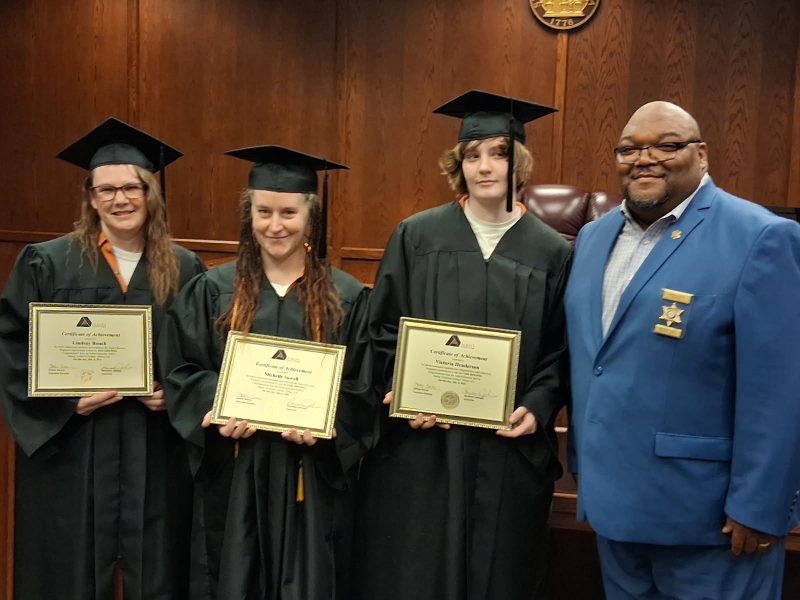
Dougherty Jail graduates first class of female GED recipients
“It was an escape. I can say this has been challenging. I want to express my gratitude for being able to attend this program.”
