
Crisp County murder conviction upheld by Georgia Supreme Court
Varocus Grant argued he was denied a fair trial in shooting death case
Jennifer Parks
From Staff Reports
CORDELE — A Crisp County murder conviction was upheld by the Georgia Supreme Court this week.
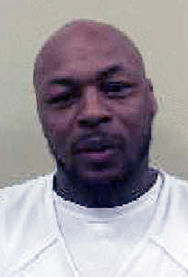
Varocus Grant appealed his convictions for malice murder and firearm possession during the commission of a felony in relation to the shooting death of Travis Shivers in 2011.
Grant argued that he was denied a fair trial because the jury array was selected in a manner inconsistent with the Sixth and 14th amendments of the U. S. Constitution and Georgia statutory law, that the trial court erred by denying a motion in limine to exclude an incriminating statement by Grant, that the trial court erred by admitting testimony about fingerprint evidence and that his trial counsel was ineffective for numerous reasons.
The trial evidence viewed in the light most favorable to the verdicts showed that on the evening of Oct. 1, 2011, Grant, along with an unknown man, attacked, shot and killed Shivers. A week prior to the shooting, Grant was witnessed speaking angrily to some male friends and was overheard saying, “I see that n****r, I’m going to do that n****r, I’m going to kill that n****r.”
On the night of the murder, officials said various witnesses placed Grant and an unknown man near the Holsey Cobb Village Apartments, known as “the Village,” where the shooting occurred.
Officials said Grant argued that the statement was introduced solely to put his character at issue and lacked relevance. He also argued that the statement was highly prejudicial because it was not temporally proximate to the shooting, its target was unclear and there is no evidence it was relevant to the murder.
“While it may be more properly introduced as evidence of intent, our old Evidence Code cases did not always delineate between motive and intent,” the court’s opinion said.
That night, Jasmine Paul, Shivers’ cousin, and Kaleesha Ross heard gunshots coming from the Village. Ross fled toward the nearest store while Paul ran toward the Village. As Paul approached the scene of the crime, she recognized Shivers’ voice calling out that he had been shot. Paul then saw Grant shoot Shivers several times while an unknown man continually pushed and kicked Shivers to the ground.
Grant and the unidentified man fled the scene, and Paul called for help, officials said.
The next morning, Grant voluntarily appeared at the police station, was informed of his rights, waived them and agreed to talk to the police. During the interview, Grant’s statements placed him at the scene of the crime. The night before, investigators recovered a can of Mountain Dew and a blue Dallas Cowboys hat near the victim.
Officials said Grant acknowledged that he both lost a hat and dropped a can of Mountain Dew near the scene.
“Although Grant does not expressly challenge the sufficiency of the evidence, we have independently reviewed the record and conclude that the trial evidence was legally sufficient to authorize a rational trier of fact to find beyond a reasonable doubt that he was guilty of the crimes for which he was convicted,” the opinion said.
The court said Grant failed to present any evidence of systematic or purposeful discrimination.
“To support his claim, Grant relies solely on the fact that the race of 111 of the 162 jurors of the array was marked as undetermined,” the court’s opinion said. “Grant argues that this lack of information shows that the composition of the array amounted to ‘discrimination by random process,’ and that the state failed to show a fair cross-section. Grant misunderstands the burden of proof — he, not the state, bears the burden of proof on this issue.”
The court also struck down all of the numerous claims of ineffective counsel.
On Feb. 2, 2012, Grant was indicted for malice murder, felony murder, possession of a firearm by a convicted felon, aggravated assault and possession of a firearm during the commission of a felony. At a trial in November 2012, where the possession of a firearm by a convicted felon charge was bifurcated, the jury acquitted Grant of possession of a firearm by a convicted felon and found him guilty of malice murder, felony murder, aggravated assault and possession of a firearm during the commission of a felony.
Grant was sentenced to life for malice murder and five years to run consecutively for firearm possession. The remaining charges were merged or vacated by operation of law.
Grant timely filed a motion for new trial on Dec. 23, 2012, which was amended by new appellate counsel on Sept. 13, 2016. On July 20, 2017, the trial court held a hearing on the motion for new trial as amended and denied the same on Aug. 31, 2017. Grant timely filed a notice of appeal on Sept. 22, 2017.
His appeal was docketed in the state’s highest court for the August 2018 term and submitted for decision on the briefs. Records from the Georgia Department of Corrections show he is currently in Jenkins Correctional Facility in Millen.
Related Articles
Federal agency to investigate Monday paragliding fatality
The death of a 63-year-old man who was killed in a paragliding accident on Monday is under investigation by the National Transportation Board, according to Dougherty County Coroner Michael Fowler.
Audit of police surveillance cameras results in arrests of five former APD officers
“The bottom line is when we find people who have misused resources that they have, we’re going to hold them accountable. These resources help fight crime, but we will not tolerate when they are misused.”

New commander takes helm as Marine Corps logistics adapts to evolving battlefield
Brig. Gen. Kevin G. Collins assumed command of Marine Corps Logistics Command during a change of command ceremony at Marine Corps Logistics Base Albany, succeeding Maj. Gen. Keith D. Reventlow after four years leading the organization responsible for sustaining Marine forces around the globe.
