
Dervan took long, winding road to 4C Academy
Instructor teaches Medical Coding/Health Informatics at academy
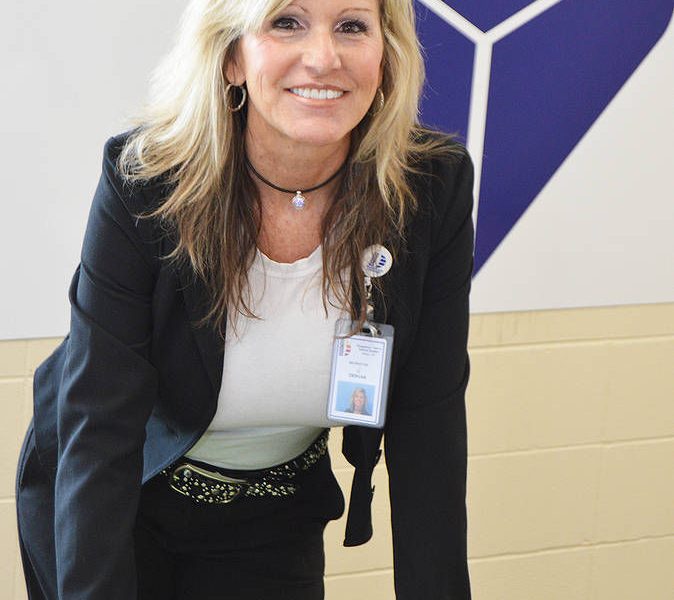
Jill Dervan is a Medical Coding/Health Informatics instructor at the Commodore Conyers College and Career Academy. She is one of 10 non-traditional teachers on the 4C Academy’s faculty. (Staff Photo: Terry Lewis)
By Terry Lewis
EDITOR’S NOTE: This is the sixth installment in a 10-part series profiling non-traditional faculty at the Commodore Conyers College and Career Academy.
ALBANY — In the late ’70s, Commodore Coyners College and Career Academy Medical Coding/Health Informatics instructor Jill Dervan’s family moved to Albany from Lindenhurst, N.Y. She was 17 and has been here ever since.
Dervan’s road to the 4C Academy, however, has been a long one, with many twists and turns along the way.
“I worked for Phoebe Putney (Memorial Hospital) for more that 30 years (1981 to 2011), mostly in medical records,” Dervan said. “When I worked at Phoebe, I had a business background that I developed at Albany Junior College. I originally wanted to be an accountant. After I graduated from AJC, I send resumes all over town before finally landing a job as a cashier at Phoebe.”
Things began to change for Dervan when her supervisor at the Albany hospital told her she could double her salary if she got her RHIT (Registered Health Information Technician) credentials, which she later obtained from LaGrange College.
“That was my first step, and I love school. I rose to a supervisory level at Phoebe,” Dervan recalled. “Then I had a lot of recruiters calling me about jobs. I wasn’t looking for anything, but they all wanted a bachelor’s degree. I thought that was long overdue, so I got my degree in Organizational Leadership.”
After graduating, Darton State College called, wanting her to do some online teaching for the college. She worked with Darton for three years.
“They told me they would pay for a master’s degree, so I took the job and later I got my MBA from Columbus State University,” Dervan said. “It was weird. When I was a kid, I wanted to be a teacher and then I really wanted to go into accounting. I love attention to detail and things like that, so I wound up in the medical field. Medical coders have to know as much as nurses — medical terminology, anatomy and physiology — because we do coding. That’s assigning alphanumerics to diagnoses. Those codes determine reimbursements. And we have a shortage right now of coders.
“If somebody overcodes your bill, they could be accused of fraud or abuse. If they undercode it, they are cheating the facility out of money. I didn’t think I would ever leave Phoebe because I loved doing what I did. “
After leaving Darton, Dervan spent three years teaching Medical Information Technology at Albany Technical College.
“But I tell you what I realized: The students’ reading and writing skills are not where they should be,” Dervan said. “When I heard about this opportunity (at 4C Academy) my thought was ‘If we could catch these students at a younger age while they are still impressionable and help them with soft skills, work ethics and building a “can-do” attitude, we can empower these kids and maybe give them the push they need to be successful.’”
Now all she has to do do is convince ninth- and 10th-graders to choose a Medical Information Technology career pathway for the next semester of classes.
“I’m not used to high school students. I’m used to college students, so that is an adjustment for me right there,” Dervan said. “A lot of students don’t think they can do better than they do. All the students who come through here want to be doctors, surgeons and nurses. They all have big plans, but when I talk to students about my field, they’ve never heard of it. But their parents are aware when you talk about medical coding, and they know that’s a good field to go into.
“The thing is a patient can’t get the care they need if we don’t do our job right and their medical record is not complete or accurate. I don’t think many people realize the importance of what we do.”
Now all she has to do is convince ninth- and 10th-graders of that importance.
Related Articles

Albany teen, 16, makes bodybuilding debut at Atlanta OCB Pro/Am
Crockett, an Albany resident and student at Albany Technical College Academy, placed second in the teen bikini division this weekend at the OCB Immortal Muscle Pro/Am Bodybuilding Competition in Atlanta, becoming the youngest competitor across all categories at the event.
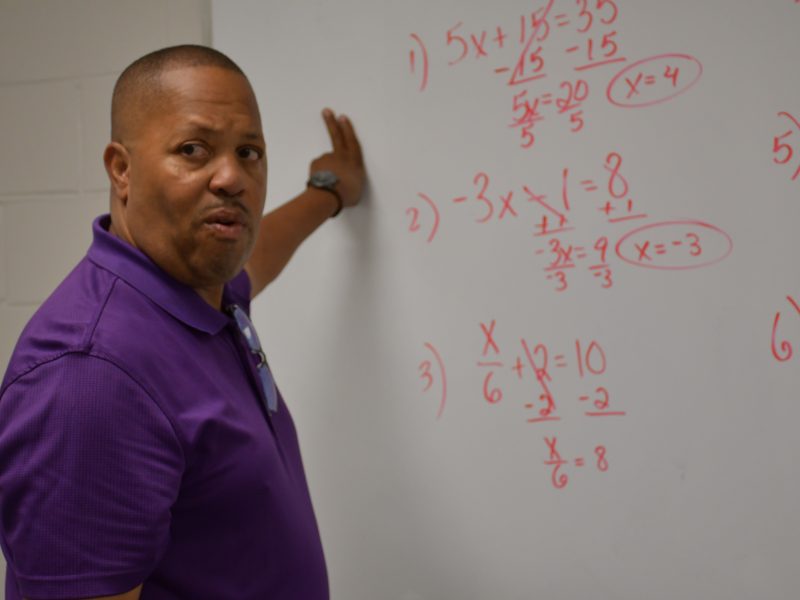
Retired Albany educator makes an impact as jail school instructor
Shortly after taking office in January 2025, Dougherty County Sheriff Terron Hayes initiated the “Jail to Jobs” program that helps students prepare for the GED exams, and Benjamin Johnson was tapped as the inaugural instructor.
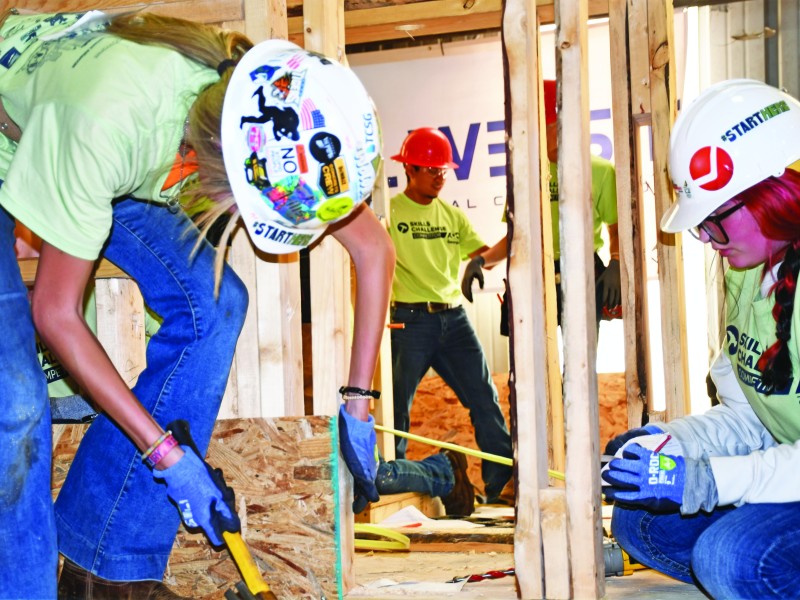
Skills Challenge attracts more than 250 high school construction students
For hundreds of area students, the 2025 AGC South + Southwest Georgia Skills Challenge was a chance to display their talents in construction skills and get a look at what a career in one of those fields could mean.
