
Dougherty County School System Social workers track down ‘our children’ after storms
Nearly 4,000 Dougherty County students and their families displaced by January storms
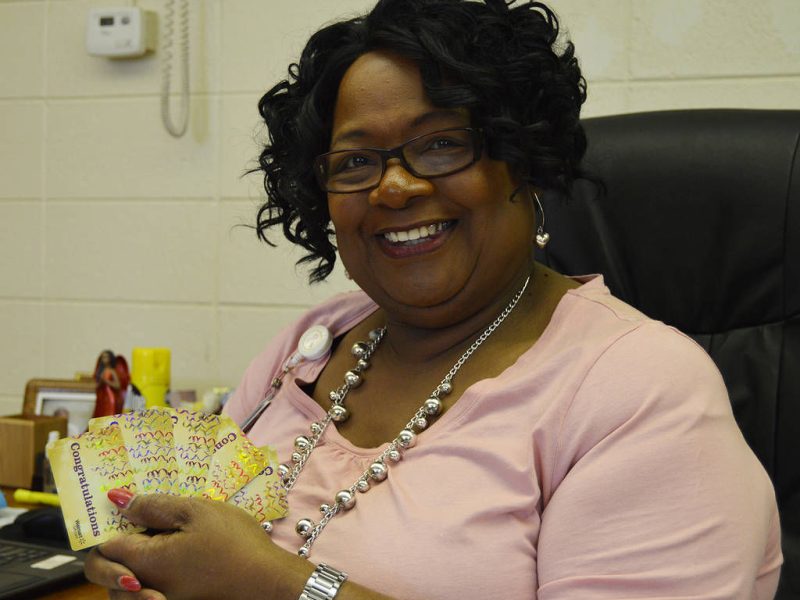
Dougherty County School System lead social worker Marion Stevens displays some of the gift cards donated to the district after January storms. (Staff Photo: Terry Lewis)
By Terry Lewis
ALBANY — January was an interesting month for the Dougherty County School System.
Superintendent Butch Mosley said he would step down in late June with a year remaining on his contract. Assistant Superintendent Jack Wills announced he would retire at the same time. Assistant Superintendent and Chief Financial Officer Ken Dyer was selected by the school board to replace Mosely, and negotiations are currently underway on Dyer’s contract. Two storms swept through the county on the Jan. 2 and 22, and subsequent closures cost the DCSS 12 instructional days. And the Commodore Conyers College and Career Academy picked up the pace on renovations at its new home at Southside Middle School.
January did not offer many “just another days” at the office for the DCSS.
Lost in the shuffle, however, are some unsung heroes. Down a long hallway at the Walter F. Judge Complex, DCSS lead social worker Marion Stevens and a cadre of five staff members have been working since early January to help nearly 4,000 students and their families get back on their feet after being displaced by the storms.
“We had 130 families who completely lost their homes; they lost everything they owned,” Stevens said. “But over the past months, we have served close to 4,000 who were without power. That included storms 1 and 2. The second storm hit on a Sunday, and at 8:30 Monday morning we were out trying to find our kids over in east Albany.
“The first place we could get into was a trailer park off Highway 82. But we had to walk to get to the trailers. Those were the ones where most of our Hispanic population lived. Those are the ones we wanted to find first. Sometimes they get fearful when things happen, and we don’t know which ones are documented or not.”
Stevens said her group found and identified a number of DCSS students in the area.
“It took a little time, but we hit every single site we could looking for our children, and we found a good majority of them,” she said. “After the storm, we weren’t even sure how many we were looking for because we didn’t have a number. But we knew if we went into the shelters, it would give us a general idea. We had to wait until they went back to school on Jan. 30; then we could compare our names to the school rosters.”
After school resumed, teachers had to pull their classroom rolls to see if they were missing students.
“If they had not shown up yet, then we had to go out there and look for them,” Stevens said. “And with the process that the school system used, we were able to find them. But we learned from the first storm and were better prepared for the second one.”
When school reopened after the storms, the district counted more than 1,100 absences that day. That number quickly dropped to 600 and steadily declined as the students were found, many of them at new locations.
“When Jan. 22 came, we knew what to do. Considering what all we’d been through, the fact that we only had 600 absences when we reopened is amazing,” Stevens said. “Every day after that, the numbers would consistently go down because our social workers remained in contact with the families.”
Stevens said that in many ways the storms of January were much worse than the Flood of 1994 that devastated the community.
“We had almost a week’s warning that the flood was coming,” Stevens said. “So a lot of people were able to get some of their stuff out of the house, and when they got back they just had to rebuild. But with these storms, there was no prewarning. Those people had to run and didn’t have time to move their stuff, and they lost everything at one time. And that’s the biggest difference.”
Currently, the system is looking at fewer than 1,000 students who remain basically homeless.
“We’ve identified them, and we know where they are,” Stevens said. “We’ve moved on to Phase 3. We have been giving them gift cards and we have new bedding, but we don’t know what FEMA is going to do. We’ve been giving out everything; if you can name it we’re giving it out. The people that have helped us have been fantastic.”
Stevens said the group’s biggest need is finding shelter for 138 displaced families.
“I’ve checked around with some of the rental agencies and there are apartments available, but these people can’t afford $600 a month in rent,” she said. “If they were staying in Paradise Village, they were out there for a reason. Their rent was affordable at $325, but how are you going to go from $325 to $600?
“Right now, a lot of them are in hotels or somewhere else, stacked up with family members or friends because they have nothing and don’t have anywhere else to go.”
Related Articles

Albany teen, 16, makes bodybuilding debut at Atlanta OCB Pro/Am
Crockett, an Albany resident and student at Albany Technical College Academy, placed second in the teen bikini division this weekend at the OCB Immortal Muscle Pro/Am Bodybuilding Competition in Atlanta, becoming the youngest competitor across all categories at the event.
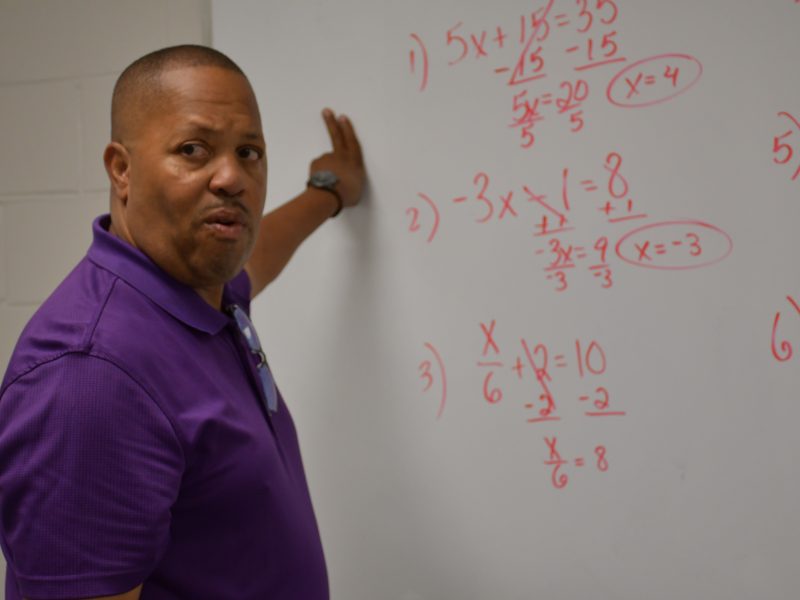
Retired Albany educator makes an impact as jail school instructor
Shortly after taking office in January 2025, Dougherty County Sheriff Terron Hayes initiated the “Jail to Jobs” program that helps students prepare for the GED exams, and Benjamin Johnson was tapped as the inaugural instructor.
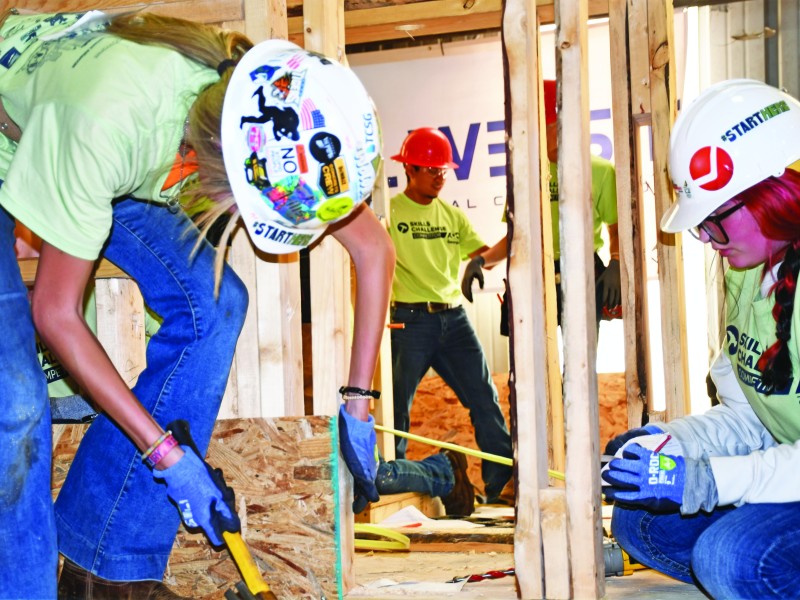
Skills Challenge attracts more than 250 high school construction students
For hundreds of area students, the 2025 AGC South + Southwest Georgia Skills Challenge was a chance to display their talents in construction skills and get a look at what a career in one of those fields could mean.
