
Dougherty schools offer ‘wrap-around services’
Students can receive health, behavioral, vision care from some schools
By Jada Haynes
ALBANY — When the school year begins, parents will receive a letter regarding “wrap-around services,” such as health, vision and dental centers, available at local schools. Plans for a wrap-around services hub are currently in progress and are expected to be completed by the end of winter break. Parents can choose to either accept or decline this coverage.
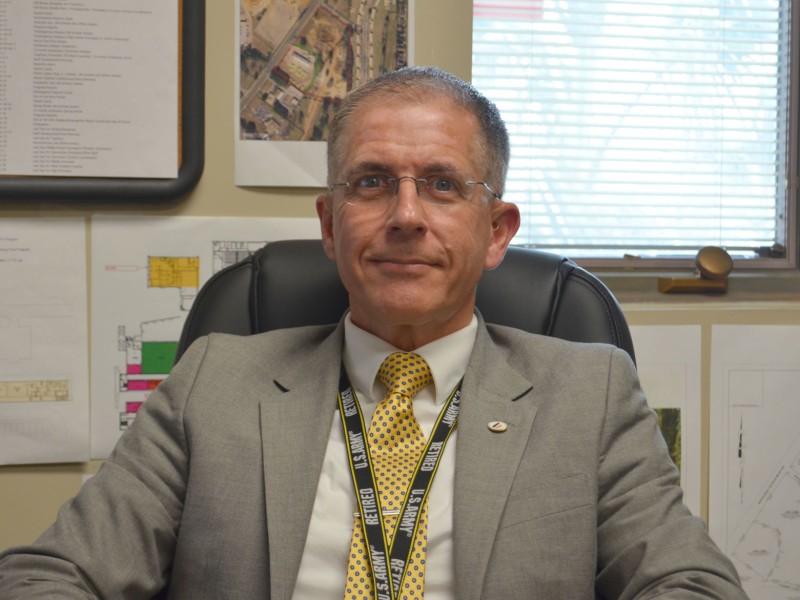
“The concept was to put clinics in the schools so the students have access to either a doctor or a physician’s assistant or a nurse practitioner who actually runs the clinic,” Joseph Harvey, chief operations officer of Dougherty County schools, said. “So it’s not just a nurse’s stations like people think of in most traditional schools.”
“The district currently has health, vision and dental clinics at multiple schools across the district,” J.D. Sumner, an employee of the Dougherty County School System’s Public Information Office, said. “We’re working with partners to add mental health to that list and also plan to open our facility on Corn Avenue as a wrap-around services hub. Clinic sites include Albany Middle School, Alice Coachman Elementary School and Turner Elementary School.”
The first clinic was started in 2014 at Turner Elementary School in partnership with Albany Area Primary Health Care. Sumner said that within the first month of Alice Coachman’s vision clinic opening, the center saw around 240 students and issued approximately 160 prescriptions for glasses.
According to Harvey, these clinics work on a “sliding scale” to determine payment. If a parent has low or no income, the payment may be reduced or waived. If they do have health insurance, the clinic can work with the insurance company to settle on a copayment. Parents interested in these services can disclose insurance information when they receive their letter.
Harvey also mentioned that wrap-around clinics are not in competition with local medical centers.
“AAPHC doesn’t want to compete with the pediatricians in town,” he said. “That’s not what they’re trying to do. They’re trying to provide services to those people who don’t have it. So they’re not trying to steal patients away, because that doesn’t benefit anybody. If they steal patients away, then they’re not able to see the patients who really need their services.”
Along with clinics, wrap-around services include other forms of health care. Multiple organizations have signed on as partners: AAPHC, Aspire Behavioral Health & Developmental Disability Services, Phoebe Network of Trust, the Health Department, Girls Inc., Strive2Thrive and Family Literacy Connection. These partners will form the wrap-around services hub and share spaces in the former Lincoln Complex facility on Corn Avenue.
“The goal is to have this up and running by the time the kids come back from the winter break, on Jan. 7,” Harvey said. “The thing that really surprised me is as I started approaching these partners, they were like, ‘This is what we’ve been dreaming about. We’ve been wanting to do this for 20 years.’ I said, ‘I don’t know why it’s taking so long, but here we are, let’s make this happen.’ They’re really energetic, they’re really excited about what they can do.”
“We were going to close the (Lincoln Elementary) building down, but then Mr. (Ken) Dyer had the vision of ‘Why don’t we make that a wrap-around services building where we can provide services to the community, especially focusing on the families and the students?’”
Harvey added that wrap-around services are meant to satisfy the first two sections of Maslow’s Hierarchy of Needs: physiological needs (such as food, water, shelter and rest) and safety needs. The theory states that each of these must be met before tending to higher needs such as friendships and feelings of accomplishment. In the context of education, a common example is that a student isn’t concerned about learning their multiplication tables if they have an empty stomach.
“We have a lot of students who don’t know where the next meal is coming from; they don’t know about shelter, clothing,” said Harvey. “Families are struggling. Helping them out is going to be important.”
He added that he and his committee divided up possible programs into four categories: health, safety, education and family.
“My biggest fear is that this place is not going to be big enough, eventually,” Harvey said. “Because there’s going to be so many services that we would love to provide that we’re not going to have space. It might be that we’re going to have partners, but they’re located in another location and we just have to make sure that the families get connected to them. But the one’s that we’re providing are the ones that we think are really the ones that the family needs to connect with immediately.”
This year, there are also plans to start a bus program to transport students who don’t have clinics at their schools to other schools that do and, eventually, the wrap-around services hub. Harvey said that his committee hopes to have the bus route operational soon.
“They can set up appointments and then they can go to those schools and be seen just the same as the kids who have the clinic in their school,” Harvey said. “We’re going to formalize that and actually have a scheduled bus plan. So instead of the buses sitting during the day between going to the schools, we’ll actually have a route going where, if they have an appointment, they get on the bus, go to the school that has that clinic and they can be seen, which is great. So it reaches out further.”
Related Articles

New commander takes helm as Marine Corps logistics adapts to evolving battlefield
Brig. Gen. Kevin G. Collins assumed command of Marine Corps Logistics Command during a change of command ceremony at Marine Corps Logistics Base Albany, succeeding Maj. Gen. Keith D. Reventlow after four years leading the organization responsible for sustaining Marine forces around the globe.

DOT says delay in Oglethorpe Bridge opening should be brief
“We know it’s not going to be July 22. We don’t think it’s going to be much later than that.”

City of Albany has big July 4 celebration planned for Saturday
“It’s going to be a lot of moving and shooting them off in a short time. It’s going to be a big show.”
