
Dougherty County School system recovering from impact of COVID
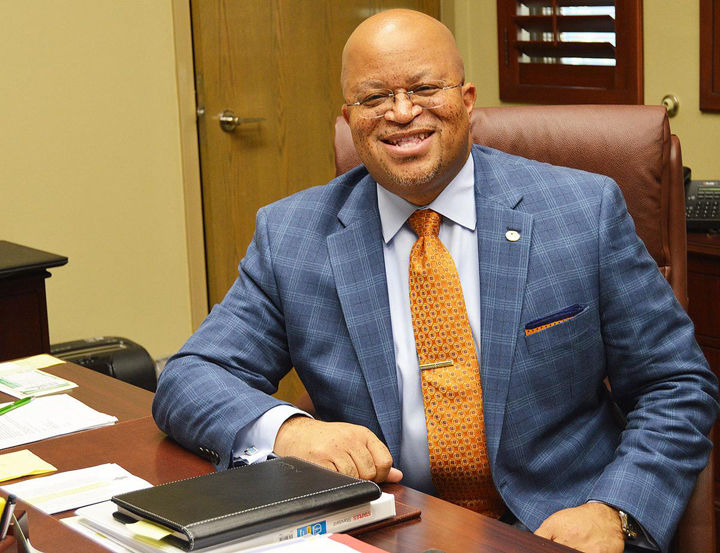
Special Photo
By Carlton Fletcher
[email protected]
Editor’s note: Second in a three-part series.
ALBANY — Now that the COVID-19 pandemic is pretty much in the rearview mirror, the world has breathed a huge, collective sigh of relief. But for educators like those in the Dougherty County School System, the impact of COVID is still being felt on a daily basis, wiping out significant gains and creating a new set of issues that must be factored into the educational equation.
In areas like graduation rate, academic relevance to future job-related skills and non-academic social concerns that are part of Superintendent Kenneth Dyer’s systemwide quest to teach the “whole child,” the Dougherty school system was making significant inroads with its 13,000 students prior to the pandemic. But COVID impacted progress in a significant way, sending the school system into two-steps-up, three-steps-back mode that has it trying to recover its momentum.
“We were making significant academic gains prior to COVID,” said Dyer, who enters his eighth year as superintendent of the local system Wednesday when the 2024-25 school year starts. “But in a system like ours, in a high-poverty area, the bottom fell out. Post-COVID studies have shown that in areas of high poverty, learning declined by as much as 35% during the pandemic. We were into a significant three-year growth period that took a dip with COVID.
“I’m pleased with the recovery efforts we’ve made. The thing about COVID is that no one knew how to prepare for it. We’ve had natural disasters here in southwest Georgia: the floods back in the ’90s, straight-line winds and tornadoes in ’17, Michael in ’18. But COVID was like nothing we’d ever seen. With natural disasters, you could see where the danger was. COVID, you couldn’t see it coming.”
The issues were exacerbated in Albany and other areas of high poverty. Once remote learning became the only option for students in the system, Dyer and staff learned that 60% of their students had no access to reliable internet.
“We provided hot spots and even had our bus drivers deliver food to students who relied on school breakfasts and lunches for nutrition,” Dyer said. “But there was the issue of emotional well-being as well. We provided the devices that our students needed to learn remotely, but the students’ emotional well-being became a concern. School is a safe haven for a lot of our students. We had to tune in to their needs.”
When students finally were able to return to the classroom, it became painfully obvious that their ability to learn had suffered. So Dyer and the school system put together a plan that has become a model for other systems.
“A lot of systems provided summer school to help their students make up some of the lost ground, but we took it a step further,” the Dougherty superintendent said. “We offered after-school enrichment leading into the summer break, and we provided Saturday classes and summer school, again with enrichment elements. We didn’t want the kids to feel like they were being punished, so we gave it a summer camp feel. We even provided educational field trips every other Friday to students who qualified.
“I’m very pleased with the results. The plan has helped with our recovery.”
As he works to improve what long has been a school system maligned for its academic inadequacies — real and presumed — Dyer bases his plan on five tenets: Early literacy, academic rigor and relevance, social and emotional wellness, investment in human capital and family/community engagement.
And like all school officials nationwide, Dyer is fighting what currently is a losing battle to bring the brightest minds into the education profession.
“Data from the last 10 years show that, in the University System of Georgia, bachelor’s degrees in teacher education have fallen from 3,223 in 2013 to 2,033 in 2023,” he said. “That’s a 36% decline. Baby boomers are retiring, and the fact is that Generation X, the millennials, and Generation Z just are not attracted to the profession.
“There are more teachers leaving the system — through retirement and seeking other jobs — than there are entering. We have to leverage the technology to make teaching more attractive to the generations coming along now.”
Dyer said the Dougherty School System is working with Albany Technical College to help adults who are struggling to provide for their families receive training that will help them find better-paying employment.
“I talked with (late Albany Tech President) Dr. (Anthony) Parker and with (current president) Dr. (Emmett) Griswold about all the jobs we’ve left on the table in our region because of the lack of training,” Dyer said. “Some of our students’ parents may be working two jobs, but they can barely make ends meet. We received a Georgia Power grant that provides job-skill training for adults who are parents of students in the system.
“Some of the success stories from this program will warm your heart. The idea is, if we can help parents get some of these in-demand jobs, that will lead to more stable home environments and reduce some of the non-academic barriers families face.”
Under Dyer’s leadership, the local system has made strides in taking on some of those non-academic barriers that plague impoverished regions. “Wraparound” services provided by the system have improved the health of students, helping to lessen that barrier.
“Dr. Shelly Spires pitched the idea of school-based health centers in 2012,” Dyer said. “She came to me with the idea, and I took the idea to (then-superintendent) Dr. (Butch) Mosely. Dr. Mosely said, ‘Do we have the money?’ I told him yes, and he said, ‘Let’s do it.’ It was a unique idea, but I trusted Shelly, and Butch trusted me.”
The system now buses students to its four systemwide health centers, its two dental centers and its vision center. Of the students tested at the latter center, 80% needed glasses, which were provided by the system.
“That’s what I mean by removing non-academic barriers,” Dyer said. “If students have health, dental or vision problems, they’re not going to be able to focus in the classroom. It’s part of the hierarchy of needs, the basic needs that are not being met. We offer our students in the system universal free meals. How can anyone expect them to learn if they’re hungry?”
Dyer said a $15 million grant will help the system address mental health issues that have risen dramatically since COVID. He noted that depression and suicide had “increased exponentially” in the wake of the pandemic. A screening in the local system showed that 24% of all students showed severe or moderate depression.
But Dyer knows all too well that academic performance is the metric on which he is constantly being “graded” by the public. Through innovative programs like the Commodore Conyers College and Career Academy, getting a jump-start on the impact of artificial intelligence in the schools and other programs that offer students paid internships, he notes the system is making inroads that will truly prepare the students in the Dougherty system for opportunities to start the pathway toward becoming productive citizens.
Part III: Moving education into the 21st century.
Author

Related Articles
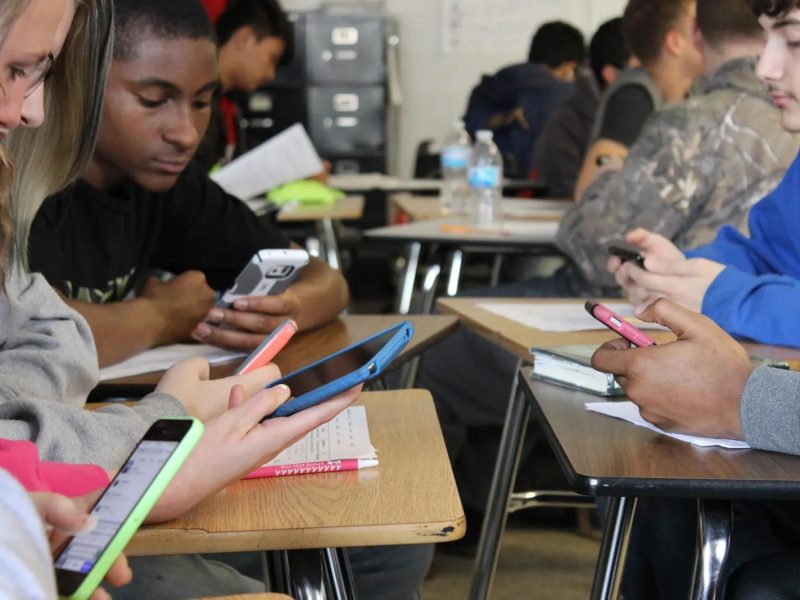
Dougherty Schools prepare for bell-to-bell student cell phone ban
As Georgia prepares to expand its statewide ban on personal electronic devices in public schools, Dougherty County School System leaders say they are working to balance compliance with the new law while giving individual schools flexibility in how they implement the policy.
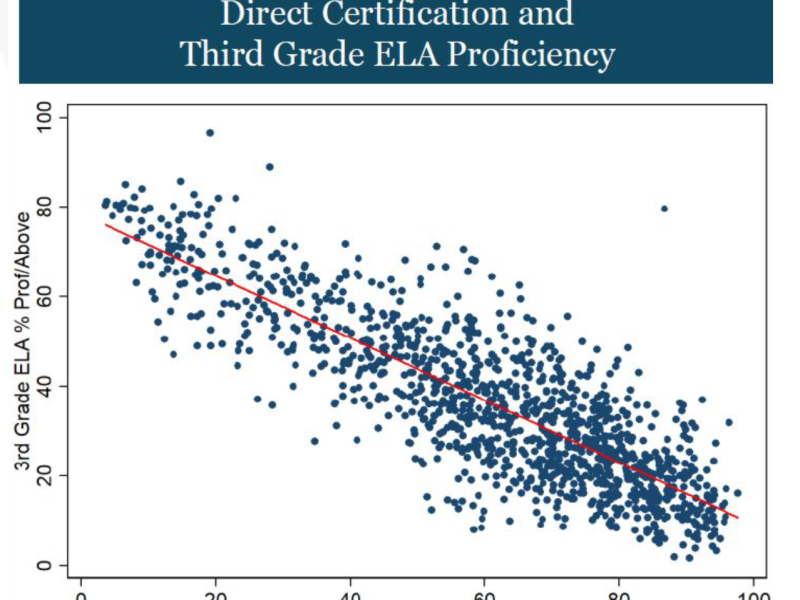
Georgia’s school funding formula still ignores poverty; educators say students pay the price
During a report to the board on the outcomes of this year’s legislative session, Dyer discussed the district’s efforts to persuade lawmakers to add an “opportunity weight” to Georgia’s Quality Basic Education (QBE) funding formula — a change supporters say would provide additional state funding for students living in poverty.

Albany teen, 16, makes bodybuilding debut at Atlanta OCB Pro/Am
Crockett, an Albany resident and student at Albany Technical College Academy, placed second in the teen bikini division this weekend at the OCB Immortal Muscle Pro/Am Bodybuilding Competition in Atlanta, becoming the youngest competitor across all categories at the event.
