
Dougherty County Schools have made strides in literacy since COVD-19 with district’s emphasis on early learning

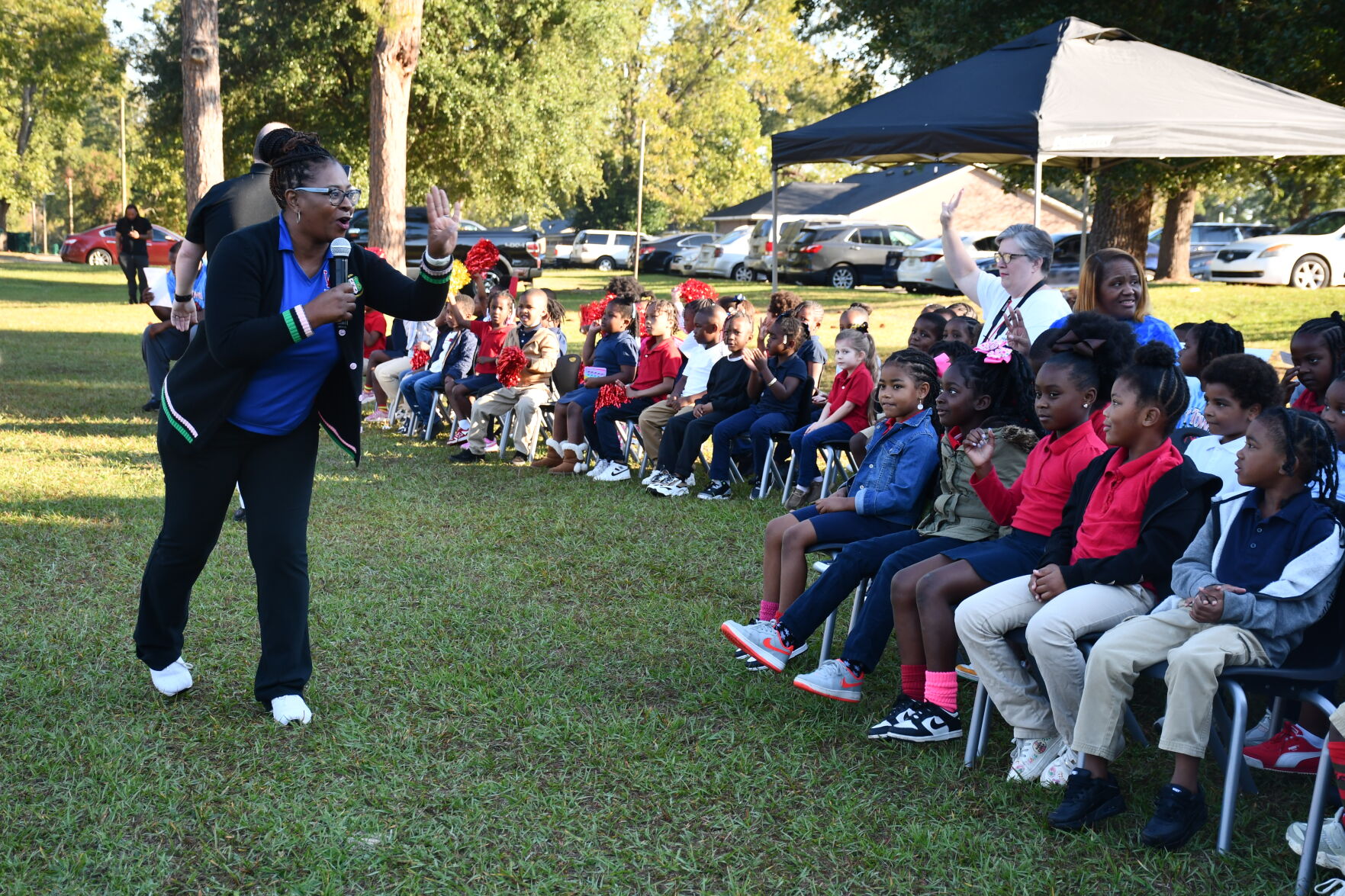
West Town Elementary students raise pom-poms to hype up this year’s reading program.
Staff Photo: Lucille LanniganBy Lucille Lannigan
[email protected]
[email protected]
ALBANY – More than 100 enthusiastic elementary students joined their teachers and parents in filling the back lawn of West Town Elementary School to kick off the school’s 10th year of its Leaping Lexiles Incentive Program for literacy on the morning of Oct. 25.
They danced to and sang songs about the importance of reading and waved red, blue and gold pom-poms and handmade posters in the air.
“Literacy is the way forward,” one sign read.
“Cool kids read,” boasted another.
The Leaping Lexiles Incentive Program was spearheaded 10 years ago by former second-grade teacher, Yolanda Bryant, and West Town’s former principal, Steven Dudley. The goal of the program is to boost students’ motivation to read, increase their academic achievement and foster a lifelong love for reading. It rewards students who show significant growth in their reading scores, according to the Lexile Framework, which measures reading ability. The scale starts at 0L for beginner readers and goes up to 2000L for the highest-level readers.
Since the implementation of this program, West Town Principal Narkisa Howard said the school has seen significant growth – so much so that it was named a state Literacy Leader in fall 2023 by the Georgia Department of Education. The school’s third-graders saw more than 15% growth on the Georgia Milestones Assessment from the previous year.
West Town’s program is just one example of how the Dougherty County School System is focusing on early literacy – one of the five pillars of its holistic strategic plan, which targets areas for improvement. DCSS Superintendent Kenneth Dyer said the school system recognizes literacy as a challenge.
“When you look at us as a community, demographics of high poverty and the lack of access to quality learning opportunities, those challenges are exacerbated,” Dyer said. “But we don’t use that as an excuse.”
DCSS students’ reading scores historically fall below the state average. Still, data from Georgia Milestones shows a steady increase in reading scores, aside from the COVID-19 pandemic year. In Dyer’s second year as superintendent and the year before the COVID-19 pandemic, the percentage of third-graders reading at a proficient level rose to 69%. Third grade is considered a critical year in determining a child’s success in school, so DCSS places an emphasis on its scores.
That proficiency level dropped significantly to the 20s in 2020 due to, Dyer said, struggles with online learning during the COVID-19 pandemic. Now, looking at the 2023-2024 school year, data shows that level back up to 56%.
Dyer said students aren’t going to surpass the state average overnight.
“But are we headed in the right direction? Yes,” he said. “Is what we’re doing working? Obviously, the data shows that it’s working.”
So what exactly is DCSS doing to improve literacy?
Three years ago, the system launched its early literacy initiative and the LETRS Program, which is a program that teaches the five essential components of reading: phonics, phonemic awareness, vocabulary, reading comprehension and fluency. It’s an acronym for Language Essentials for Teachers of Reading and Spelling, and it teaches educators the skills needed to help students master the fundamentals of reading and writing.
Educators who teach students as young as Pre-K level are trained through the LETRS program.
DCSS also hired four literacy specialists to work alongside teachers in the classroom to provide extra support with the literacy curriculum. So students falling behind in their reading scores have safety nets.
Dyer said the school system has a multi-tiered system of support for its students in which they are given targeted remediation and support. Students are grouped into “small groups” in the classroom based on their skill level, and they have access to Saturday school as well as after-school tutoring.
“Just because a student’s not reading on grade level doesn’t mean they don’t have a skill set for reading,” he said. “What we do is try to develop those skills even more.”
DCSS also has expanded Pre-K accessibility in the county. Studies show these early-start programs help children develop foundational literacy skills that can impact future reading ability and achievement. Dyer said the school system saw many students entering kindergarten who didn’t know their letters or numbers or even how to properly hold a pencil. So the school system conducted a study and found that about half of Pre-K eligible children in Dougherty County did not attend.
They discovered the primary reason was simply a lack of slots for students.
For years, the district lobbied at the state level for an increase in state-funded Pre-K classes so that students could enter a formal education setting sooner. In 2024-25, DCSS was able to open a second Pre-K site in east Albany, where the demand for early childhood education was particularly high. This was thanks to the state approving the expansion of Pre-K programs in the district. The school added 120 more Pre-K slots to the system.
Students in the DCSS system are now more in tune with literacy from a young age.
At West Town, students as young as 5, 6 or 7 held signs with Lexile score goals. They hyped up these numbers like they were cheering for their favorite musician or sports team. They clapped and shouted when asked if they were going to continue to work toward growth.
“If we hone in on those skills and scores early on, those children are able to grasp them and apply them to be able to improve their vocabulary, comprehension and then proficiency over time,” Howard said.
Cindy Baltimore was at West Town’s reading pep rally to support her grandson. She said he’s only in the second grade but reads at a third-grade level.
“Every day he’s reading a book,” Baltimore said. “West Town has helped him so much.”
She beamed with pride, talking about her grandson’s love for reading, especially to his family, which she said provides him a lot of encouragement.
Baltimore said the Leaping Lexiles program helps students stay in touch and even excited about their reading level.
A row of bikes lined the front stage at the school’s pep rally on Oct. 25. In December they’ll be given to students who meet their Leaping Lexile goals.
Howard, the school’s principal, said West Town is a neighborhood school. The majority of its students come from economically disadvantaged families. About 99% of its student population is black.
She said at West Town, teachers and staff focus on the whole child, providing not only academic support but also social and emotional support. When it comes to literacy, the school makes sure every child feels good about reading.
“Everybody is celebrated,” she said. “Most of our children are in high poverty, so we focus on creating a place of warmth. We don’t distinguish the difference among the children. We celebrate their growth and success.”
Dyer said literacy across the district is on a steady increase.
“It’s not gonna be a straight line,” he said. “Recovery is a journey, and you’ll have some setbacks, but if the overall trend is hitting the right direction, that’s what we’re looking for. And when we do have setbacks, we try to find out why we had a setback, and we target those issues and continue to move forward.”

Lucille Lannigan is a Report for America Corps Member assigned to The Albany Herald. RFA is a national service program that places journalists into local newsrooms across the country to report on under-covered issues.
Author

Related Articles
Dougherty Schools prepare for bell-to-bell student cell phone ban
As Georgia prepares to expand its statewide ban on personal electronic devices in public schools, Dougherty County School System leaders say they are working to balance compliance with the new law while giving individual schools flexibility in how they implement the policy.
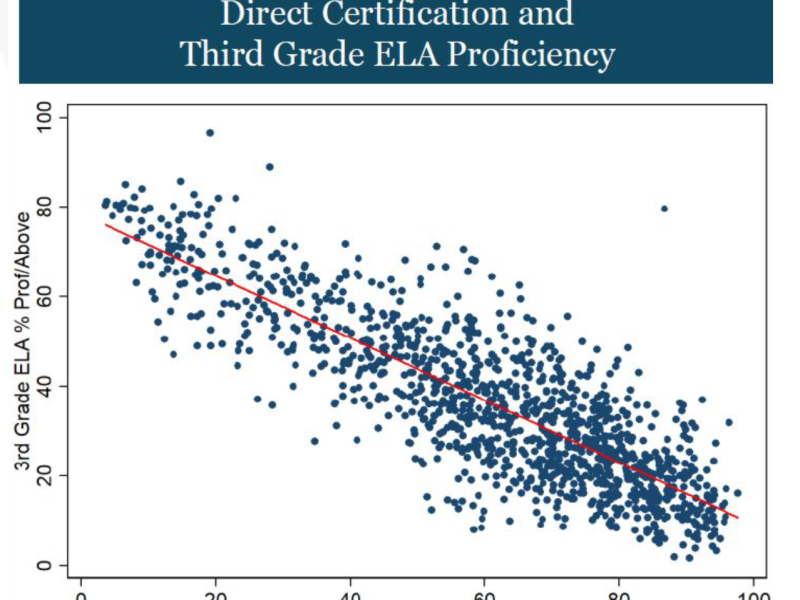
Georgia’s school funding formula still ignores poverty; educators say students pay the price
During a report to the board on the outcomes of this year’s legislative session, Dyer discussed the district’s efforts to persuade lawmakers to add an “opportunity weight” to Georgia’s Quality Basic Education (QBE) funding formula — a change supporters say would provide additional state funding for students living in poverty.

Albany teen, 16, makes bodybuilding debut at Atlanta OCB Pro/Am
Crockett, an Albany resident and student at Albany Technical College Academy, placed second in the teen bikini division this weekend at the OCB Immortal Muscle Pro/Am Bodybuilding Competition in Atlanta, becoming the youngest competitor across all categories at the event.
