
John Culbreath broke down racial barriers at Dougherty County School System
In 1995, John Culbreath became the first African American superintendent of the Dougherty County School System
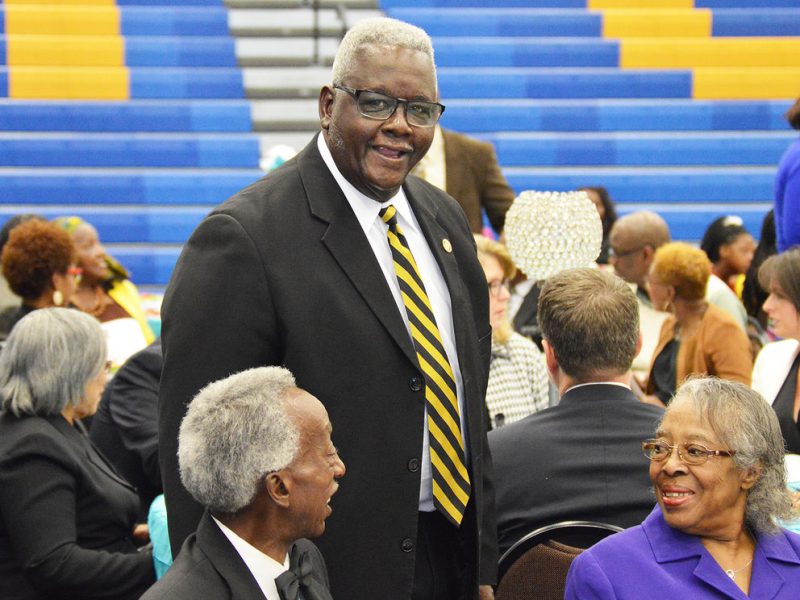
By Terry Lewis
ALBANY — in 1995, John Culbreath became the first African-American superintendent of the Dougherty County School System. Breaking racial barriers, however, were not part of the original plan he’d laid out.
In 1968 as he prepared to graduate from Albany State College with a degree in French, Culbreath, a native of Monroe, thought he had it all figured out.
“I was going to move to New York City and become an interpreter at the United Nations,” he said. “So when someone came to the UN from a french-speaking country, I saw myself as one of the people translating into English. I never got to go.”
Sometimes, life gets in the way of a plan.
Cuthbert went on to earn a master’s degree in administration and supervision at Georgia State University, then earned his doctorate in education from the University of Georgia.
After graduating from UGA, Culbreath returned to Southwest Georgia and became the first principal of the new Randolph-Clay High School in Coleman.
“I left there to become a principal in Athens and left Athens to become assistant superintendent of schools in Brunswick, and later I became principal at North Atlanta High School,” Culbreath said. “A year after the flood and vowing never to come back to Southwest Georgia, I came here in 1995 to be the school superintendent.”
At the time, Culbreath did not realize that he had just broken a huge color barrier in Albany by becoming Dougherty County’s first black school superintendent, but it didn’t take him long to figure it out.
“At first, I didn’t realize I was breaking a barrier,” Culbreath said. “But I read The Herald before coming and got a hint of what some people expected. And it ran the gamut of some folks saying he’s gonna straighten all these people out to others saying, ‘Oh, Lord, there goes the neighborhood.’ But most of the people were open-minded and willing to support me and give me a chance to see if there was really anything to this vision of all children can learn if properly taught.
“I found mostly receptivity, cooperation and support, not just for me but for the school system, for the children and their teachers, and that made it an easier transition.”
Culbreath’s biggest initial challenge, however, was rebuilding the schools the system lost to the flood of 1994.
“We had to build three new schools and renovate several others and get out students out of those temporary class rooms,” Culbreath said. “I took the (superintendent) job despite the flood-damaged schools. I had vowed to never again live below Macon again, but I guess it took an act of divine intervention to bring me back.
“Yet here I was, deep in Southwest Georgia in 1995 and here I remain until the present day.”
Culbreath remained with the DCSS for six years before stepping down in 2001.
“I left because I was tired. Those six years took a lot out of me,” he said.
Looking back, Culbreath graded his six-year performance as superintendent as a “solid B-plus.”
“I am most proud of the fact we were able to get people focused on academics and academic achievement,” Culbreath said. “We also focused on excellence in athletics and fine arts and facilities. We had not built a new school in Albany since 1967. Westover High School was our newest school in 1995.
“After the flood, we had the challenge of finding 20 acres, that was not in the flood plain, for each of the three schools we had to replace. Finding spots like that is extremely difficult in Albany, especially when you have to find that property in the general area in which the schools were lost.”
It took several years, but Alice Coachman, Martin Luther King and Lamar Reese elementary schools were built.
“One thing we discovered is you can save a lot of money if you recycle your plans,” Culbreath said. “A lot of people don’t know that Alice Coachman and Martin Luther King are the same schools because we used the same floor plans, same layout and same design for both buildings.”
As current Superintendent Butch Mosely prepares to step down in June and Ken Dyer stands ready to take the wheel, Culbreath had two pieces of advice for the rookie superintendent.
“I would tell Mr. Dyer to do two things — take charge and do right,” Culbreath said. “I got that from Gen. Norman Schwarzkopf. Take charge and do right, and you can’t go wrong.”
Related Articles

Albany teen, 16, makes bodybuilding debut at Atlanta OCB Pro/Am
Crockett, an Albany resident and student at Albany Technical College Academy, placed second in the teen bikini division this weekend at the OCB Immortal Muscle Pro/Am Bodybuilding Competition in Atlanta, becoming the youngest competitor across all categories at the event.
Albany Technical College celebrates award winners
ALBANY – Albany Technical College has announced the names of students and educators representing our college at upcoming state-level competitions in 2025.
Georgia Southwestern earns SACSCOC reaffirmation accreditation
Georgia Southwestern State University received recognition of a 10-year reaffirmation of accreditation from the Southern …
