
DANNY CHANDLER: During EMS Week, honoring those who answer the call
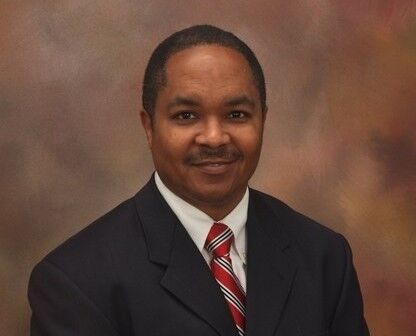
By Danny Chandler
As the 46th annual national EMS week (May 16-22) approaches, the COVID-19 pandemic has made many in the health care community ponder the following question: Is the public service I provide worth the personal sacrifice I am expected to make, either intentional or unintentional?
With the virus spreading, seemingly uncontrollably at times, and health care providers and facilities becoming overwhelmed, all were forced to make the adjustment to a new normal. Clinical resources as well as cleaning supplies became scarce. This was compounded by job losses, and daily reports of COVID cases and deaths rising exponentially. It was/is a salient moment.
Those of us on the front lines began seeing and hearing things most of us had been beckoning for the public to acknowledge for years: Every call, every patient encounter, puts the provider at risk. Respect the work we do.
Treating the chief complaint in a pre-hospital setting, and transporting that patient to a facility to meet their emergent need, does not mean the call ends for the Emergency Medical Technician. The exposure to an unknown disease or virus, and the subsequent treatment of the provider, may go on for months after that patient is discharged and resumes his daily life.
The expressions of those from the community have been mostly positive. The signs that read “You Are Heroes” and comments from everyday citizens saying “Thank you for your service” have been much appreciated.
The free, or reduced-cost meals provided by eating establishments were tangible reminders of this acknowledgement. Coming in for a shift and finding that some entity has provided breakfast or lunch as a token of appreciation made carrying the burden more bearable.
Unless one has served as a front-line health care worker, it is hard to fully understand the challenges of providing services to the public in this capacity. That includes our associated support team members who are firemen and police. The expectations are gargantuan, and in some instances, unrealistic.
One call can challenge book knowledge, experience, and common sense in a millisecond. The scene can require the services of “Mr. Goodwrench,” capable of fixing everything wrong. At the same time, emergency personnel become a de facto ombudsman, adroit in the art of bringing peace out of chaos.
The EMS provider often finds the patient at the intersection of hope and despair.
That can present a conundrum. No one person has the unfettered power, skill, or medicine to ease the pain, alleviate the suffering, or save the life of every patient he or she encounters, let alone de-escalate every volatile situation, the origin for which often is organic.
The goal and the mission of EMS are symbiotic: provide the best possible pre-hospital care, within one’s scope of practice, every time, without regard to person. There is no place for xenophobia.
One of the lessons of this pandemic is that the current health care system, as sophisticated as it might be, is not prepared for a 21st-century, worldwide health care crisis of international impact. Despite the type of governments established throughout the countries in the world, a pandemic requires a unilateral approach to containment and treatment/cure. None can afford to go it alone.
Another lesson for those of us on the front lines is that in our effort to provide a public service, there can be unintended consequences, and the personal sacrifices required cannot always be pre-measured.
There are untold numbers of workers, who, after caring for COVID patients, died due to COVID-related symptoms. It is emotionally toilsome to watch a health care worker place a patient on a ventilator one week, and another co-worker place this colleague on a ventilator a few weeks later. Death is not selective. It will take anyone, regardless of pedigree.
It does not take long for those who chose to work in Emergency Medical Services to realize that there are no routine calls. At some point, a personal decision must be made: Is this a job or a calling? Do the risks outweigh the benefits?
The answer to these question makes the vagaries of the task more palatable. To provide a service to the public, one will be called upon to make personal sacrifices. All gave some; some gave all.
This year we extend a hardy appreciation to EMS workers who have laid it all on the line, under austere conditions and extreme duress, to help the world survive this international pandemic, in addition to what each person does every day that goes unnoticed.
Be healthy and stay safe.
Related Articles

Albany teen, 16, makes bodybuilding debut at Atlanta OCB Pro/Am
Crockett, an Albany resident and student at Albany Technical College Academy, placed second in the teen bikini division this weekend at the OCB Immortal Muscle Pro/Am Bodybuilding Competition in Atlanta, becoming the youngest competitor across all categories at the event.
Phoebe opens new urgent care clinic in Camilla
Phoebe Putney Health System has expanded its network of urgent care clinics by opening a new location in Camilla.
Colquitt Regional introduces new heart failure treatment
Colquitt Regional Medical Center recently announced a major advancement in its cardiac care services with the introduction of the biventricular implantable cardiac device (ICD)
