
Lee Georgia’s 12th-healthiest county
Dougherty, other area counties among state’s 10 least healthy

By Carlton Fletcher
LEESBURG — On a color-coded map created by the Robert Wood Johnson Foundation and the University of Wisconsin Population Health Institute to show the health rankings of Georgia’s counties, the tiny white block that represents Lee County stands out in a sea of dark greens and blues.
The map key shows that white-shaded counties are among the state’s 30 most healthy. The darker blues and greens represent counties whose rankings are much farther down the list … in fact, at the bottom.
Lee County ranked 12th-best among Georgia’s 159 counties in the annual survey that takes into account health factors but also such non-health-related categories as education, transportation and poverty, that influence how long and how well people live.
“A good part of these rankings has to do with affluence,” Lee County Commissioner Rick Muggridge, who owns an insurance agency, said. “But it also takes into account the conscious choices that we as citizens make in relation to our health, such as whether to eat that plate of greasy french fries or drink that extra beer.
“A couple of years ago, Lee County was ranked 18th, so it’s good to see us as a county improving steadily. But as a citizen of our Southwest Georgia community, I can’t take a lot of pride in how well we as a county are doing when our neighbors around us are not close to the Top 30. Our physical health, like our economic health, is tied together. We’re all in these boats together.”
While Forsyth County is ranked as Georgia’s healthiest county for the sixth straight year, the survey shows eight Southwest Georgia counties are among the state’s 10 worst healthwise, including Quitman County, which came in dead last at No. 159, and Dougherty County, which ranked 153rd
Among area counties that also fared poorly in the ranking, Crisp County came in at No. 157, Turner County at 156, Early County at 155, Clay County at 154, Ben Hill County at 152 and Randolph County at 150.
The 2018 County Health Rankings, released Wednesday, showed affluent suburban counties remain Georgia’s healthiest. After Forsyth, which is northeast of Atlanta, the next four are Oconee, Cherokee, Fayette and Gwinnett counties. They are followed by Columbia, Cobb, Harris, Paulding and Coweta.
State health officials say it’s not surprising that the unhealthiest counties predominantly are in rural areas.
“We can’t be a healthy, thriving nation if we continue to leave entire communities and populations behind,” Dr. Richard Besser, president and CEO of the Robert Wood Johnson Foundation, said. “Every community should use their County Health Rankings data, work together, and find solutions so that all babies, kids and adults – regardless of their race or ethnicity – have the same opportunities to be healthy.”
Forsyth County’s statistics show an 11 percent uninsured rate, vs. 16 percent statewide; low rates of premature deaths, teen births and STDs, and just 7 percent of children living in poverty, vs. 23 percent statewide.
At the other end of the list, Quitman County has a high rate of premature deaths and of low birthweight babies. Its uninsured rate is 19 percent, and 45 percent of its children are living in poverty.
Muggridge said that Lee County and Albany are making efforts to provide healthy activities for citizens, which should improve not only health outcomes but quality-of-life factors.
“As a county, we are working to give our citizens access to more recreation opportunities,” he said. “And what a phenomenal gift Albany and Dougherty County are providing with the (Flint River) Trail System that can have an impact on their citizens as well as the region in general.
“Part of the issue with health care outcomes is that much of the bad is self-inflicted, the poor choices that we make. That’s why the education element is so important. Because with issues like poor health care, we all pay a steep price.”
Andy Miller, who contributed information for this report, is editor and CEO of Georgia Health News.
Author

Related Articles
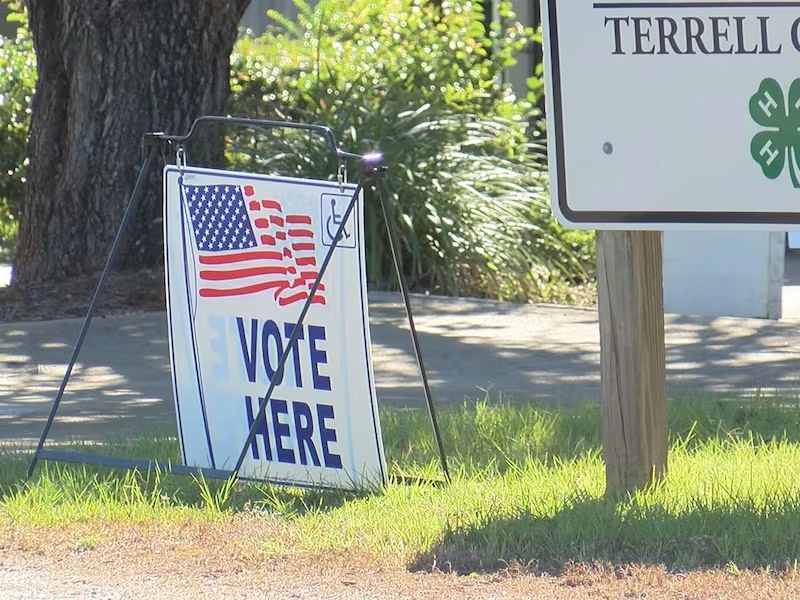
Who decides elections in Terrell County? Data show older voters dominate turnout as turnout declines
According to the Georgia Secretary of State, 1,731 of Terrell County’s 6,048 active registered voters cast ballots in the May primary, a turnout rate of 28.6%. Four weeks later, only 922 voters participated in the June 16 primary runoff, reducing turnout to 15.2%.
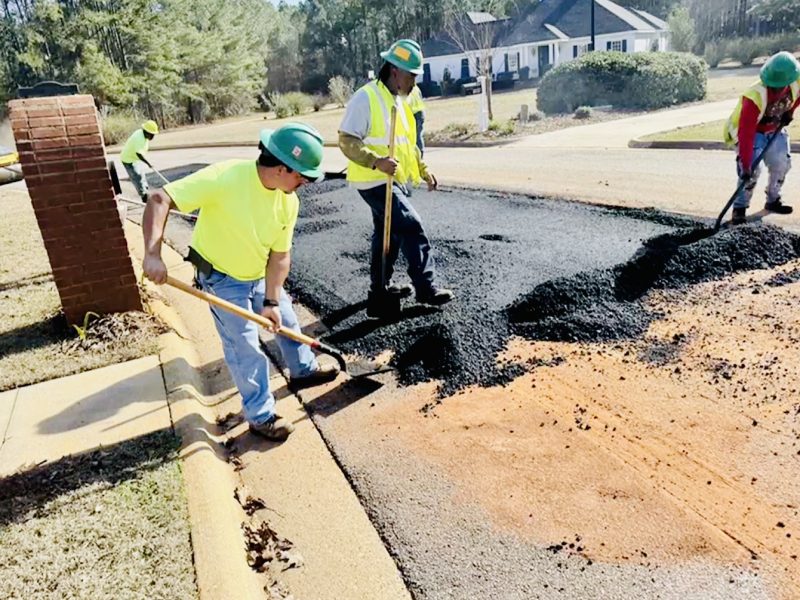
From Ledo to Coston, Lee County’s summer road projects are underway
Updates provided during recent meetings of the Lee County Board of Commissioners show projects are underway or scheduled to begin on several county roads, while additional transportation improvements funded through the Local Maintenance and Improvement Grant (LMIG) program and Transportation Special Purpose Local Option Sales Tax (T-SPLOST) are expected to begin shortly after the July Fourth holiday.

PSC candidate Peter Hubbard makes case for election to full term
The reason why voters should pick me is I’m a rare breed in that I read everything that comes across my desk. I’m asking hard questions at the meetings. I want to get to the bottom of are data centers paying their fair share, are residential customers getting their fair share.
