
Meeks: Chehaw struggling to adapt financially
Wild animal park management working to make facility more self-sufficient
By David Shivers
ALBANY — The future of Chehaw Park hinges on the ability of the facility to continue building partnerships and collaboration with the community and the region, the park’s chief says.
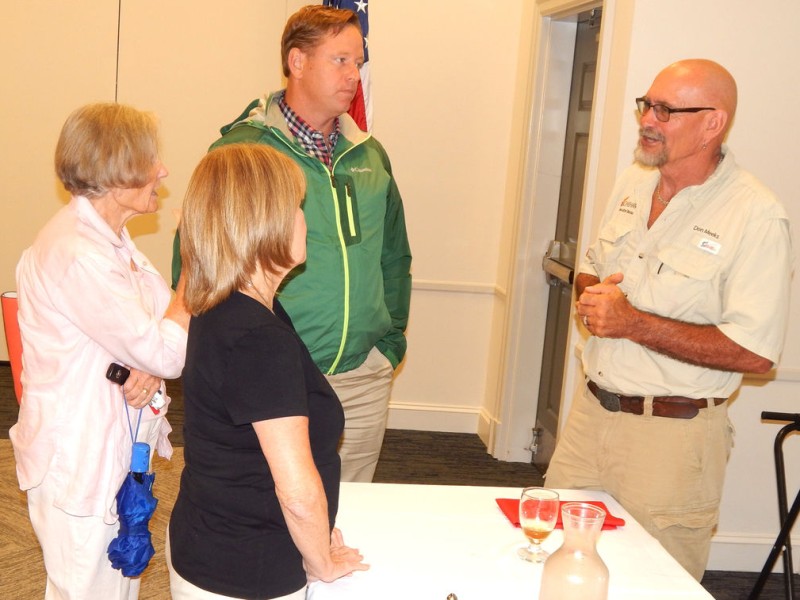
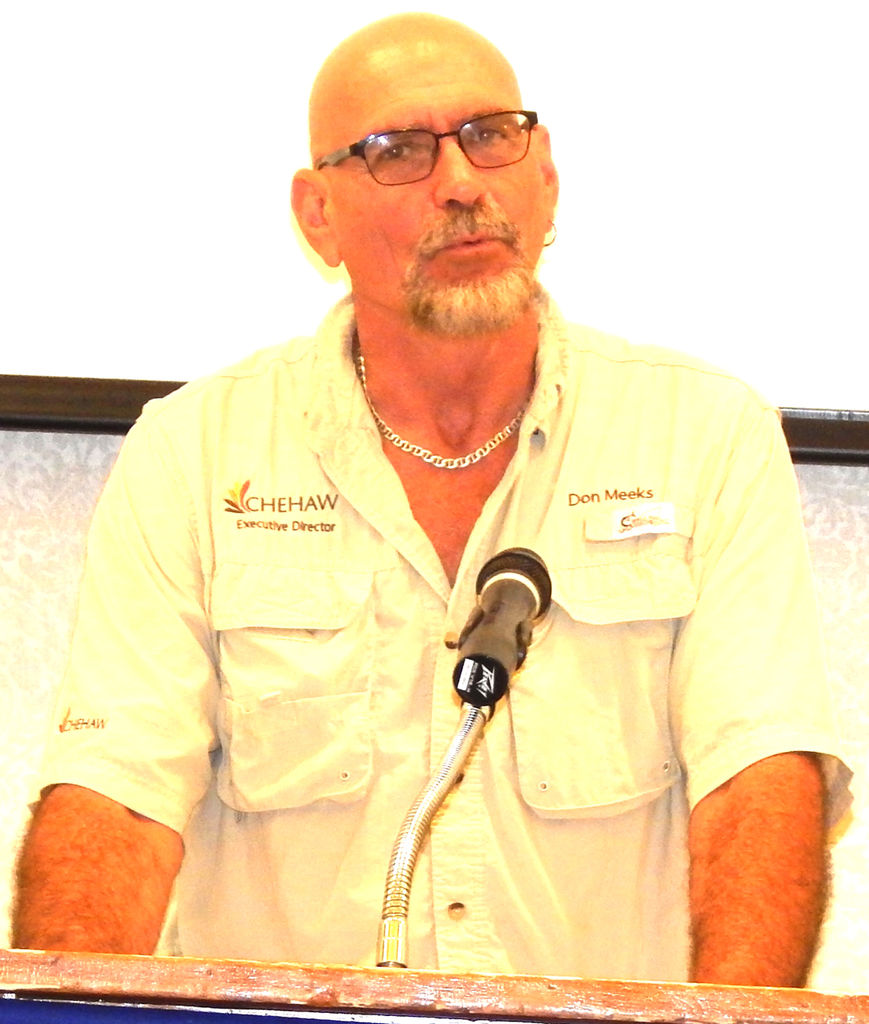
Chehaw Executive Director Don Meeks — a Montana native who has been with Chehaw five years in both maintenance and operations and was named executive director in January following the retirement of Doug Porter — didn’t mince words during what he called “a conversation,” rather than a presentation, with the Kiwanis Club of Dougherty County on Monday.
Chehaw was a state park, said Meeks, until “it was essentially deeded to the city of Albany in the 1970s to do with it what they wanted. They moved the zoo, which was in Tift Park, out there, which was a big community event. It was something that galvanized support for the park.”
But, said Meeks, “Not much has happened since then, and we struggled to adapt to the times. The city, as many local governments, is struggling now to do the things they need to do with their (funds). The economy has created some challenges,” and municipal financial support for Chehaw has been waning.
“The city support that we get, although it’s a very big number, doesn’t quite cover” what the park needs for even routine maintenance and overhead expenses, Meeks said. “We’ve operated at a deficit for probably the last five years that I’ve been there. It’s been a real struggle.”
Meeks said the goal from the city’s standpoint is “for us to be completely independent. In 2009, Chehaw separated from the city completely (operationally). I don’t know that everybody understands that. We’re no longer city employees; the city does not pay any of our bills. We are on our own out there to make it.” The city no longer owns the property, which Meeks said has been deeded to the Chehaw Park Authority.
Ninety percent of the park is in Lee County, said Meeks, and 10 percent in Dougherty. None of it is inside the Albany city limits.
The park’s annual budget is $2 million, Meeks said. “That’s a big number, (but) it doesn’t even come close to what we should be doing out there just to maintain the facility. We’re very short-staffed by design. We’re trying to change from being a city department to run the park under a business model.
“We have to market ourselves just like a business does. The unique part about Chehaw is we don’t have a lot of revenue streams,” which are a necessity for becoming financially independent. “We need to sell something, rent something, host something, which we are actually doing.”
Meeks noted that use of the park’s Creekside Conference Center has doubled over the past year through marketing, especially for weddings. Work is also continuing on laying sewer lines for the waterfront campground that Meeks hopes will come online within the next year.
Along with the campground are pending plans to renovate the boat ramp.
“How that evolves going forward, there may end up being a small convenience store in there or something for the boaters on the water,” Meeks said. “We’ve had a couple of people express interest in that. But again, it takes a while to develop these things, so we are moving in that direction.”
Chehaw has developed partnerships with a few of the recreational elements of the community, such as Josh Lorber’s kayaking business; building a track for model-car racing that is heavily used; plans for a championship disc golf course, organizers of which Meeks said hope to attract a national competition; and the rebuilt BMX mountain bike trail, all of which have involved volunteers. Another public event was a fundraiser in memory of Britney Kerfoot, a teacher who was killed in a plane crash at Southwest Georgia Regional Airport earlier this year. In recognition of her love for children, her family and friends raised $14,000 in funds to rebuild Chehaw’s play park.
“All of that money is going directly to the play park,” said Meeks. “We’ll provide the labor. That type of event pulls this community together with a common purpose, and it’s a way that we can keep Chehaw alive into the future.”
Attendance for the Native American Festival grew this year beyond expectations. Traffic getting into the park backed up in spite of efforts that were made to expedite it, including having two lanes coming in, two additional pay lanes, and the creation of two lanes that accepted credit cards, said Meeks. In all, he said, the traffic count of vehicles was 1,000 above the previous record.
“It was truly phenomenal,” he said. “Once we got them through the gate, everything went as planned. We expanded (the festival) to try to make it a bigger opportunity for the community; we just didn’t have the ability to handle that much traffic. That’s a good problem to have, and we’ve already got a plan in place to be able to handle it next year.”
Whatever the activity or event, Meeks said, “What works for us is for people to come through the gate.”
Meeks pledged that his door is open, and he is seeking more ideas on how to help Chehaw transition away from the taxpayer-funding sphere.
“Anything we can put together that fits with our mission of stewardship of the land out there, being efficient with our money, (and) growing the park, we’re open to discuss it,” he stated.
Related Articles
James Rubino installed in new role at Marine Corps Logistics Command in Albany
James L. Rubino recently assumed the role as executive deputy of Marine Corps Logistics Command in Albany. In his new role he will oversee integrated logistics support.

Rain depresses voter turnout in Dougherty County
“A lot of people don’t vote when it’s raining. People don’t do a lot of things when it’s raining.”
City of Albany faces shortfall for police, fire salaries
“We can’t tell staff to hire more police officers and then complain at what it costs.”
