
Momentum growing for Albany/Dougherty trail system
Flint River Trails could be ‘game-changer’ for community, region
By Carlton Fletcher
ALBANY — Talk of creating a unified trail system in Albany and Dougherty County is nothing new. It’s been ongoing for the better part of two decades.
But, spearheaded by a Dougherty County Commission that “sees the incredible value of having a trail system in our community,” individual proponents like attorney Spencer Lee and Albany State University IT specialist Lonnie Wormley, as well as area organizations, outdoors enthusiasts and other government officials who see the growing economic impact of trails on communities throughout the state, the Flint River Trails System has at long last breached a steep hill and has generated momentum that’s picking up steam with each passing day.
The County Commission, which gave final approval to the Flint River Trails and Albany-Sasser Rail Trail master plans at its meeting Monday after allocating $80,000 to fund the general plan, has begun work on the southernmost portion of the trail that will connect Albany State University to the Radium Springs area and, farther south, to the former Boy Scout recreation area and Robert Cross Park.
City of Albany officials, meanwhile, say they’re ready to redirect their attention to the 13.6-mile Albany-to-Sasser portion of the trail system, which is part of a deal the city made in purchasing the property for utility infrastructure expansion, which is now “60 to 70 percent” completed.
“The key word here is connectivity,” said Lee, the county’s attorney who has, along with County Commission Chairman Chris Cohilas and Albany-Dougherty Planning Services Director Paul Forgey, been among the catalysts for moving the trail plan forward. “You’ve got all these disparate parts pulled together.
“There has been talk in the past about a trail system, but it was never coordinated. Finally, we have a plan in place to tie the Albany-to-Sasser Rail Trail, Chehaw Park, Paul Eames Park, Robert Cross Park, Albany State University, downtown Albany, the east side of the river, the west side of the river. This plan connects it all.”
And that connectivity, Cohilas says, has unlimited potential.
“You look at the Silver Comet Trail (in north Georgia, around metro Atlanta),” the Dougherty Commission chairman said. “Do a little research on that thing. It has a $100 million economic impact on that region every year, has directly created 750 new jobs. But there is a lot of that trail that’s, basically, just sidewalk.
“Our trail system has the opportunity to be superior because it’s located along greenspace. And, oh yeah, there’s the Flint River as the backdrop.”
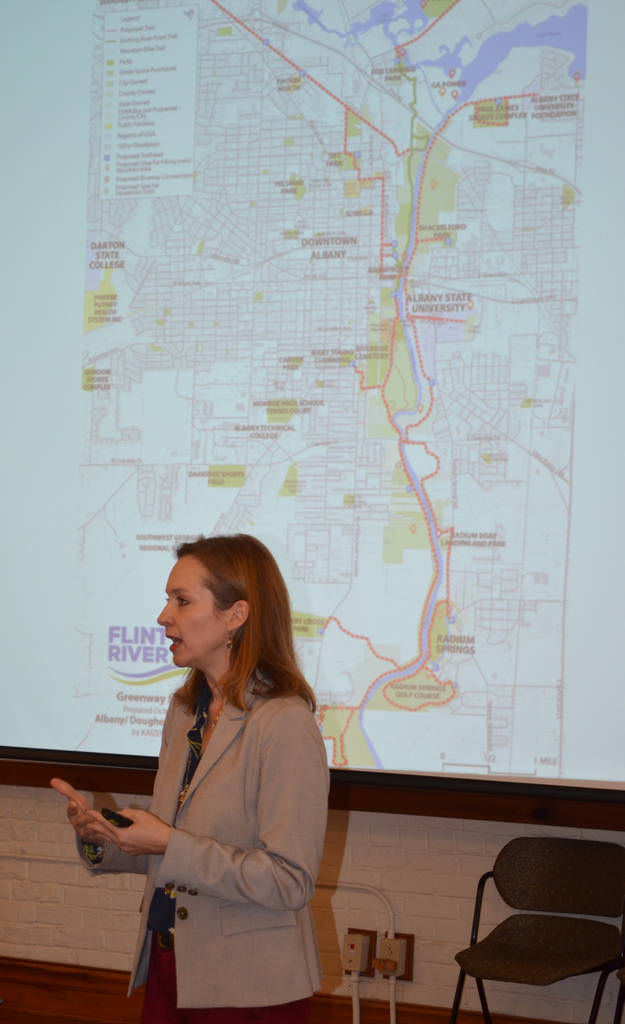
The Albany-Dougherty County plan is indeed impressive when all of its various components are considered. Not only does most of the trail system tie in to the Flint, the overall system connects to a number of vital outdoors and recreation facilities from the northern county line to its southern tip.
Areas that would be touched by the fully-implemented Flint River Trails system include Chehaw park, Cox Landing Park, the Paul Eames Sports Complex, Tift Park, Phoebe Putney Memorial Hospital, Shackelford Park, Riverfront Park, ASU, Mary Young Cummings Park, Radium Boat Landing and Park, Radium Springs, the former Radium Golf Course Walking Trails, the former Boy Scout property and Robert Cross Park.
That north-to-south portion of the trail system also includes planned equestrian, mountain bike and waterway elements that add to its potential for drawing visitors to the community.
“The reason I’m so excited about this project is the way it links our community together,” Dougherty County Commissioner Clinton Johnson said. “It takes away the inherent fears we seem to have about race, class, socio-economics. Good health is a basic quality-of-life issue for everyone.
“The trail system also answers that old ‘there’s-nothing-to-do-here’ complaint and provides links that have not existed in our community before. For instance, I understand that for a long period of time, the Radium Springs area was unavailable to African Americans. Now, there is a link to that area from anywhere in the county, and a similar link to northwest Albany.”
Meanwhile, the Albany-to-Sasser portion of the trail system links northwest Albany, southern Lee County and eastern Terrell County to Albany’s downtown and to all of the stop-off points along the trail system.
“I can tell you, as soon as I heard that the city of Albany had purchased that railbed property all the way to Sasser, I was thrilled,” Lee County Commissioner Rick Muggridge said. “I think this has the potential to be so important to the livelihood and to the quality of life of all Southwest Georgia. And it doesn’t stop with quality of life, because economic development goes hand-in-hand with that concept.
“We in Lee County immediately asked (Albany officials), how can we help? With the help of our state representative (Ed Rynders), we applied for and was awarded a $100,000 DNR grant. Our plan is on hold right now (awaiting action by the city of Albany), but we plan to build trail heads and restroom facilities along the trail.”
When the city of Albany made construction of a 12-foot-wide asphalt trail part of its purchase agreement with South Georgia Rails to Trails Inc. (along with $150,000), an agreement that then-interim City Manager Tom Berry said would “pay for itself” with increased utilities revenue, Lee felt the time was ride to talk about countywide trail connectivity.
He called for a meeting with the county’s Greenway Committee, which had been instrumental in guiding the county’s purchase of land on both sides of the Flint. From that meeting, Forgey was instructed to put out an RFP for a trail master plan. Of the 12 proposals submitted, the county chose Kaizen Collaborative of Atlanta to do the work. That group had worked on such nearby trail systems as The Thread in LaGrange and the Dragonfly in Columbus.
“There had been talk about a trail system in the county for years, but it’s become clear over the last couple of years that the interest has really taken off,” Forgey said. “I knew how vital this could be; it’s something that can change Albany and Dougherty County for the better in so many ways. And when you add it to the momentum that’s growing with the ongoing redevelopment of downtown, it becomes phenomenal.
“I often ride by Moultrie’s trails, and I see people of all shapes, sizes, colors getting out and using it. You basically can find an activity that just costs you the shoes on your feet or you can purchase a kayak or canoe or just get on your bicycle and ride for miles.”
Kaizen owner Greta DeMayo said there’s no limit to the value of a well-designed and maintained trail system.
“In today’s real estate market, trails are being called the new beachfront property,” she writes in the Flint River Trails Master Plan. “People want to live close to trails as they provide many benefits such as increased mental and physical health, increased sociability, a way of transportation and an increase in economic activity.”
Indeed, Dougherty County Commission Gloria Gaines, who served as a planner for Atlanta’s MARTA system, called trail systems “foundational to modern cities.”
“Let’s face it, amenities (like a trail system) attract the population we sorely need: young people,” Gaines said. “We’re educating and training our best and brightest, and they’re going away to other cities. With a trail system and other improvements in our community that are being discussed, we have the opportunity to provide our young people — and our senior citizens — the whole package, the kinds of things that make them want to be a part of a community.”
While the County Commission has taken the lead in financing and promoting the unified trail system in Albany and Dougherty County, City Manager Sharon Subadan said the plan is definitely on the city’s radar, especially as the trail system relates to downtown development.
“Our agreement in 2015 gave us five years to build the Albany-to-Sasser rail trail,” Subadan said. “I see it as a huge connectivity element that will bring people from the northwest portion of the city and county — as well as people from Terrell and Lee counties — to our downtown. This is such a quality-of-life piece for our overall city improvement plan.
“My plan is to bring the trail plan to the board after we finish the (FY 2018) budget process and start the implementation of the planning phase. We’ve utilized the property to run utilities infrastructure 60 to 70 percent of the way to Sasser (primarily gas line, although some fiber optics have been installed in Lee County). We’re certainly not averse to selling utilities to new customers. That will allow us to pay for the rail trail.”
With the adoption of the master plan by the county (the city is expected to soon follow), an implementation committee is being selected to assure momentum continues. Finding funding is a vital next step, and Lee says trail proponents are looking at ways to bring in necessary dollars.
“This is one of those opportunities that doesn’t come along very often,” the attorney said. “If we can keep the momentum going and develop this multi-use trail, it’s going to help turn us into a more progressive community. If we stay in the ballgame, the benefits of this trail system can literally change the face of our community and assure we remain the true hub of Southwest Georgia.”
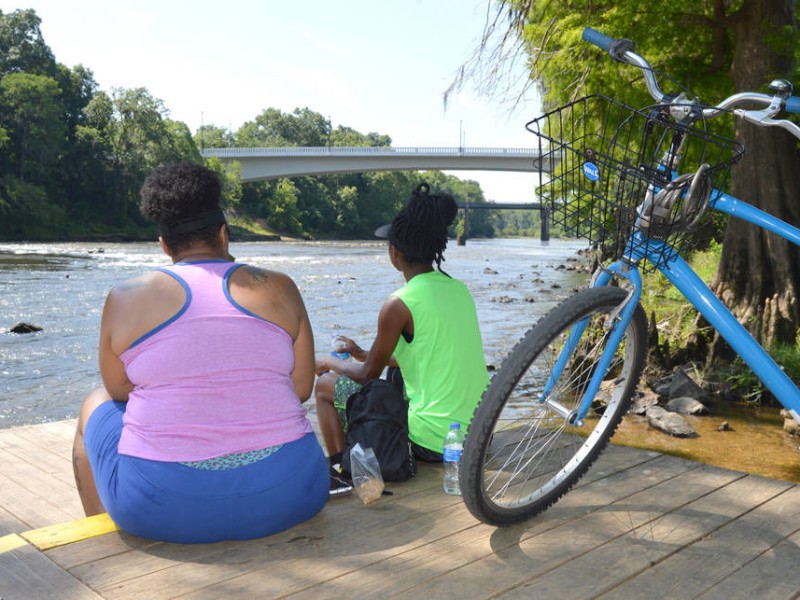
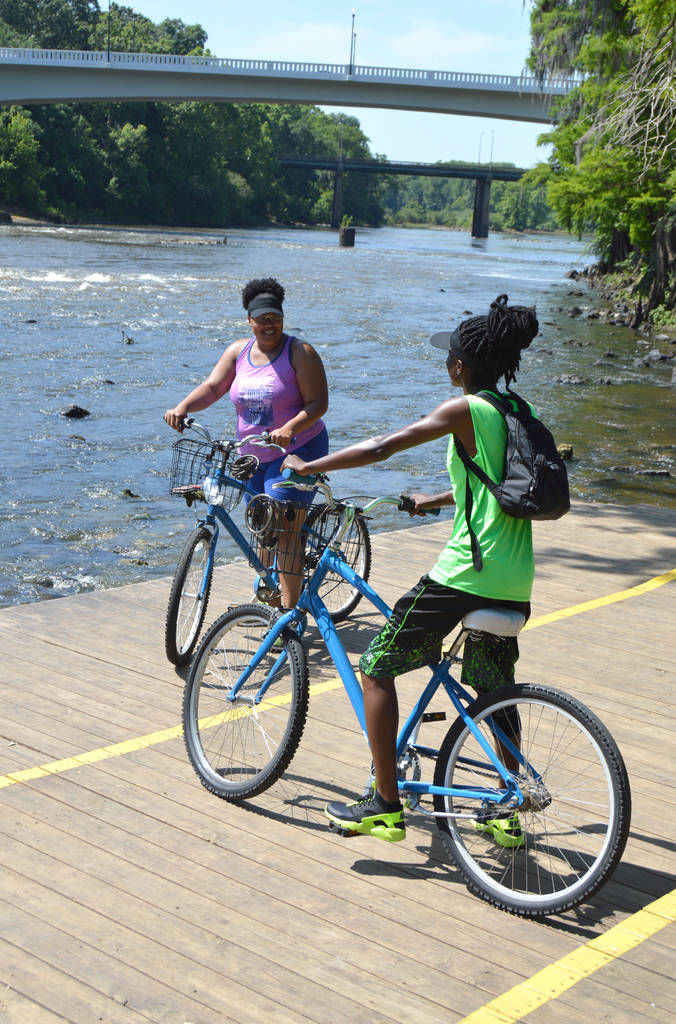
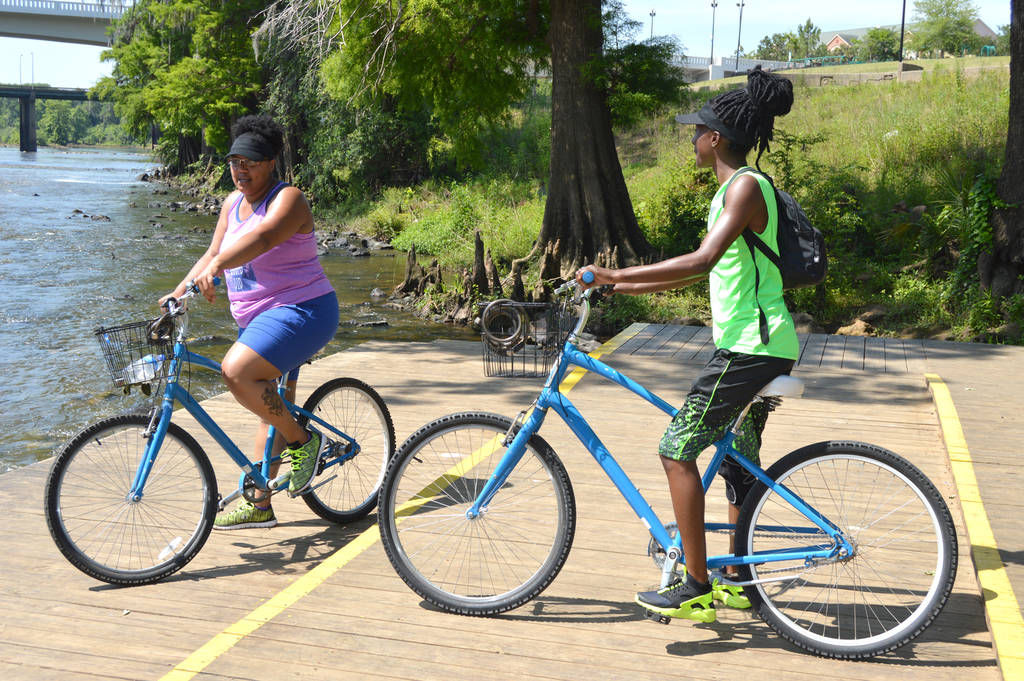
That’s fine for Albany State students Ikeyiah Jennings and Takia Rice, who were riding bikes along the Riverwalk portion of the trail system Thursday.
“We love coming here,” Rice, a senior English major, said. “It would be perfect if we could get here from campus without having to cross through the traffic (on Oglethorpe).”
Added Jennings, a sophomore criminal justice major, “We love this part of the city and would love to see it include the Albany State campus. We both live in South Carolina but are staying here through the summer. This (trail) gives us something we enjoy doing.”
Author

Related Articles
Albany, Dougherty County looking at data center regulations
“Data centers are going to come to Georgia. Data centers are already in Georgia. Property owners have a right to sell their property. It is the responsibility of local government to zone and protect the community you are in.”
Congress weighs packaging bill with implications for Albany manufacturers
A congressional hearing this week on proposed national packaging-labeling standards could have implications for several of Southwest Georgia’s largest manufacturers, many of which produce or package products shipped across state lines.

Dougherty County Sheriff’s Office, GBI investigate inmate death
“The sheriff’s office will conduct an administrative investigation to determine if the staff response was appropriate. We have requested that the GBI conduct an investigation.”
