
Muralists bring urban art to Albany museum
Exhibit to feature work of JM Rizzi, Tony Sjoman
By Carlton Fletcher
ALBANY — While the idea was bold and exciting, what Dallas Contemporary Art Museum Director Peter Doroshenko called “almost breaking traditional museum rules,” it was daunting as well.
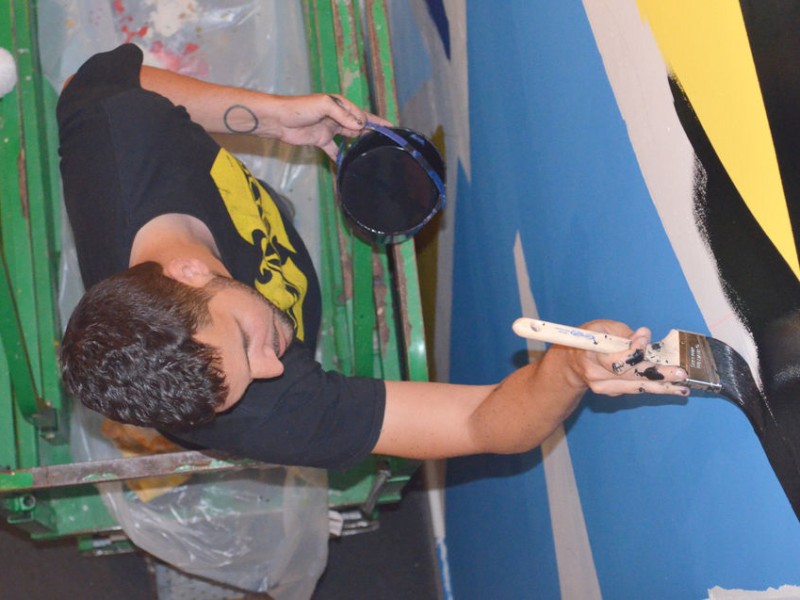
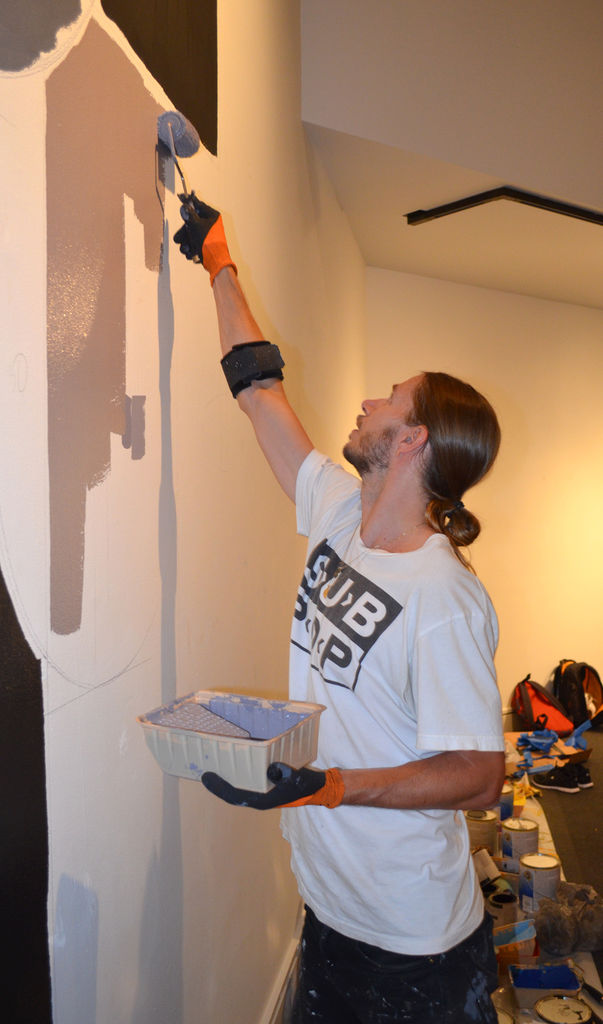
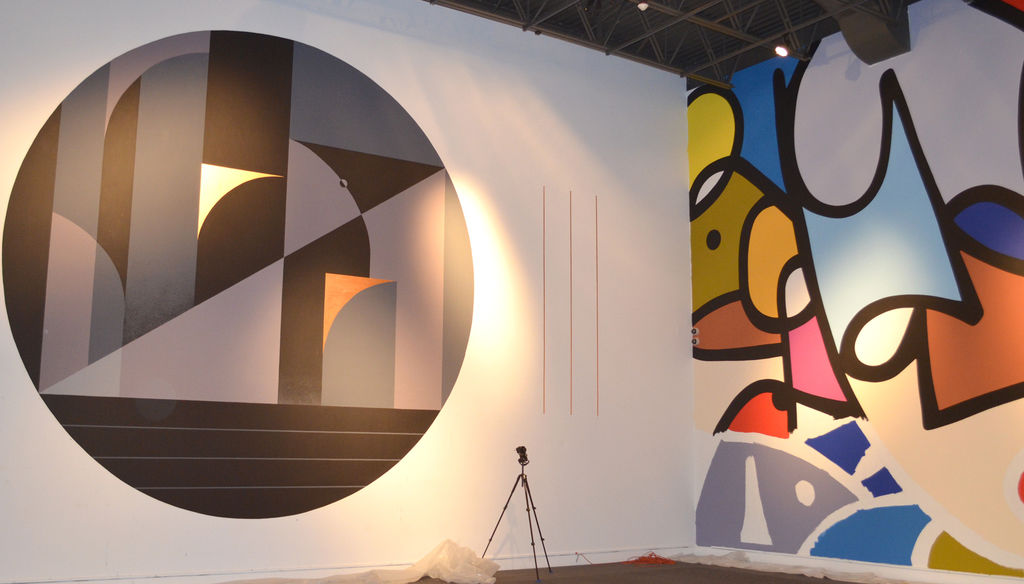
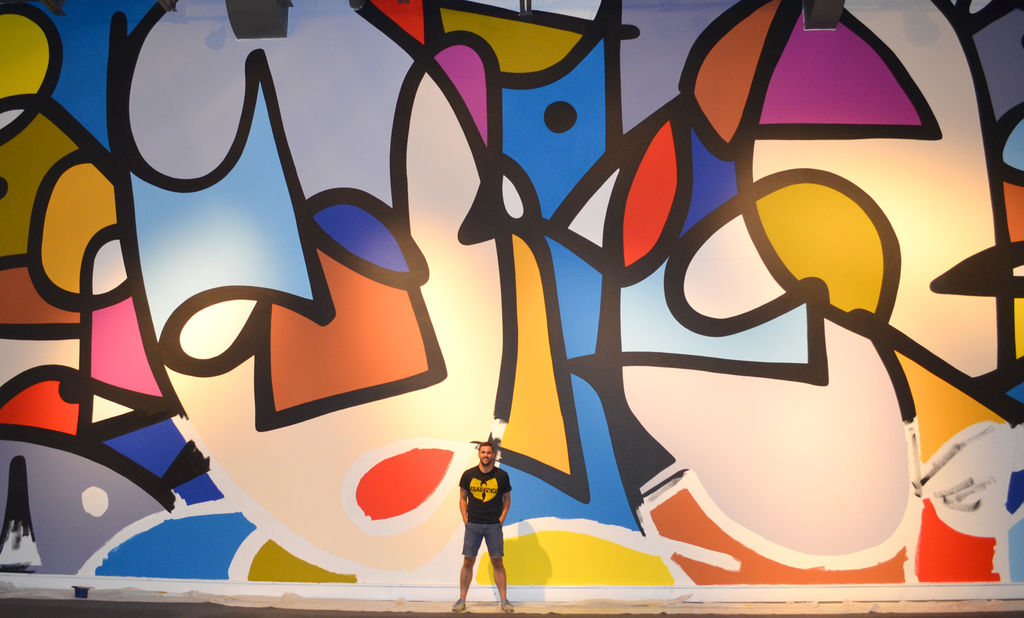
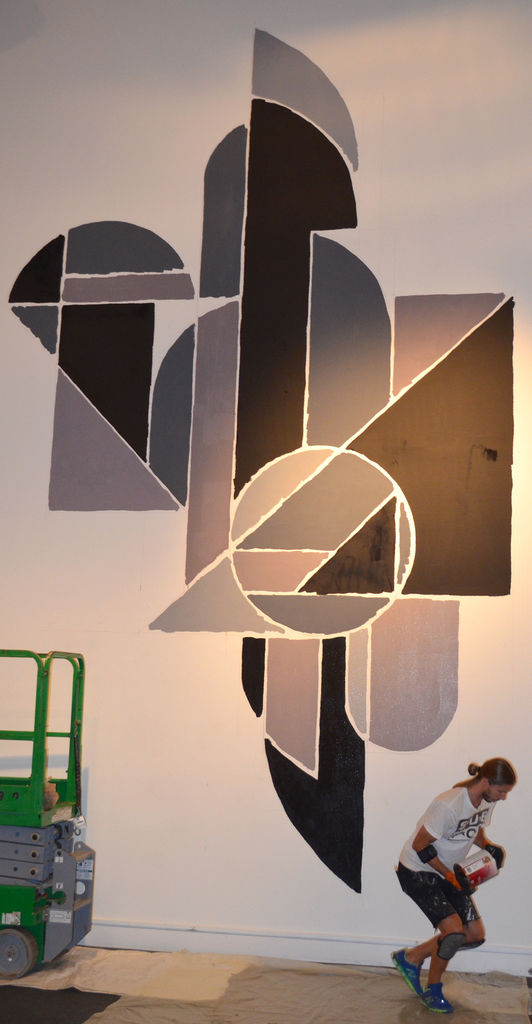
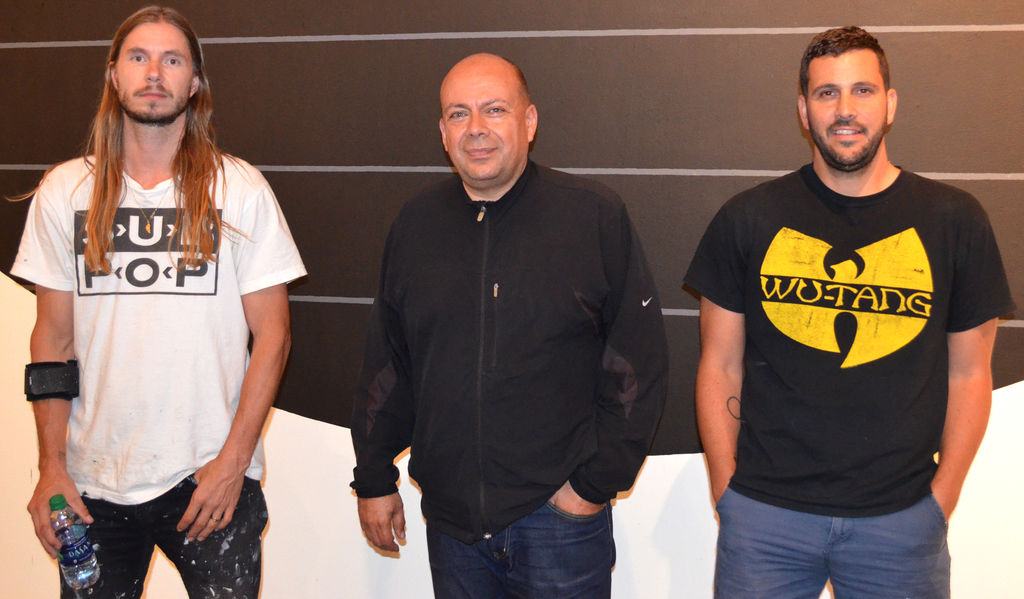
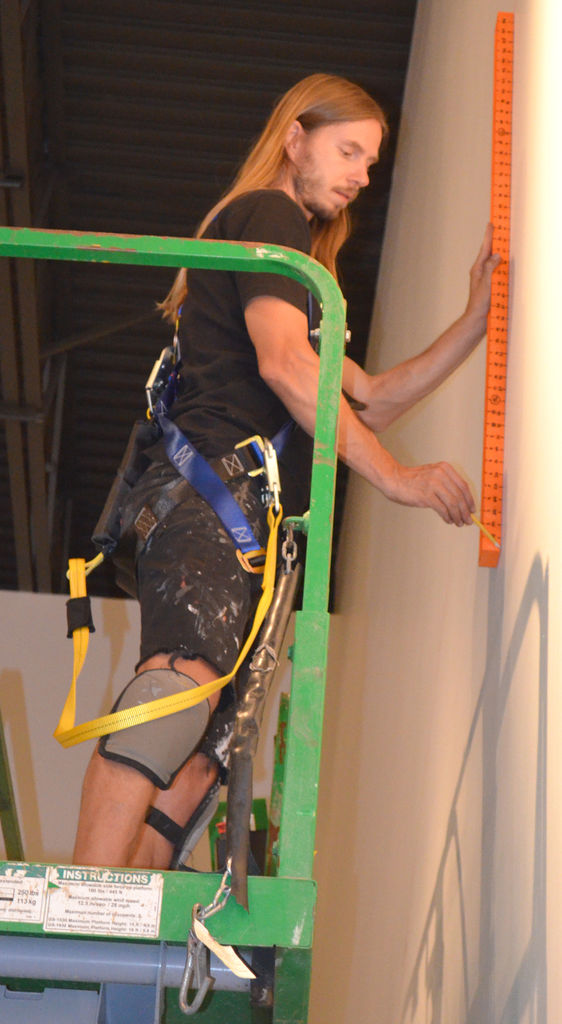
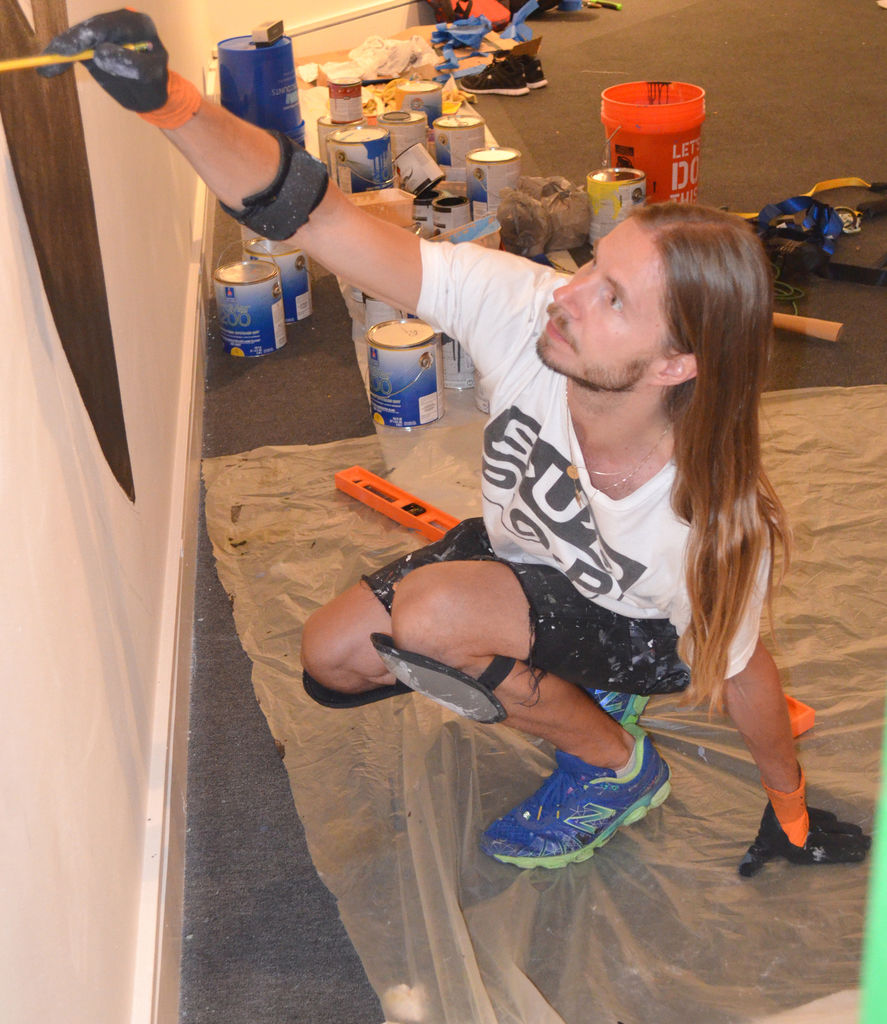
Muralists JM Rizzi of Dallas, by way of New York, and Tony “Rubin415” Sjoman of New York, by way of Gothenburg, Sweden, were commissioned to create unique works on the walls of the Haley Gallery at the Albany Museum of Art in a matter of a couple of days.
It’s when the artists saw the size of their canvass that they realized they had their work cut out for them.
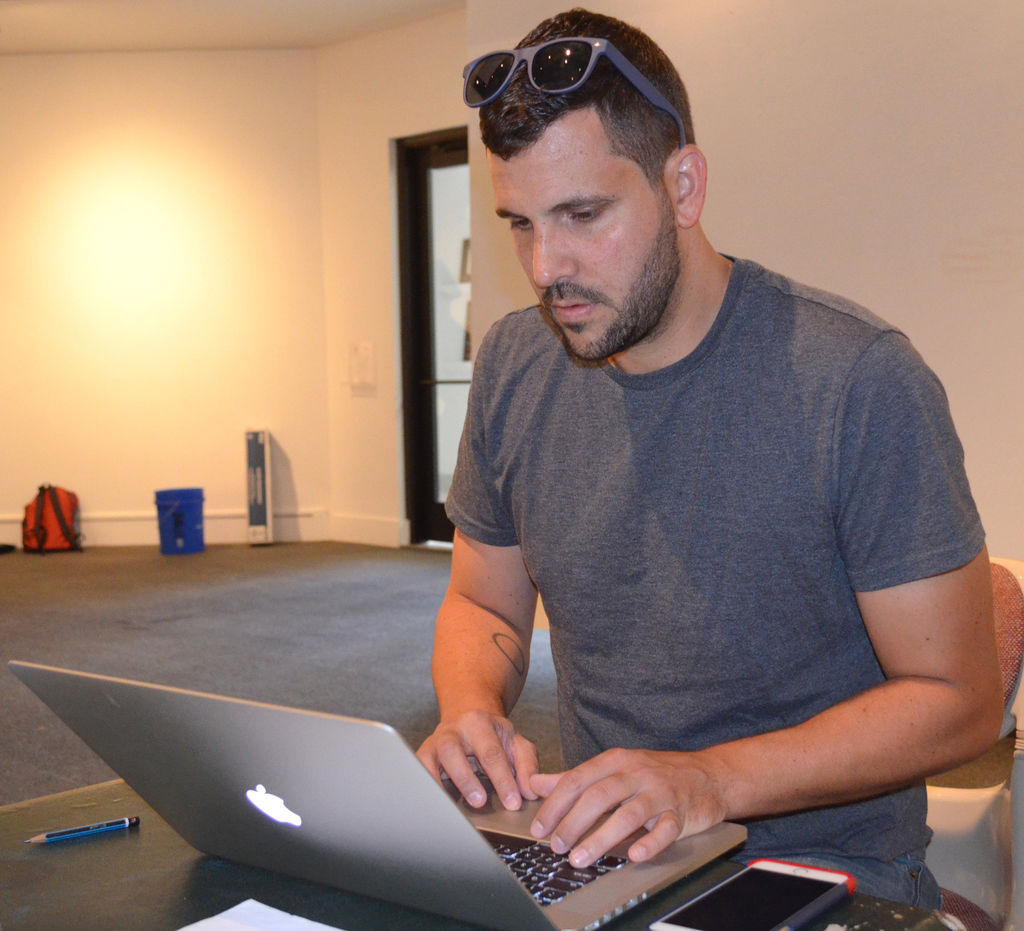
“I came in this morning (Monday) without a preconceived idea,” Rizzi, 41, said. “I wanted to look at the space and see what I was compelled to do. When I saw the room and the size of the walls … I knew it was going to be a challenge.”
Adds Sjoman: “As a graffiti artist, I generally use spray paint. But aerosol cans are toxic inside, so I’ll be using latex paint with brushes and rollers. That’s a challenge.”
The artists, working with what AMA Executive Director Paula Williams called “amazing energy,” had transformed the 25 foot-by-49 foot and 23 foot-by-46-foot Haley Gallery’s blank walls into spellbinding but not quite complete works by Wednesday afternoon, preparing for Thursday’s Collectors Circle Dinner and preview of Rizzi’s and Sjoman’s “Motion Forward: Street Style” exhibit. The exhibit will open to the public with a special 11 a.m.-2 p.m. showing Saturday and remain at the museum through Oct. 29.
The unique exhibit grew from a New York meeting Williams had with Doroshenko, the former curator at the Albany museum who has worked at museums in Kiev, Ukraine — his parents’ homeland — Ghent, Belgium, Milwaukee, Houston and Syracuse, N.Y. He’d had huge success with a similar guerrilla-style art show, “Spank the Monkey,” at the Baltic Centre for Contemporary Art in Gateshead, U.K. Central to the concept was finding the right artists to pull it off.
“James (Rizzi) had created a major mural on our building in Dallas, so I was very familiar with his work,” the Chicago-born museum director said. “I’d seen him a week before I met with Paula, again in New York, so he immediately came to mind as we considered an exhibit of street art. Our conversation went from bringing one artist to create a work to pairing him with somebody similar.
“James recommended Rubin, and after doing research on his work and having a conversation with him, I thought the choice was perfect.”
Williams said that as the germ of an idea of bringing urban street art to the Albany Museum of Art grew, her enthusiasm for the project increased proportionately.
“I’d known Peter for years, and we’ve always talked about projects we could do together,” the AMA director said. “We talked about a couple of ideas in New York, and this one took off. The question was whether we’d be able to pull it off in such a short period of time. Quite frankly, I can’t believe this is happening. We didn’t meet until February of this year.
“I think it’s important for all of our patrons to experience new things in the art world. This urban street art has evolved from an underground culture to a legitimate form of art. I think it will appeal to a younger audience, which is the future of our museum, but I also hope all of our members will be open to the concept.”
Rizzi, 41, grew up in the thriving New York arts scene before moving to Dallas to be close to his now 8-year-old daughter. He’s melded his love of graffiti and the works of abstract impressionists into a style that incorporates both. Murals became a perfect outlet for his work.
“I was from a middle-class family, and although I started drawing when I was a small child — copying comic book art on a larger scale — I didn’t realize until my final year of high school that you could study art,” the artist said. “I’d become a part of the underground graffiti culture that sprang up in New York, but the work that I did was usually seen only by a select few people. This was pre-Internet.
“When I went to the School of Visual Arts in Manhattan, it clicked. I immediately found what I was looking for.”
Rizzi worked “any job I could find — a cigar shop clerk, waiter, construction work, anything to pay the bills” — before creating his niche as an artist. The move to Dallas brought about initial culture shock until he made a life-altering rationalization.
“It was like, ‘I’m out of New York, the world has passed me by,’” he says. “But then it dawned on me: I had space and time, the two things an artist needs. I went back to the things that inspire me, and found a way to bridge a gap between the worlds of graffiti and abstract impressionism.”
Rizzi has had exhibits in Dallas, California, New York, Hong Kong and across Europe.
Oddly enough, it was in New York that Sjoman was able to come to terms with his identity as a Swede whose roots were in Finland.
“My family was from Finland, but I grew up in Sweden,” the 40-year-old artist says. “The Swedes saw me as a Finn, and when I’d visit my grandmother, the Finns saw me as a Swede. I’d been drawn to New York for some time, and my wife and I visited often before we moved to the States 7 1/2 years ago.
“In New York, nobody cares where you’re from, and for maybe the first time in my life I was allowed to be who I am. Oddly enough, that freedom allowed me to get closer to my roots.”
Sjoman started creating graffiti art as young as 9 years old, and by the age of 15 he was being commissioned to create artwork. But his working-class background did not allow him to see art as a viable vocation, so he focused on music. That passion still informs his art.
“Music is an important part of what I do,” he said. “I need to listen to a certain type of music, depending on the mood and the project. I’m inspired by early ’70s electronic music, artists like Kraftwerk, and also by Pink Floyd and sometimes Nina Simone.”
While in New York, Sjoman was drawn to the freedom afforded both underground and “legitimate” graffiti artists, and he soaked up information — and inspiration — from artists who helped turn it into a true art form.
“I was living a parallel life in Scandinavia,” he said. “My art was completely separate from the rest of my life. In New York, I was allowed to be proud of what I did.”
So Sjoman and his wife came to “an empty apartment in New York with four suitcases.”
“I decided to give my art everything I had,” he said.
By “deconstructing” the elements of his work, “removing everything that did not feel like me,” Sjoman has created his own style based on abstract and geometrical elements.
His art is featured throughout Scandinavia, in Thailand, and in New York and Miami. Sjoman recently completed his first art book: “Rubin: New York/Scandinavia.” He held a New York exhibition in conjunction with the release of the book and has another show planned for Venice, Calif., in September.
In addition to the “Motion Forward: Street Style” exhibit featuring Rizzi’s and Sjoman’s works, the Albany Museum of Art will also display the unique “The Art and Sole of a Sneakerhead” exhibit in the East and Hodges Gallery through Sept. 25. The exhibit features an array of sneakers collected by Marvin Laster and Herm Tsoi.
AMA is open Tuesday-Saturday, 10 a.m.-5 p.m. Admission is free.


Author

Related Articles

Brie’s Gift offers a helping hand for families affected by leukemia
“I think that would be beautiful. Brie loved her school, she loved her city. I think that would be wonderful.”
Who decides elections in Terrell County? Data show older voters dominate turnout as turnout declines
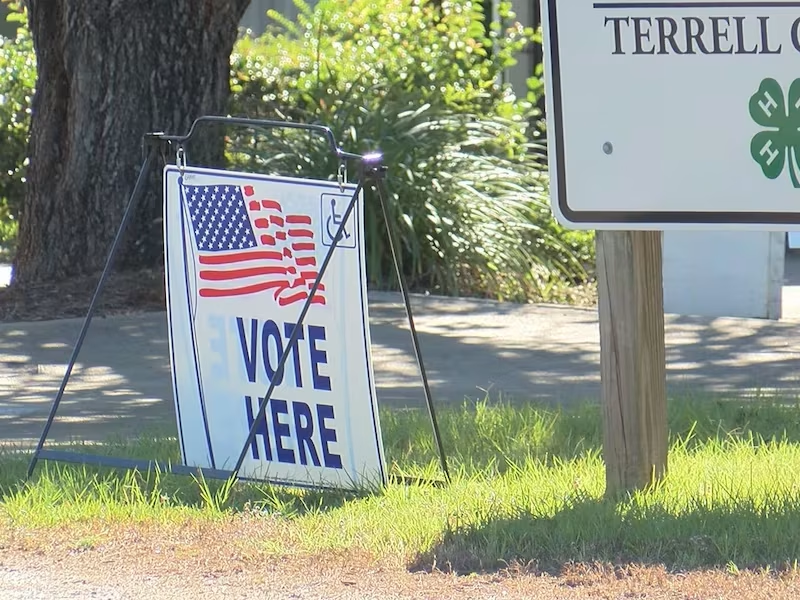
According to the Georgia Secretary of State, 1,731 of Terrell County’s 6,048 active registered voters cast ballots in the May primary, a turnout rate of 28.6%. Four weeks later, only 922 voters participated in the June 16 primary runoff, reducing turnout to 15.2%.
From Ledo to Coston, Lee County’s summer road projects are underway
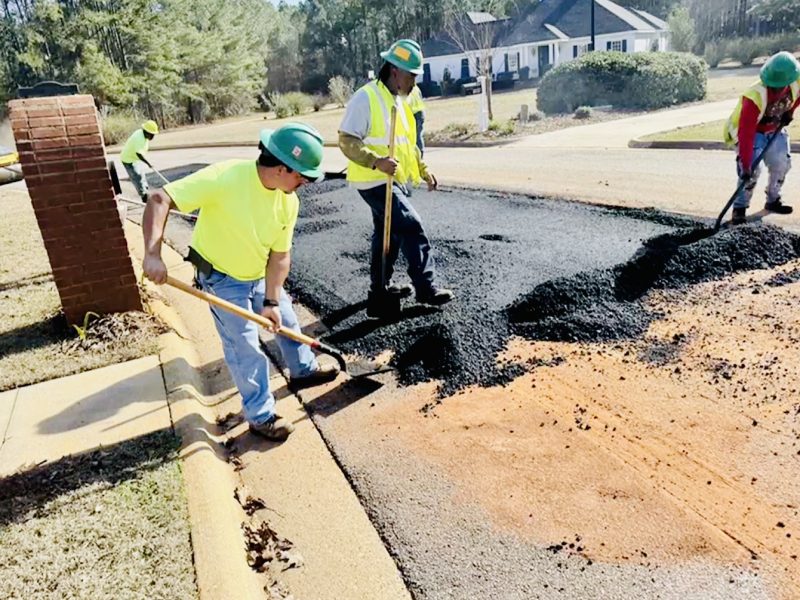
Updates provided during recent meetings of the Lee County Board of Commissioners show projects are underway or scheduled to begin on several county roads, while additional transportation improvements funded through the Local Maintenance and Improvement Grant (LMIG) program and Transportation Special Purpose Local Option Sales Tax (T-SPLOST) are expected to begin shortly after the July Fourth holiday.
