
OUTLOOK: Albany officials focus on unseen part of the city
OUTLOOK: City officials’ plans for 2016 center on infrastructure improvements
By Carlton Fletcher
ALBANY — For city officials looking to make 2016 a memorable year, the process starts and ends with one word: infrastructure.
A large portion of the city’s inner workings — what City Manager Sharon Subadan calls “the part of the city no one sees” — is aging and in dire need of what everyone agrees will be costly upgrades. Since Albany and Dougherty County voters will decide this year whether to continue the 1 percent SPLOST sales tax that has financed tens of millions of dollars in improvements, it’s only fitting that such issues as sewer lines, street resurfacing, alley paving, sidewalk repairs and the like have suddenly become the hot topic of conversation among decision makers.
“We don’t have the luxury of putting this off any longer,” Mayor Dorothy Hubbard said. “We’ve got sewer lines that are more than 100 years old, potholes throughout the city, and many of our streets and sidewalks are in rough shape. As we look at the latest SPLOST, we have to focus on infrastructure. Our citizens are counting on us to make the needed repairs and upgrades.”
Hubbard, Subadan and the Albany City Commission have vowed to aggressively confront the infrastructure issues facing the city, coming up with a plan of attack that they say will start before the SPLOST vote is even taken.
“This process is ongoing, there is no set start date for infrastructure improvements,” Subadan said. “I will be bringing items to the mayor and commission for action throughout the year.”
With improvements on everyone’s mind, the next hot item of consideration is paying for them. SPLOST VII, if it is approved, will be the primary source, but Hubbard said actions taken by the commission — particularly with the city’s Utility Board — could play a large role as well.
“We’ve taken action that will allow the Utility Board to expand its services outside the city and county limits,” the mayor said. “We’ve already got projects going on that can have a major impact on our budget, and there are others we’re discussing. I admit I was not even in favor of merging our utilities authority with the city initially, but forward thinking has put us in position to increase revenues in the city.
“I also believe the unification of the city/county trail system is going to bring a lot more people into our community, people who will stay here and spend their money here. We have the kinds of projects in place — including the downtown renovations that have already brought two huge tenants (a microbrewery and a multipurpose residential project) — that have us on the verge of significant positive growth in the city.”
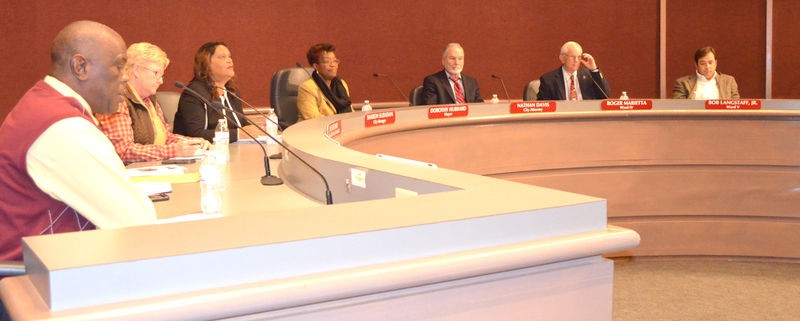
With the city already in the midst of making many of the changes Hubbard and Subadan spoke of, members of the City Commission talked about some of their concerns going into the new year.
JON HOWARD, Ward I: “If we don’t get some kind of economic development here soon, it’s going to be devastating. We’ve got to push the EDC (Economic Development Commission) to bring jobs here; that’s the only way we’re going to keep our young people. And, of course, (lack of) employment is one of the key components of crime in our city. I think we’re going to have to start thinking — and reaching — outside this region, even to other countries like China, Japan, India, Canada.
“I’ll be honest with you, I’m catching hell from the constituents in East Albany because we can’t keep businesses over here. I’m concerned for this generation’s well-being, but I’m even more concerned about those young people who are walking the streets because they can’t find jobs. I’ve started to believe that the consolidation of Darton and Albany State University is actually going to have a positive impact on our economy, but we need some instant relief. My focus this year is going to be simple: jobs, jobs, jobs.”
BOBBY COLEMAN, Ward II: “I think we’ve put ourselves in a position where we have fences to mend. A lot of commissioners don’t like what took place with our police department (a restructuring that cost Deputy Chiefs Nathaniel Clark and Mark Scott their jobs). You just don’t take a man’s job and tell him it wasn’t because of his performance. The loss of these two experienced officers — both of whom had been chiefs — is little more than a political hit.
“I’ve put this behind me because we have to continue working together on behalf of our citizens. But I think one of the things we’re going to have to do this year is take a close look at the processes we have in place. We have to take a look at our charter, see if we need to make changes. I want to make it clear that I can accept people not seeing things the way I see them. My problem is when people go into their respective corners and let their egos take over. That’s what I have issues with.”
B.J. FLETCHER, Ward III: “When you look at our city, SPLOST, blighted properties and infrastructure concerns are very important issues going into 2016. But overriding all of them is our economy. One of the things I’d like for the commission to do is revisit the 50-50 split of hotel-motel taxes. We’re getting retail in our city but no new industry. In fact, I think our No. 1 industry now is tourism. I think we ought to look at giving the Convention and Visitors Bureau more of the hotel-motel taxes to promote tourism.
“I believe our CVB is already doing a good job for the city, but how much better could they do if we increased the dollars that they’re working with? All the box stores that come in here improve our property tax base, but those stores aren’t going to support local businesses. In fact, they make it harder on local mom-and-pop stores who don’t have the luxury of writing off losses like national chains. I think we need to help agencies like the CVB better tell our story.”
ROGER MARIETTA, Ward IV: “One of the things I think we have to pay more attention to is the decrease in activity at the Marine base now that we’re not actively involved in military operations. We’ve got to take into account how that will impact jobs in the region, and we’ve got to find jobs to replace ones that might be lost. Getting the brewery downtown is exciting, and we’re hoping to see progress with the group planning to bring manufactured housing jobs here.
“We’ve got some good things going on in the city, and it’s important that we take advantage of (expected) SPLOST funds to make the infrastructure improvements we’ve talked about. It is worth looking into reworking the agreement with the CVB to get them more funding, and I think we’ve got to take advantage of low-hanging fruit like having the (Flint) river running through our community. I also believe the merger of Albany State and Darton is going to give us opportunities to tap into funds that will make the new university an even bigger economic engine in the community.”
BOB LANGSTAFF, Ward V: “I believe Sharon (Subadan) has primed the pump already for a renewed focus on infrastructure, and I believe SPLOST as well as the state mechanism in place for additional transportation funding will allow us to make a number of needed improvements throughout the community. We have to prioritize these needs, though, and start addressing them while the funding is available. There are always a lot of hands out asking for money when it’s available, so we have to be smart with allocations.
“Sharon is not one to let red tape get in the way of stuff getting done, and I think we as a commission must have the same mindset. When you have projects like the so-called multimodal (transportation) hub that has sat for years and years because of political differences, it becomes harder to move things forward. That’s why I think we need to take an aggressive approach to addressing things like street resurfacing and other infrastructure improvements.”
TOMMIE POSTELL, Ward VI: “The infrastructure improvements like providing better roads for our citizens is one of the key issues we need to address. Things like potholes not only impact our quality of life, they make the streets unsafe for our citizens. When you address infrastructure needs, you’re maintaining the city’s equilibrium, you’re doing the things that have to be done to improve the city.
“We also have to start thinking about our youth, the next generation that’s coming up. We’ve got to provide opportunities for that group by working to bring jobs into the community. That also means we have to be careful what kind of projects we finance with our taxpayer funds. A lot of people are looking back to the way things have been done in the past, but we can’t afford to do that. We have to look forward. We have to put a plan in place that allows us to address the issues that are most important to the people of Albany. It’s our job to take care of this city.”
Author
Related Articles
Congress weighs packaging bill with implications for Albany manufacturers
A congressional hearing this week on proposed national packaging-labeling standards could have implications for several of Southwest Georgia’s largest manufacturers, many of which produce or package products shipped across state lines.

Dougherty County Sheriff’s Office, GBI investigate inmate death
“The sheriff’s office will conduct an administrative investigation to determine if the staff response was appropriate. We have requested that the GBI conduct an investigation.”
Dougherty Jail graduates first class of female GED recipients
“It was an escape. I can say this has been challenging. I want to express my gratitude for being able to attend this program.”
