
Powerful 2017 Atlantic hurricane season comes to a quiet close
Three of the six major hurricanes hit the U.S. and its territories
From Staff Reports
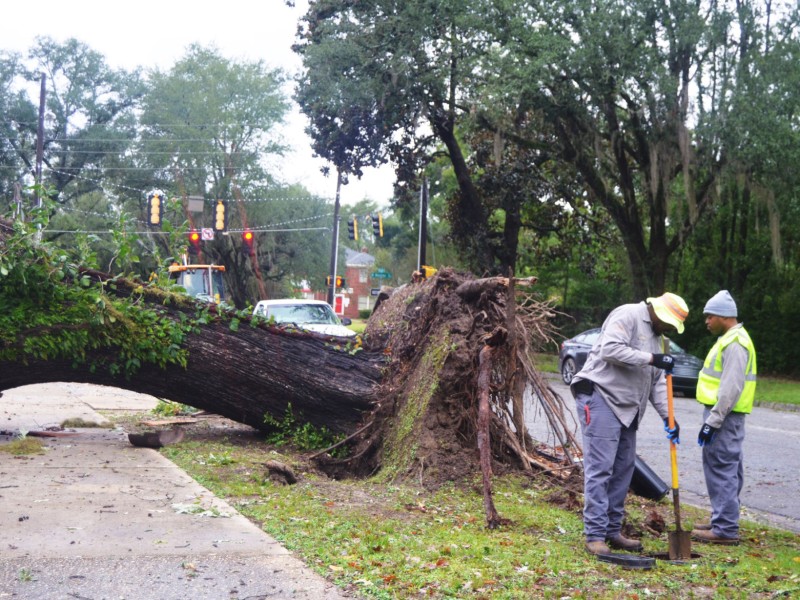
ALBANY — The Atlantic hurricane season ended quietly Thursday, but the season itself was anything but that.
During the season, which started June 1, there were 17 named storms, with 10 developing into hurricanes, including six major cyclones (category 3 wind speeds of 111-129 mph or greater). For the first time in a dozen years, the continental United States was hit by a major hurricane when two — Harvey and Irma — landed.
The National Oceanic and Atmospheric Administration had predicted an active storm season and the prediction was realized.
“This was a hurricane season that wouldn’t quit,” retired Navy Rear Adm. Timothy Gallaudet, acting NOAA administrator, said. “The season started early with a storm in April and the peak of the season featured an onslaught of 10 successive hurricanes.
“NOAA forecasters rose to this challenge to keep emergency officials and the public aware of anticipated hazards.”
Based on NOAA’s Accumulated Cyclone Energy index, a system that measures intensity and duration of storms during a season, 2017 was the seventh most-active hurricane season since 1851 and had the most activity since 2005.
“Throughout this devastating hurricane season, NOAA provided vital forecasts and data that helped save many lives,” U.S. Secretary of Commerce Wilbur Ross said. “I commend the scientists and forecasters who worked long hours tracking every storm and guiding federal and local officials’ efforts to prepare and respond.”
When NOAA updated its forecast in mid-August, just before the period that is traditionally the most active of a season, it upped its May prediction numbers. With six named storms already formed by that point NOAA forecasters increased the range of expected named storms to 14-19 from the 11-17 that had been expected in May.
And while its prediction of five-nine hurricanes was static, the number of those hurricanes that were expected to be classified as major — category 3 or higher — rose from two-five from May’s two-four.
Three major hurricanes made landfall, with Harvey slamming Texas, Irma striking the Caribbean and Southeast, and Maria devastating the Caribbean and Puerto Rico. Harvey was the first major hurricane to hit the U.S. since Wilma struck Florida in October 2005.
Harvey, which devastated the Houston area in late August, generated nearly $200 billion in damages and killed more than 60 people. Irma, the strongest Atlantic storm since Wilma, caused nearly $67 billion in damages and was responsible for more than 130 deaths. Maria was the deadliest, with some estimates of more than 1,000 deaths, and caused more than $100 billion in damages.
Four other tropical storms also hit the U.S. this season — Cindy in Texas, Emily and Phillipe in Florida, and Nate in Mississippi.
NOAA said there were no known deaths this season from storm surges associated with any of the storms.
NOAA officials said aircraft flew more than 500 hours to support forecasting, research and emergency response. Unmanned aircraft and underwater drones probed Hurricane Maria’s eye-wall, soared at 60,000 feet over Hurricane Harvey and dove through the storm-churned waters of the tropical Atlantic and Caribbean to gather unique insights on the storms, they said.
Experimental forecast models run during the storms continued to push the frontiers of weather forecasting skill in storm track, intensity and rainfall amounts, NOAA officials said, adding that researchers were assessing how the data may improve future hurricane predictions.
Meanwhile, forecasters already are looking toward the 2018 Atlantic season, which starts June 1.
“In six short months, the next hurricane season will be upon us,” Gallaudet said. “This is a good time to review and strengthen your preparedness plans at home as we continue to build a Weather-Ready Nation.”
NOAA’s Climate Prediction Center will provide its initial seasonal outlook in May. The organization updates its predictions in mid-August.
Related Articles
From Ledo to Coston, Lee County’s summer road projects are underway
Updates provided during recent meetings of the Lee County Board of Commissioners show projects are underway or scheduled to begin on several county roads, while additional transportation improvements funded through the Local Maintenance and Improvement Grant (LMIG) program and Transportation Special Purpose Local Option Sales Tax (T-SPLOST) are expected to begin shortly after the July Fourth holiday.

PSC candidate Peter Hubbard makes case for election to full term
The reason why voters should pick me is I’m a rare breed in that I read everything that comes across my desk. I’m asking hard questions at the meetings. I want to get to the bottom of are data centers paying their fair share, are residential customers getting their fair share.

Dougherty Schools prepare for bell-to-bell student cell phone ban
As Georgia prepares to expand its statewide ban on personal electronic devices in public schools, Dougherty County School System leaders say they are working to balance compliance with the new law while giving individual schools flexibility in how they implement the policy.
