
Rising gas prices interrupted with slight downturn
Drop in oil prices leads to lower gas costs for national, state, metro Albany drivers
From Staff Reports
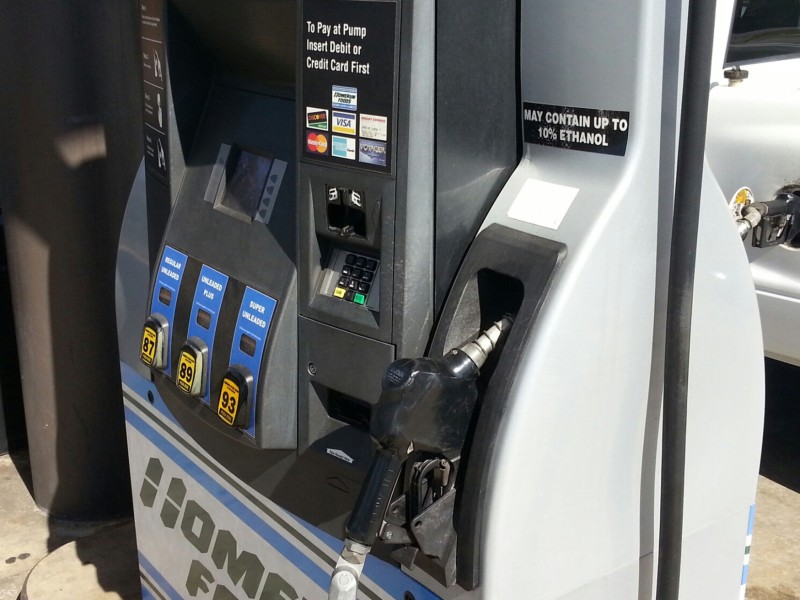
ALBANY — With the Memorial Day holiday now in drivers’ rearview mirror, the nation, state and metro Albany are starting to get a little relief — very little, it turns out — from the steadily rising gas prices that have driven the cost of a tank of gas to levels not seen in years.
Prices fell 1.9 cents a gallon during the week nationally, dropped 2.4 cents in Georgia and fell 2.7 cents in metro Albany, the first such decline in several weeks. Still, prices in Georgia were 57.8 cents a gallon higher Monday than they were on this date a year ago, and prices in Albany were 52.4 cents a gallon higher.
“Finally some moderation has hit tens of thousands of gas stations across the country, following the drop in oil prices in recent days,” said Patrick DeHaan, head of petroleum analysis for GasBuddy, one of two survey groups that monitor up-to-the-minute prices at gas stations across the state and country. “We may have dodged a bullet in avoiding the $3-per-gallon level for now, but not everything is rosy yet.
“While nearly 40 states saw average prices drop in the last week, 10 still saw small increases, so this is not an all-inclusive party by any means. Prices remain well above their year-ago level, costing the country $228 million more every day versus a year ago. Moving forward, all eyes remain on OPEC and their coming meeting to see if they’ll push oil prices higher, or if they’ll allow a respite for the summer driving season.”
The most expensive gas price averages in Georgia Monday were in Atlanta ($2.88), Athens ($2.86) and Gainesville ($2.86), according to surveyor AAA-The Auto Club Group, while the least expensive averages were in Augusta-Aiken ($2.67), Warner Robins ($2.68) and Albany ($2.69).
Crude oil prices hit seven-week lows last week as the dollar gained strength and U.S. oil rig count reached the highest level since March 2015. These factors compounded the downward pressure on crude — initiated when Russia and Saudi Arabia revealed interest in raising crude output. The price of oil sank to $65.81 on Friday, after reaching a four-year high of $72.24 per barrel just two weeks ago.
“Gas prices could drop 10-15 cents, based on recent oil price declines,” Mark Jenkins, a spokesman for AAA, said. “The discount will not happen overnight, because it usually takes a couple weeks for shifts like this to play out at the pump. However, any downward potential would be wiped out if futures prices suddenly bounce higher.”
The U.S. Department of Energy offered a number of gas-saving tips for drivers:
— Drive Sensibly: aggressive driving (speeding, rapid acceleration and braking) wastes gas. Gas mileage can be reduced 15-30 percent at highway speeds/10-40 percent in stop-and-go traffic, the equivalent of 27 cents to $1.08 per gallon.
— Observe the speed limit. Not only is it safer, it can help you save money. Gas mileage rapidly declines at speeds above 50 mph; every 5 mph you drive over 50 mph is like paying an additional 19 cents per gallon.
— Lose the weight: Using your trunk for storage can cost you by way of lower fuel economy. Remove unnecessary items from your vehicle. An extra 100 pounds in your vehicle reduces your miles per gallon by about 1 percent, like paying an additional 3 cents per gallon for every 100 pounds.
— Use cruise control: Cruise control on the highway helps you maintain a constant speed; conversely, constant throttling at high speeds consumes gasoline much faster.
— Avoid excess idling: Idling uses a quarter- to a half-gallon of fuel per hour. Turn off your engine when your vehicle is parked; it takes 10 seconds worth of fuel to restart your vehicle.
— Combine trips: Saves time and money. Fuel economy is better when your engine is warmed up and you make multiple stops.
— Inflate tires: Keeping your tires inflated to the proper pressure can improve your gas mileage up to 3 percent. It can mean the difference of a of couple cents per gallon. Find the recommended tire pressure on a sticker located on the driver’s side door jamb.
Related Articles

James Rubino installed in new role at Marine Corps Logistics Command in Albany
James L. Rubino recently assumed the role as executive deputy of Marine Corps Logistics Command in Albany. In his new role he will oversee integrated logistics support.

Rain depresses voter turnout in Dougherty County
“A lot of people don’t vote when it’s raining. People don’t do a lot of things when it’s raining.”
City of Albany faces shortfall for police, fire salaries
“We can’t tell staff to hire more police officers and then complain at what it costs.”
