
The vital does and don’ts required of duck hunters
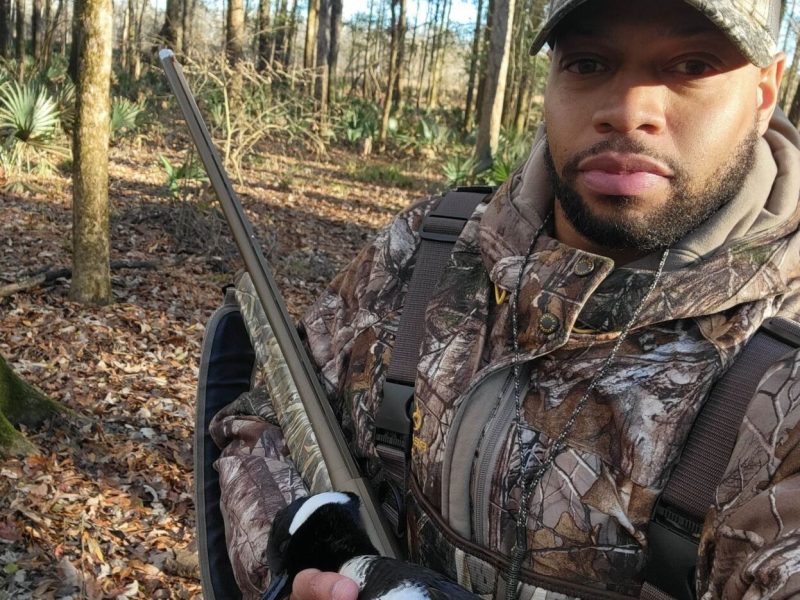
To become a successful duck hunter requires the waterfowl enthusiast acquire a unique combination of skills and knowledge beyond wing-shooting basics. Georgia duck hunters need to have a basic grasp of ornithology, mathematics, meteorology and the law.
Special Photo: Georgia DNRFile Photo: Georgia DNRBy Tom Seegmueller
[email protected]
READER ALERT: THIS WILL NOT BE ONE OF THE MOST ENTERTAINING ARTICLES YOU WILL EVER READ. HOWEVER, IT COULD BE ONE OF THE MOST IMPORTANT TO YOUR POCKETBOOK AND PERSONAL SAFETY.
ALBANY — Nov. 23 is a “red-letter day” for duck hunters in Georgia, as the 2024 duck season kicks off. The season runs until sunset on Dec. 1. Following a five-day break, the season resumes Dec. 7 and remains open until sunset on Jan. 26.
Youths, active military, and veterans can take advantage of two bonus days of early waterfowl hunting on Nov. 16-17. Young hunters taking advantage of these special dates must be 16 years of age or younger and accompanied by an adult of at least 18 years old. Only the young hunter may hunt.
To become a successful duck hunter requires the waterfowl enthusiast acquire a unique combination of skill and knowledge beyond wing-shooting basics. Not that being able to drop a bird on the wing with non-lead shot isn’t important. However, Georgia duck hunters need to have a basic grasp of ornithology, mathematics, meteorology and the law.
No other game species in the state is as heavily regulated as migratory birds, which actually are not only regulated by the state but also by the U.S. Fish and Wildlife Service. The Georgia Department of Natural Resources works within the federal USFWS regulations to maximize the waterfowl hunting opportunities for hunters in Georgia. This requires a bit of creativity on the part of DNR and is one reason the seasons might seem to be nonsensical.
In 2018, the USFWS gave states the option to end waterfowl season on Jan. 31. States are allowed to offer no more than 60 total days of hunting and are only allowed to split the season once. In accordance with hunters’ desires, DNR has traditionally had a nine-day season around Thanksgiving, which leaves 51 days to hunt and end the season on the last possible day. This means the opening day of the second split may fall on different days of the week each year versus a weekend date in order to allow hunters the full number of days the state can legally offer.
The first season in November will always be from the Saturday before Thanksgiving to the Sunday after Thanksgiving, lasting nine days. The opening and closing days of the week for the second split will vary each year.
Of all the skills required to be a successful duck hunter, two are critical to not only hunt legally but also to maximize harvest while hunting. The first requires that the duck hunter be able to rapidly identify the ducks flying in range by species and sex. This is definitely not a sport where you want to shoot ’em first and them sort ’em out in the pile. The other is the ability to count. Georgia hunters may have a daily bag limit of six ducks with no more than four being those classified as sea ducks.
This legal harvest of ducks is further restricted by species and the sex of the ducks. Hunters may only have the following subtotals, making up their daily bag limit:
· 1 black or mottled duck
· 2 canvasbacks
· 1 fulvous whistling duck
· 2 mallards (only 1 may be a hen)
· 1 pintail
· 2 redheads
· 1 scaup
· 3 wood ducks
Sea Duck Limits are:
· 3 eider (only 1 may be a hen)
· 3 long-tailed duck
· 3 scooter
This is obviously where your bird watching skills come into play. When you have five ducks down, it’s important to know exactly what you are attempting to take as your final duck of the day. If you’re looking for a bigger bag, identification skills are also important since a variety of migratory birds that look like ducks have their own limits, including mergansers (5) and coots (15), which do not count in the duck total. When the state’s goose season overlaps duck season, they also may be harvested accordingly.
Hunters are allowed a possession limit that is three times their daily bag limit. Further regulations related to possession state, “No person shall give, put or leave any migratory game birds at any place or in the custody of another person unless the birds are tagged by the hunter with the following information: The hunters signature, the hunters address, the total number of birds involved by species, and the dates the birds were killed. No person or business shall receive or have in custody any migratory game birds belonging to another person unless such birds are properly tagged.”
In addition to state regulations, the following federal rules apply to the taking, possession, shipping, transporting, and storing of migratory game birds. This is only a summary: Each hunter should also consult actual federal regulations, which may be found in Title 50, Code of Federal Regulations, Part 20 (www.gpo.gov). More restrictive regulations may apply when hunting on National Wildlife Refuges open to public hunting. Violation of state migratory bird regulations is also a violation of federal regulations, and dual charges may be made.
Duck hunters may use any shotgun 10-gauge or smaller, loaded with federally approved nontoxic shot of size “F” or smaller. F-shot is the largest shot not considered to be buckshot. No lead shot may be in possession while hunting waterfowl. Firearms must be limited to three shots, which may require the use of a one-piece filler “plug” that cannot be removed without disassembling the gun.
When hunting from a boat, regulations state that “it is not legal to hunt from or by means of any motorboat or sailboat unless the motor has been completely shut off and/or the sail furled, and its progress therefore has ceased. It is also illegal by driving, rallying, or chasing waterfowl with any motorized conveyance or any sailboat to put them in the range of the hunters.”
Many of the lakes in Georgia have special regulations. In southwest Georgia, Lake Walter F George requires “No hunting allowed on the portions of LWFG in Georgia within 600 feet of a dock, house, structure, bridge, road, boat ramp, marina, or open recreation area. Waterfowl hunting from land is prohibited outside of the specified ‘hunting areas.’ A corps permit is required to hunt waterfowl on all areas of the lake, except the Eufaula NWR.” Information on how to purchase a permit (in person or by mail only) is available at www.sam.usace.army.mil or by calling (229) 768-2516.
On Lake Blackshear and Lake Seminole, no hunting is allowed within 300 feet of a dock, house, structure, bridge, boat ramp, marina, or open recreation area.
All hunters born on or after Jan. 1, 1961, must successfully complete a hunter education course before purchasing a hunting license. Hunter education is not required if purchasing an apprentice license or short-term license, if a hunter is hunting on his or her own land or if he or she is hunting pen-raised game birds on a licensed shooting preserve.
To hunt waterfowl in Georgia, hunters need a variety of state and federal licenses and stamps, including a Georgia hunting license, a Georgia migratory bird license, and the federal duck stamp. WRD has made the purchase of these items easier by the creation of the Waterfowl Hunter Package at GoOutdoorsGeorgia.com, which includes all the licenses needed (and an attractive plastic license hard card and a camo hat). Those who want the old duck stamp can purchase one online or at some U.S. Post Offices.
Although the minimum equipment required to start duck hunting includes a legal shotgun and shells and a pair of waders, the sport can be addictive, leading to subsequent purchases of decoys, boats, retrievers, camo and calls.
Adding water to the equation by hunting from a watercraft or blind over water increases concerns related to safety. When hunting from a boat, it is always wise to be wearing a personal flotation device. Self-inflating devices may be worn without interfering with the ability to shoot. The consequences of an overturned boat or a fall overboard are amplified dramatically with the addition of heavy clothing, waders, dogs, and frigid water.
All other aspects of boating activity must be done in keeping with state and federal guidelines for licensing, operation and safety. When hunting from a blind or boat with others, be sure that safe zones of fire are established and adhered to.
Even when not in a boat, water can present a variety of safety concerns. Personal experience has proven that if you wear knee boots, you will need hip boots. If you wear hip boots you will need chest-waders. If you wear chest waders you will trip or step in a stump hole. When you are wet, and the temperatures are right for duck hunting, hypothermia can be a real danger.
For more information on waterfowl hunting, visit GeorgiaWildlife.com/migratory-bird-info.
Author

Related Articles

Dougherty County residents experience sticker shock with tax notices
Dougherty County property owners are reacting to an increase in property values that are the result of a comprehensive revaluation of all 37,000 properties in the county. Dougherty County officials say that the increase in property valuation does not necessarily mean a higher overall tax bill.

As assessments climb, DCSS signals sizable millage cut
As Dougherty County property owners react to sharply higher reassessed values, school officials say the Dougherty County School System expects to substantially reduce its property tax rate for the ninth consecutive year.

Police seek identity of man killed in early morning shooting Wednesday
Albany Police Department officers responded at 2:45 a.m. Wednesday to an incident at 216 E. Oghetlorpe in which two men were shot, one fatally. The case remains under investigation.
