
Long COVID patients ask Senate for more research
By Jennifer Shutt
Georgia Recorder
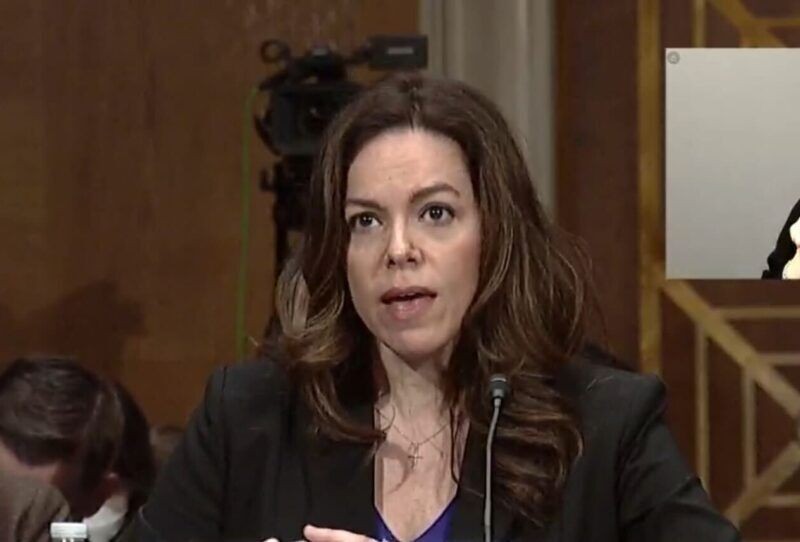
WASHINGTON — U.S. senators have pledged to press for more funding to research long COVID-19 during a hearing that highlighted patients suffering from the diagnosis as well as experts studying its impacts.
“Long COVID stripped away my daughter’s life as she knew it,” Nicole Heim, the mom of a long COVID patient in Winchester, Va., said. “She was a straight-A honor student, an active member of the school’s marching band and had an active friend group. Now she is isolated and struggles to do her schoolwork”
“Instead of looking forward to a high school graduation, my 16-year-old is working slowly on her GED from home,” Heim added.
The Health Education Labor and Pensions Committee broke up the hearing into two panels. The first featured three patients speaking about their struggles getting diagnosed, finding the right providers and then finding medications or treatments that can actually help them address their symptoms.
Rachel Beale, a long COVID patient who lives in Southampton County, Va., told senators the disease forced her to leave her career as a human resources director at a community college. The ongoing symptoms of extreme fatigue, chronic pain and neurological issues, among others, still hamper her ability to function normally or plan for family events, she testified.
“I’ve been sick for almost three years and it feels like there hasn’t been much progress with long COVID research,” Beale said. “I hope that Congress can help with that to move the research forward. But for now, I’m trying to make peace with my situation.”
Beale spoke about how her application for Social Security Disability Insurance has been denied twice, though because the agency isn’t required to tell her why, she doesn’t know if she’ll ever be able to access the program.
Virginia Democratic Sen. Tim Kaine, who has been diagnosed with long COVID, said there’s a unique set of problems with the disease that’s made it challenging for patients to get approved for SSDI.
But Kaine mentioned that a long COVID diagnosis is covered under the Americans with Disabilities Act as “a disabling condition that can require reasonable accommodations or SSDI determination.”
Minnesota Democratic Sen. Tina Smith criticized health insurance companies for not better providing for long COVID patients.
“I often feel that our insurance companies are designed to figure out how to deny care rather than provide care,” Smith said.
HELP Committee Chairman Bernie Sanders, an independent from Vermont, said in response to Smith’s comment that he planned to “bring major insurance companies” before the panel to explain when and how they provide benefits as opposed to denying to pay for care.
Kansas Republican Sen. Roger Marshall empathized with the witnesses, saying that a close family member has long COVID and has spent considerable time traveling for care.
Wisconsin Democratic Sen. Tammy Baldwin also raised concerns with how the NIH has spent the money Congress provided for long COVID.
“Congress has previously allocated $1.15 billion to fund NIH research on long COVID through a multipronged research network,” Baldwin said. “However, I know that NIH has received critical feedback regarding its approach to this research, including the fear that it may not deliver any meaningful treatments to people suffering from long COVID.”
Dr. Ziyad Al-Aly, a clinical epidemiologist at Washington University in St. Louis, said one solution could be to “more deeply understand why acute infections lead to chronic disease.”
That would require a “comprehensive approach to the onset of mechanisms of why viruses actually produce acute infection that leads to chronic disease” as well as understanding the epidemiology and other factors.
“This really requires an all-hands-on-deck situation and really a broad comprehensive approach, an interdisciplinary approach that should be solved in my view in the form of a new institute to tackle this issue,” Al-Aly said.
Charisse Madlock-Brown, an associate professor of Health Informatics in the College of Nursing at the University of Iowa, testified there is a “critical need for a moonshot initiative” similar to the cancer moonshot program.
“The scarcity of clinical trials focusing on long COVID’s underlying causes and treatments poses a barrier to progress,” Madlock-Brown said. “A call to actions by patients and researchers posits that the U.S. government leads this initiative with a significant annual investment like the Cancer Moonshot program to inspire global action against this widespread health challenge.”
A key priority for that program, she said, should be “conducting clinical trials for behavioral and experimental medicine treatments.”
Dr. Tiffany Walker, an assistant professor of internal medicine at Emory University School of Medicine in Atlanta, told senators that between 15% to 38% of people who contract COVID will end up with long COVID.
“To provide a stark comparison, this is commensurate to the rate of diabetes in our population,” Walker said.
Author

Related Articles

Albany Herald – July 18, 2026
Georgia Trust for Local News partners with… Adult leadership group spreads concept to… Lee County homeowners have until Aug. 1 to claim…

Classifieds – July 18, 2026
Classifieds; Legals;

Albany police make arrests in murder, robbery cases
Officials with the Albany Police Department have announced a number of arrests in cases that involved a homicide and a pair of thefts.
