
Looking Back October 4, 2009
Looking Back
October 4, 2009
It has been 80 years this month since the stock market crash sent Americans into a period of hardship as never seen before or since. Here is a look back at just some of the statistics, hardships and heartaches associated with the Great Depression.
By the numbers
* On October 24, 1929, “Black Thursday”, as it became known, a record-breaking crash on the New York Stock Exchange began market panic. Many investors lost vast sums of money when the value of stocks plummeted. Approximately 12.8 million shares were sold in one day, most at prices far below their values of only a few days earlier.
* Known as “Black Tuesday”, October 29 saw the value of the stock market continue its sharp decline. Approximately 16.4 million shares were sold that day.
* The loss on that infamous Tuesday was $14 billion, making the loss for the week $30 billion. This was ten times the federal budget.
* Following the crash, customers rushed to the banks to withdraw what money they had, sparking even greater disaster. From there, the economy continued its erosion into the greatest crisis in U.S. history, one that would continue until the beginning of World War II.
* The U.S. Gross Domestic Product was $103.6 billion in 1929. By 1933, it was $56.4 billion.
* The average rate of unemployment was 3.2 percent in 1929. By 1933, 25 percent of Americans were without jobs.
* The fertility rate (per 100,000 women ages 15-44) in 1929 was 89.3. That rate dropped to 75.8 by 1936.
* For the years leading up to the stock market crash, 1920-1928, the suicide rate per 100,000 people was 12.1. In 1929 alone, the rate was 18.1. In New York City, the suicides were so numerous that hotel clerks were heard to ask new guests if they needed a room for sleeping or jumping.
* From 1931-32, more than 5,000 banks suspended operations. The 25,568 banks operating in 1929 were reduced to 14,771 by 1933.
* Between 1930 and 1935, nearly 750,000 farms were lost through bankruptcy or sheriff sales.
* Thousands of schools were operating on reduced hours or were closed down entirely. Some three million children left school completely.
* It is estimated that 50 percent of all children did not have adequate food, clothing, shelter and medical care for the duration of at least a decade.
* By 1933, the average family income had tumbled 40 percent. As many upper class families suffered little loss of income, those suffering the most lost more than that figure implies.
* In New York city in 1931, there were 20 confirmed and recorded cases of death from hunger. In 1934, there were 110 deaths. There were so many accounts of people starving in the city that the West African nation of Cameroon sent $3.77 in relief.
* By 1933, over one million people were homeless and almost one-fourth of those rode the rails in search of work or simply drifting. Of the rail population, 40 percent were youths.
* In a poll taken in 1940, it was found that 1.5 million married women had been abandoned by their husbands during the Depression.
* Money spent by the American people on food in 1929 was $19.5 billion. In 1933, it was $11.5 billion.
* In cities like Philadelphia, public and private charities distributed $1 million each month to the poor. The poor were so great in number that the money provided only about $1.50 per week per family.
* In 1932, the government called for a temporary stop to home foreclosures. For many, it was too late.
This ‘n That
* Zippers became widely used during the Depression because buttons were too expensive.
* The circulation of money was low and the need for coins so diminished that the U.S. Mint did not mint any nickels in 1932 or 1933.
* Herbert Hoover was the president when the Depression started. In March of 1930, he stated that the U.S. had “passed the worst” and that the economy would sort itself out. Hoover also stated that “Nobody is actually starving.”
* People who lost their homes often lived in what were called “Hoovervilles” or shanty towns. There was also “Hoover Stew” (soup kitchen food), “Hoover Blankets” (newspapersused for warmth), “Hoover Hogs” (rabbits used for food) and “Hoover Wagons” (broken cars pulled by mules).
* In the Pennsylvania coal fields, three or four families often crowded together in one-room shacks and lived on wild weeds. In Arkansas, families were found inhabiting caves. In California, whole families lived in sewer pipes.
* The board game Monopoly, which first became available in 1935, was immensely popular. It allowed folks to become rich-at least in their imaginations.
* Millions of Americans still attended movies during the Great Depression although that industry also suffered. One of the most popular films was King Kong (1933). For about 15 cents, the real world could be forgotten…however briefly.
* Many people tried selling apples to avoid the disgrace of panhandling. In NYC alone there were an estimated 6,000 apple sellers.
* Some of the famous men that “rode the rails” are William Douglas, U.S Supreme Court Justice from 1939-1975, novelist Louis L’Amour, and folk singer Woody Guthrie.
* Jigsaw puzzles became very popular. They were inexpensive and offered hours of distraction for the family.
* Joseph Kennedy amassed an enormous wealth through real estate during the Great Depression. Much of that money was later used to finance the presidential campaign of his son, John F. Kennedy.
* Democrat Franklin Delano Roosevelt became president in March 1933. Within his first 100 days, he attempted to create jobs by establishing federal organizations such as the TVA, NRA, CCC and WPA. These were known as the “Alphabet Agencies.”
* During her first year in the White House, Eleanor Roosevelt received some 300,000 pieces of mail-many from children. In each letter, the child writer seemed certain that the great lady could and would provide aid. There were frequent requests for old and/or soiled clothes and shoes .
Insult to injury
Sever drought and dust storms exacerbated the Great Depression, drying out the farmlands and forcing families to leave the land behind. On May 9, 1934, a dust storm carried an estimated 350 million tons of dirt 2,000 miles eastward. In Chicago alone, an estimated four million tons of prairie dirt was dumped. As many as 7,000 people died from the dust storms and tens of thousands of animals were killed.
Related Articles

Albany Commission OKs $400,000 purchase of Chamber building
“It’s just a (big) space that was going to take a considerable investment. It’s a great building that really doesn’t meet our needs anymore.”
Former Edison city clerk faces 10 years in prison for federal program fraud
Former Edison City Clerk Tami Fincher has admitted in federal court that she used taxpayer money for personal purchases and pleaded guilty to one count of federal program theft before U.S. District Judge Leslie Abrams Gardner on Thursday.
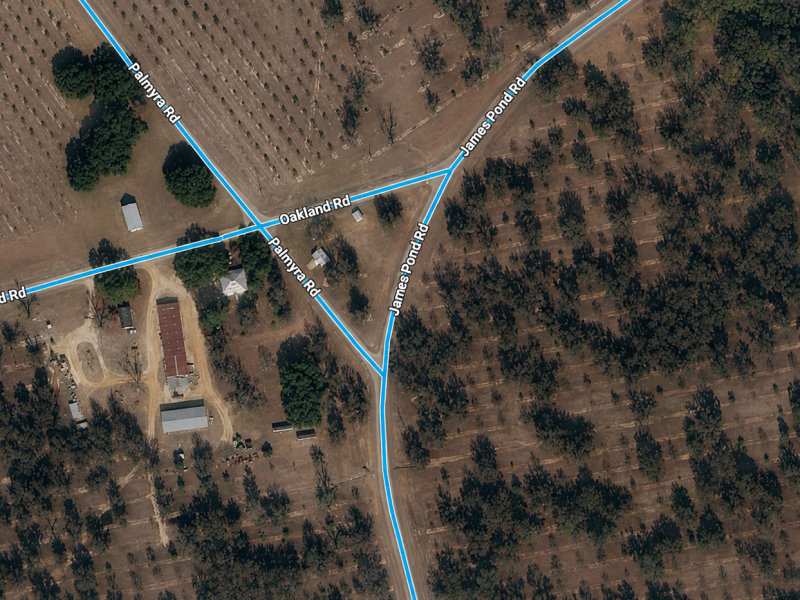
Lee Commissioners to vote Aug. 11 on roundabout after 48 emergency calls since 2021
Lee County commissioners will decide Aug. 11 whether to apply for state funding to build a $2.3 million roundabout at a three-way cluster of intersections where emergency responders have been dispatched 48 times since 2021.
