
LORAN SMITH: UGA going to miss Mike Bobo
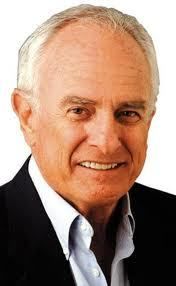
Loran Smith
When Mike Bobo lit out for Ft. Collins, Colorado over the holidays, it would have been appropriate if he had first climbed to the top of the Butts-Mehre Building and sang in his loudest voice, “You are going to miss me when I’m gone.”
In my experience with the University of Georgia, I have never known a more under-appreciated coach. Why fans get it in their craw that they can’t tolerate certain coaches or abide certain decisions is beyond me. Let it go. Why is it lost on them that they are not in position to know all that goes on with a given play or a game—that caused a bust or brought about defeat?
It’s production, consistency and the body of work that counts, and few get higher marks than Bobo when it comes to the bottom line. The coaches know who missed a block that kept Georgia from winning certain critical games, but what unprintable would throw a college kid, making a mistake, under the bus. Damn the social media, full speed ahead was Bobo’s unspoken motto.
My guess is that the majority of Bobo critics play golf. If any of them can say they haven’t missed a three-foot putt for a measly two dollars, then I’d say they are lying. I recall a second guesser once asking Vince Dooley in a public forum about a goal line play which failed, if he had it to do over again, would he call the same play?
“Why hell no,” was the response. “I know how that one turned out.”
Second-guessing is part of the game. Nobody understood that more than Bobo, who now is the lonely man at the top. Nobody will appreciate him when there are down times except his family and his dog.
Any way you dissect the games we play, we should be forever reminded that it is never easy. The Los Angeles Dodgers last year made Clayton Kershaw, generally considered the best pitcher in baseball, the highest paid player in the game. He was expected to not only get the Dodgers to the World Series but win it. He lost two games in the playoffs. Los Angeles stayed home. Does this make Kershaw a loser? Not by a long shot. If it takes a village to win a championship, it takes a village to lose one.
None of us have no idea who Mark Richt will tap as his successor, but if the new offensive coordinator can cobble together an offense which scores 40 points per game; teach and train quarterbacks to excel beyond their abilities; recruit the best talent; keep his ego from getting in the way; express sincerity for his employer, the University of Georgia, and lead the offensive staff to present day competence on the field—then we will have a Mike Bobo clone.
Go back and review his career and you find that Bobo was never flashy as a quarterback. All he did was win games. His father, George, a successful high school coach taught him the nuances of the game. Mike was named 1993 Player of the Year for the state of Georgia by the Atlanta Journal-Constitution.
At Georgia, it was the same story. Early on, he had the good fortune of coming under the tutelage of Greg Davis, who was an outstanding quarterback coach. By the time Bobo graduated, he won a lot of games in Athens, even with having to endure a head coaching change.
Bobo didn’t have quick feet to leave defenders in his wake. He wasn’t blessed with a fast ball to zip into tight spots in the secondary, but he made plays with his head and his heart, a born competitor. Two games, in particular, are worthy of recalling which remind us that he has always been a winner.
Against Georgia Tech in 1997, he directed a late scoring drive of 65 yards, which enabled the Bulldogs to win a seventh consecutive win against the Jackets when he threw an eight yard TD pass to Corey Allen with eight seconds left, the Bulldogs winning 27-24.
In the SEC’s (and Georgia’s) first overtime game, he brought the Bulldogs from a 28-7 deficit to a fourth quarter tie with a TD pass to Corey Allen with no time left on the clock, a Johnny Unitas-like drive, to get the Bulldogs in overtime. Georgia won in the fourth overtime.
It was all about Georgia for Bobo who, at age 40, realized that if he wanted to be a head coach, there are not that many opportunities. Timing often dictates decisions. He could not afford to become entrapped in Athens. Turn down enough jobs and athletic directors quit calling. Either you change or the head coach changes eventually. You could get left out completely—with no job at all after you turn 60 years old; too young to retire, but the marketplace turns a deaf ear.
Bobo happens to be similar to Erk Russell in attitude. If things turn dark in Ft. Collins, he would likely find happiness elsewhere—even a smaller school. I remember Erk saying over a beer during good times at Georgia that he could take a high school coaching job and be happy. Erk dramatically proved one thing when he took the assignment of restoring football at Georgia Southern: Coaching is coaching, and you can enjoy any level if you are imbued with the love of the game. The view here is that Bobo has that love, but is headed for greater opportunity.
Related Articles
Albany Herald – June 20, 2026
City Albany faces shortfall for police… Women’s Anchorage tentatively set to… Commissioner, school leaders clash over…

Classifieds – June 20, 2026
ALBANY HERALD CLASSIFIEDS JUNE 20, 2026

Public safety drives Leesburg’s $4.2 million Fiscal Year ’27 budget
The adopted spending plan reflects modest growth in city revenues and continued emphasis on maintaining core municipal services, particularly public safety and sanitation, which together account for a significant share of general fund expenditures.
