
Lorenzo Heard stakes re-election on development push, defends jail strategy
At the center of his platform is a push to grow Albany’s economy through targeted investment — including a proposed $20 million Veterans Affairs facility that could bring more than 100 jobs to the area, expanded support for small businesses through a revolving loan fund, and a long-discussed effort to transform Albany into more of a “college town” by drawing students and activity into the downtown core.
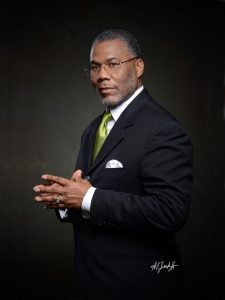
ALBANY — As Dougherty County Commission Chairman Lorenzo Heard seeks a second term in office, he is highlighting a slate of ongoing initiatives — from economic development to housing — while also addressing criticism over jail renovations, internal divisions and questions about transparency in local government.
“There are things we’ve started that I want to see brought to fruition,” Heard said in a recent interview, pointing to economic development projects, housing initiatives and public safety challenges he argues require continuity in leadership.
At the center of his platform is a push to grow Albany’s economy through targeted investment, including a proposed $20 million Veterans Affairs facility that could bring more than 100 jobs to the area, expanded support for small businesses through a revolving loan fund, and a long-discussed effort to transform Albany into more of a “college town” by drawing students and activity into the downtown core.
“We’ve got to become a college town,” Heard said. “That vibrancy — young people walking, shopping, being downtown — helps everything.”
Heard pointed to a series of district-level projects as evidence of progress, describing his leadership style as one centered on supporting individual commissioners’ priorities before advancing his own agenda.
He said he worked in tandem with commissioners from each district to move forward initiatives such as construction at Putney Park, renovations to the West Town area and library, early development of a resilience trail, and continued efforts to redevelop sites like the Old National Guard Armory and Radium Springs. He also cited ongoing discussions around a small business revolving loan fund and efforts to bring more educational activity downtown.
He framed his role as chairman as one of coordination and backing the goals of others first — “tell me what you want, and I’m going to help you do what you want in your district” — before seeking support for his own priority of expanding affordable housing.
But while Heard emphasizes long-term planning, critics have increasingly focused on more immediate issues, particularly conditions at the Dougherty County Jail and the pace of action from county leadership.
Heard pushed back on those criticisms, arguing that some have been fueled by politics rather than facts.
“They were trying to get us to spend $11 million. We didn’t rush into it, and now it appears the cost could be closer to $4 million,” he said, referencing a debated proposal to overhaul the county jail’s HVAC system. “I’m 100% committed to safety — but not to wasting taxpayer dollars,” he added, noting that updated figures are expected to be discussed publicly in the coming weeks.
The issue has become a flashpoint in the race, with some citizens and officials warning that delaying the upgrades could carry significant financial risk to the county if the aging system fails during peak summer months.
Heard maintains the problems predate his tenure and said a more measured approach is now proving justified.
“It was a political ploy to get people in an uproar,” he said. “We’re going to take care of the jail, but we’re not going to do it Bentley-style,” drawing a comparison to choosing between a luxury vehicle and a more practical option that ultimately serves the same purpose.
“Within two weeks, you’re going to hear it on the agenda,” Heard said. “There was a much better way than spending $11 million — only about $4 million is going to be needed.”
Beyond the jail, Heard acknowledged broader systemic strains, particularly within the local judicial system, where case backlogs have left some defendants waiting months or longer for court dates.
“We have too many people in backlog,” he said. “Some have served their sentence before they even get to trial.”
He said the county is working with judges and prosecutors to identify solutions, emphasizing the commission’s role as a funding body rather than a direct operator of courts or law enforcement.
A major pillar of Heard’s campaign — and one he distinguishes sharply from his opponent — is housing. While home construction and housing programs do not typically fall under the direct jurisdiction of the county commission, infrastructure development — a critical prerequisite to housing — does, and combined with his personal focus on the issue, places it among his top priorities.
“We’re not going to get back to ‘glory days’ without being intentional about housing,” he said.
Heard argues that Dougherty County has lost a critical segment of its population — middle-income workers — not because of a lack of jobs, but because of a lack of attainable housing options.
“They still work here, they still go to church here, but they live somewhere else,” he said. “We didn’t keep pace with development.”
He frames “affordable housing” not as a low-income initiative, but as a broader strategy to create homeownership opportunities for teachers, public safety workers and young families, a shift he says is necessary to stabilize neighborhoods and rebuild the local tax base.
Still, Heard’s tenure has not been without friction, including strained relationships within government and skepticism from some residents. He acknowledged those challenges, pointing to communication and trust as ongoing hurdles.
His approach to meeting people where they are is both an asset and a liability, which he readily acknowledges, but he said he remains open to improvement.
“I will honestly do all that I can to be fair, merciful and gracious, and to extend an olive branch,” Heard said. “I promise to do that.”
Heard described himself as guided by personal convictions around fairness, fiscal responsibility and community support, while also acknowledging that not all working relationships have developed as he had hoped.
“Some people say I’m racist … that’s inevitable when you speak your mind,” he said. “But I’m going to always lean toward the marginalized. I’m going to lean toward the person who’s left out. I’m going to prioritize the kids. I’m always going to try to help the underdog.
“There are some relationships I wish had turned out differently. Sometimes it’s like a marriage: You want it to work, but it doesn’t.”
If re-elected, Heard said he intends to continue pursuing collaboration, while maintaining his core priorities.
Related Articles
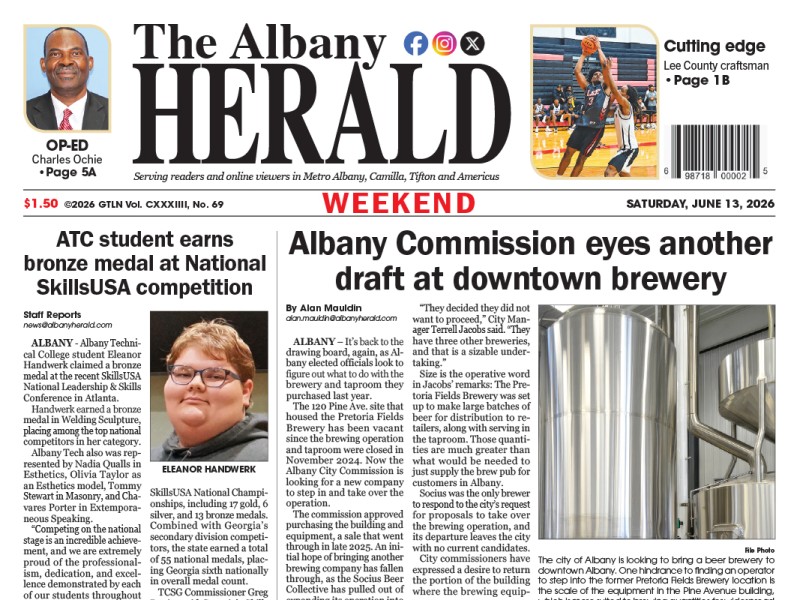
Albany Herald – June 13, 2026
ATC student earns bronze medal at National SkillsUSA competition… Albany Commission eyes another draft at downtown brewery… PUBLIC OPPOSITION SINKS PROPOSED LEE COUNTY SOLAR FARM…

Classifieds – June 13, 2026
Moving Sale: Sat June 13th, 8am-12pm. 265 Brenda Lane, Albany. Large Variety of Items.
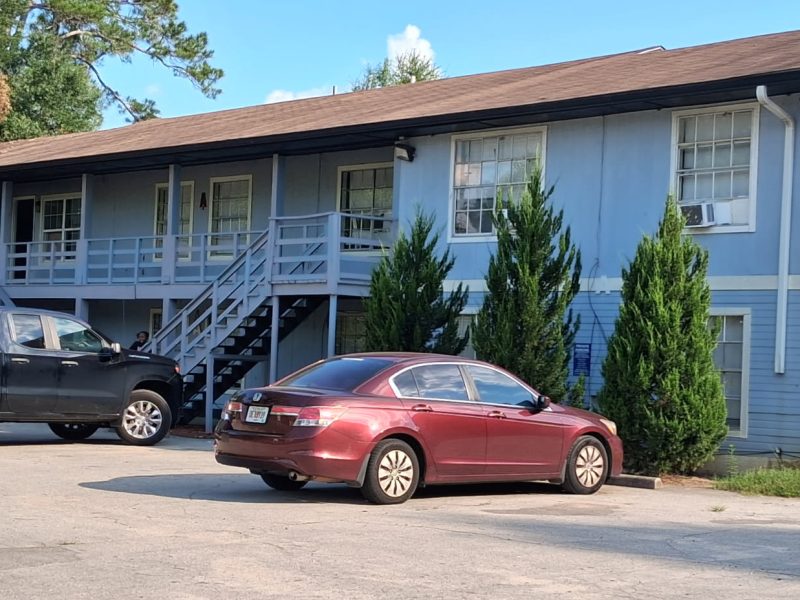
Tenants in Albany apartments face eviction
Residents at Cornerstone apartments, located at 608 Moultrie Road, said that eviction notices were placed on the doors of all of the units this week, giving them three days to pay two months’ rent or face being removed in three days. Tenants said they were confused to whom rent should be paid and are frustrated by the living conditions at the complex that is more than 50 years old.

