
MARY BRASWELL: Looking Back at Albany 119 years ago

Mary Braswell
Each week Albany Herald researcher Mary Braswell looks for interesting events, places and people from the past. You can contact her at (229) 888-9371 or [email protected].
Here is a look at life in Albany and Southwest Georgia, 119 years ago.
— Located at 106 Broad St., Eatman and Powell had all that was needed for hunting season. Knives of the best kinds as well as gunpowder, shot and loaded and empty shells were plentiful.
— School children and teachers at the Albany Academy were given a three-day break so those wishing to do so could visit the Atlanta Cotton States and International Exposition.
— Notice: All persons wishing the old bridge over the Kinchafoonee Creek made safe, or a new iron bridge instead, will please call upon our worthy county commissioner, J. Mock, and sign a petition at his store.
— A list of Dougherty County registered voters was printed for all to see in the Albany Daily Herald. The men (no women allowed) totaled 579.
— Three fires “within a stone’s throw of each other” within a short span of time had Albany officials suspicious of a fire bug in the northwestern part of the city.
— The ladies of St. Paul’s Episcopal Church held their December Fair after months of work and planning. The booths included dolls, fancy works, flowers, paper, gents’ furnishings, housekeeping and art. An early report estimated sales at (or near) $1,000.
— Phil Harris, jeweler, had a wide assortment of watches, diamonds, novelties and other items for gift giving. All engraving was done free with purchase.
— Restaurant Bennie at the Union Depot had bananas for 10 cents per dozen, a 25 cent bunch elsewhere.
— A list of more than 40 unclaimed letters was given in the newspaper on a single day. All letters not claimed by Dec. 18 were headed to the dead letter office.
— Two prisoners broke out of the Early County Jail. The pair was confined in the dungeon but managed to cut themselves out with tools from an unknown source. This was, in fact, the the third time the duo had broken free of the same jail.
— Warwick became home of an artesian well, flowing from a depth of less than 300 feet.
— Muse & Cox Co. at 74 Broad St., the cash shoe people, had a wide assortment of men’s footwear for $2-$4 per pair.
— The city of Americus passed an ordinance providing that any circus advertising on regular billboards that all seats were one price must carry out that contract. Any circus found not in compliance could expect to be penalized.
— For rent: One five-room house, corner of Residence and Washington Streets, $12 per month. See C.M. Shackleford.
— Having entered upon a third winter season with public waterworks, many consumers were caught off guard yet again with bursting pipes. Every lot in the city where water was furnished had stop and waste cocks installed and printed instructions regarding the use in freezing weather was provided for customers at hook-up time. Many either did not read the instructions or could not understand the individual’s role in preventing costly pipe repairs.
— According to the latest information, the Salvation Army (all across the country) had 9,000 complete brass bands.
— Bartow F. Powell, a well-known black man of Dougherty County, bought Dr. P.L. Hilsman’s farm five miles west of the city for $2,600 cash. The 400-acre spread was Powell’s fourth plantation purchase, none of which carried any indebtedness.
— A horse attached to a wagon on Washington Street was apparently frightened by a window dummy. The creature tried to run into the Mayer & Crine saloon, but the iron rods supporting the awning caught the wheels of the wagon and restrained the horse before he could enter the doorway.
— The Albany Fire Department tested a new ball nozzle under high pressure from one of the steamer wagons. The new device worked quite well and was deemed worthy of purchase, especially for use in roof fires.
— With the upcoming February closing of Albany’s theatrical season, the city’s only place of public amusement would close only to be reopened a a gymnasium and armory. Willingham Hall was leased by the Albany Guard and no plans were in the making for an alternative theater. The Herald stated frankly that living in a city of 7,000 with no chance for good shows was “too much like living in the country.”
— A large shipment of raccoon skins was prepared for shipment from Waycross to New York City. The nearly 1,000 skins came mostly from the Okefenokee Swamp, some quite large. The skins were valued at several hundred dollars.
— W.J. Glaser opened a new gunsmith shop at Bridge Hall. Glaser worked not only on firearms, but also clocks and sewing machines. His motto: “Good work or no pay.”
— An anonymous letter, postmarked Leesburg, addressed to Santa Claus in care of W.E. Hilsman, gave some ideas for Christmas gifts. The wishes from five children included dolls, doll carriages, pencils, writing paper, collar buttons, grapes, apples, candy and a gun.
— Had there been a Squawkbox at the time, this anonymous comment would have fit perfectly: “Let the president alone! He will do less harm on the coast of North Carolina gunning for ducks than he would do in Washington!”
— According to the Smithville Enterprise, “Leesburg is in better condition financially than any town in Georgia.” After spending considerable funds on streets, the town was debt-free with $500 remaining in its treasury. A portion of that sum was expected to be used to plant shade trees along the streets and avenues.
— The DeWitt Farming Co. was selling shelled fresh pecans at local stores for the price of 6 pounds for $1.
— Merchants Hofmayer & Jones had gift ideas for the gentlemen including silk suspenders, smoking sets, ink stands, pipes, umbrellas and moustache combs.
— A Christmas Day report stated that Albany policemen “had about all they could do yesterday afternoon and last night. There were any number of plain drunks.”
QUIK QUIZ answer
d) mathematics and Latin
Related Articles
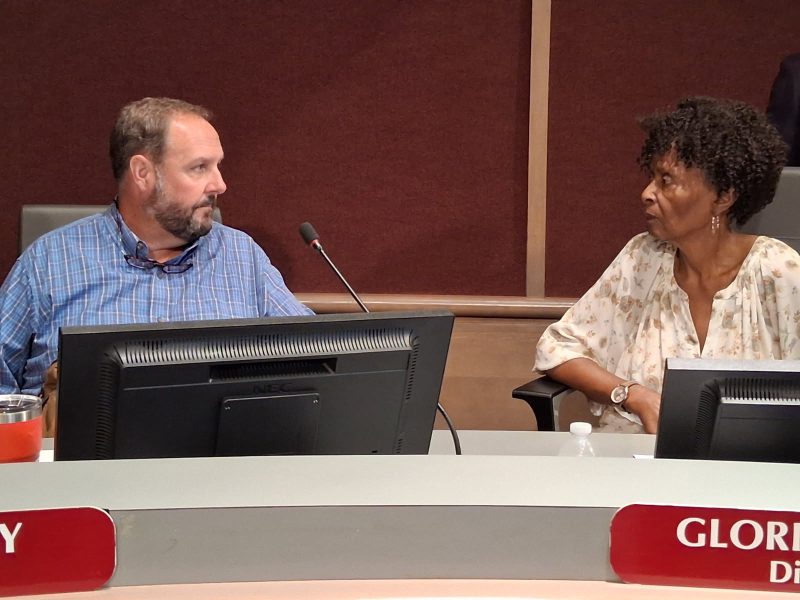
Dougherty Commission considers $104 million budget for 2026-2027 budget year
“The other side of the coin is you could have higher revenues than projected. We’re very conservative in budgeting revenues. That also reduces the need to use fund balance”
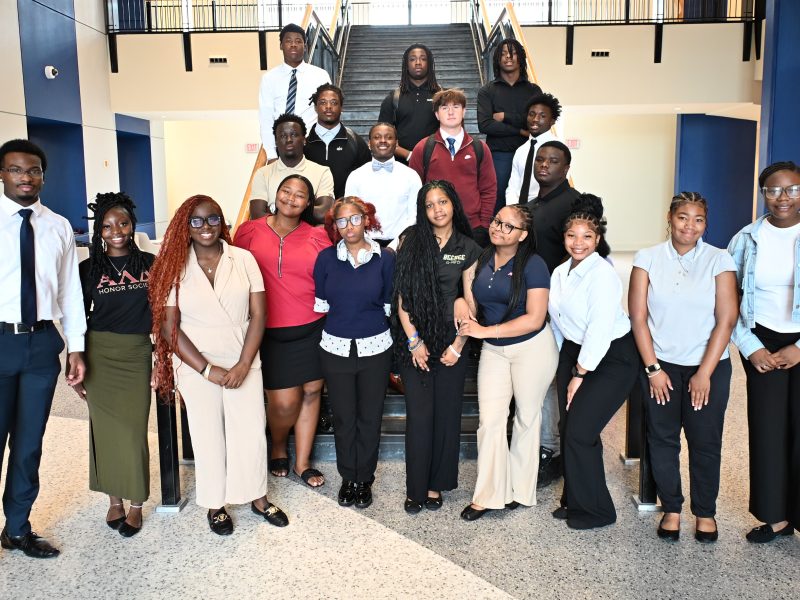
PHOTOS: Albany State Summer Success Academy
Photos by Reginald Christian, Albany State University
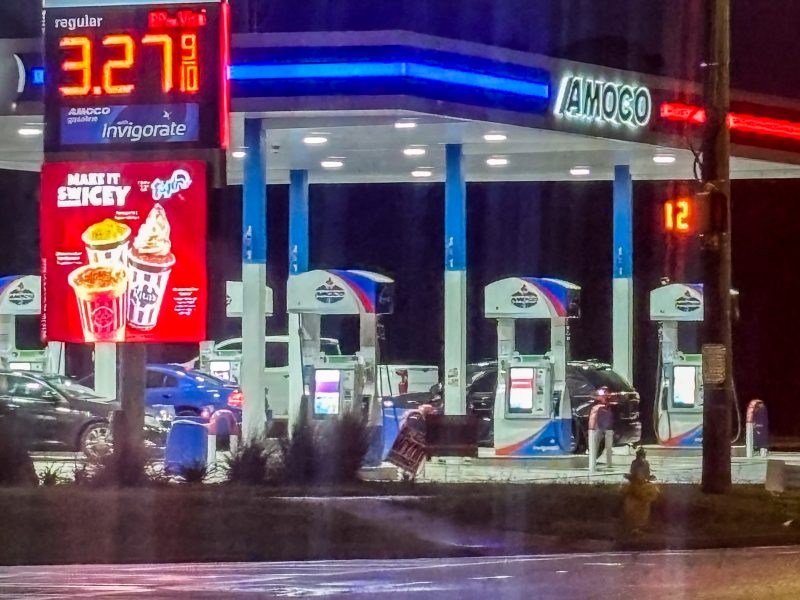
Albany gas prices among Georgia’s lowest as summer fuel costs decline
According to AAA, the average price for a gallon of regular gasoline in the Albany metro area was approximately $3.45 this week, making Albany the second-least expensive metro market in Georgia behind Dalton at $3.41 and slightly ahead of Brunswick at $3.48.
