
MARY GANZEL: Planning, hard work help create change
Mary Ganzel
Throughout the years I’ve heard several quotes related to working hard and moving forward. I’m not sure if I heard them from my father, teachers, athletic coaches, read them in a book, or just heard them from some very wise people. Several quotes that come to mind are: “Nothing in life comes easy;” “Quitters never win and winners never quit” “God never promised that life would be easy;” “Success is a journey built on moments of sweat and tears;” “Falling off the horse isn’t what matters, it’s getting back up that does.”
One common thread through all of these quotes is you have to work hard and stay the course to keep moving forward. Moving forward applies to anything in life. Moving forward requires changing the old ways and embracing the new ways. This means change has to happen. Although I’ve talked about the Stages of Change associated with making changes in one’s life in previous articles, it’s worth doing a quick review as we approach summer and you consider making a healthy lifestyle change.
The Contemplation Stage of Change is when you are thinking about making a change and trying to become more motivated to get started. You might be in this stage if you have been considering change but you are not ready to start. You believe that your health, energy level, or overall well-being will improve if you develop new habits. You are not sure how you will overcome the roadblocks that stand in the way of success.
In the Preparation Stage of Change, you are making plans and figuring out specific ideas that will work for you. You might be in this stage if you have decided that you are going to change, and you are ready to take action. If you have set some specific goals that you would like to meet. If you are getting ready to put your plan into action and get started soon.
In the Action Stage, you are acting on your plan and making the changes you set out to achieve. You might be in this stage if you have been making eating or physical activity changes in the last six months or so. You are adjusting to how it feels to eat differently or be more active. You have been “troubleshooting” to overcome things that have blocked your success.
The Maintenance Stage is the stage everyone wishes they could achieve, but, in fact, about 85 percent of the population does not reach this stage. In the Maintenance Stage, you have become used to your change and have kept it up for more than six months. You might be in this stage if your change has become a habit. You have found creative ways to keep going and stick with your routine. You have had slip-ups and setbacks but have been able to get past these snags. You work hard to ensure you keep up the routines you’ve set in place that have been successful.
Since so many of us waffle between the Contemplation and Preparation Stage of Change, let’s focus on some of the perceived barriers often heard in the Preparation Stage of Change and look at possible solutions.
If you find yourself saying, “I don’t have time,” make your new healthy habit a priority. Schedule the time to exercise, grocery shop or cook just as you would schedule a work-related appointment. Often, it doesn’t take a drastic change to fit physical activity into your daily routine. Try taking the stairs or getting off the bus a stop early, if it is safe to do so. Instead of several quick trips to the store, set aside one grocery shopping day a week. Make a list of healthy ingredients, and don’t go to the grocery store hungry. When you’re preparing healthy meals, make extra that you can freeze and eat later when you do not have time to cook.
If you feel “Healthy habits cost too much,” start a walking group. Walk around the mall during off-peak hours, find a school track, or go to a local park. Eat healthy on a budget by buying in bulk and choosing frozen or canned fruits and vegetables.
If you feel “I can’t make this change alone,” recruit others to be active with you. That will help you stay interested and be safe. Also, consider signing up for a fun exercise class, like Zumba, Water Aerobics or a family activity class. Get your family or coworkers on the healthy eating bandwagon. Plan healthy meals together with your family, or start a healthy potluck once a week at work.
If you associate physical activity with a bad experience at school or just never “did sports”, forget the old notion that being physically active means lifting weights in a gym. You can be active in many ways, including dancing, walking, gardening, or taking fun fitness classes. Make your own list of options that appeal to you. Explore options you never thought about, and stick with what you enjoy.
If you find yourself saying, “I don’t like healthy foods,” try making your old favorite recipes in healthier new ways. For example, you can trim fat from meats, and reduce the amount of butter, sugar, and salt you cook with. Use low-fat cheese or milk rather than whole-milk foods. Add a cup or two of broccoli, carrots, or spinach to casseroles or pasta.
If you have special medical concerns or feel, “I need guidance,” talk to your health care provider, fitness professional, or registered dietitian to learn more. You do not have to be an expert to change your habits.
If you find yourself saying, “I’m not motivated,” then think about your most important reasons for being healthy. For example, do you want to be there for your family? Would you like to be able to do the things you love without feeling tired or out of breath? Would you like to stop worrying about your health risks? Think about these things when you want to quit. Also, try different activities or try exercising in new places to stay interested.
No matter what your barrier may be to making a change in your life, please remember some of the quotes mentioned in the first paragraph. They may help you stay the course for lasting positive change.
Mary Ganzel is senior program director at the Albany Area YMCA. She has a master’s degree in exercise physiology from the University of Kentucky and has worked in the fitness industry for more than 25 years. She’s been certified through multiple national organizations over the years as a personal trainer, exercise test technologist, health promotion director, group exercise instructor, Cycle Reebok instructor and Pilates instructor through Cooper Institute, American College of Sports Medicine, American Council on Exercise, Aerobic Fitness Association of America and the Young Men’s Christian Association.
Related Articles
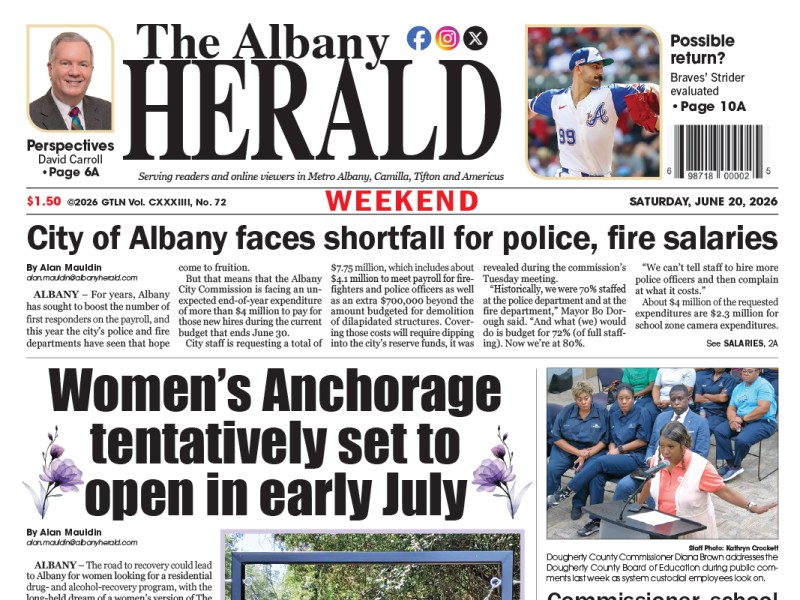
Albany Herald – June 20, 2026
City Albany faces shortfall for police… Women’s Anchorage tentatively set to… Commissioner, school leaders clash over…

Classifieds – June 20, 2026
ALBANY HERALD CLASSIFIEDS JUNE 20, 2026

Public safety drives Leesburg’s $4.2 million Fiscal Year ’27 budget
The adopted spending plan reflects modest growth in city revenues and continued emphasis on maintaining core municipal services, particularly public safety and sanitation, which together account for a significant share of general fund expenditures.
