
Meet your candidates for Dougherty County Superior Court Judge
Staff Photo: Lucille Lannigan
Staff Photo: Lucille Lannigan
Staff Photo: Lucille Lannigan
By Lucille Lannigan
[email protected]
ALBANY – When Dougherty County voters go to the polls On May 21, they’ll vote for a new Superior Court Judge.
The Superior Court is the highest level of trial court. Judges preside over cases involving misdemeanors, contract disputes, premises liability and other actions. Much bigger, it has exclusive equity jurisdiction over all cases of divorce, title to land and felonies involving jury trials. This includes death penalty cases.
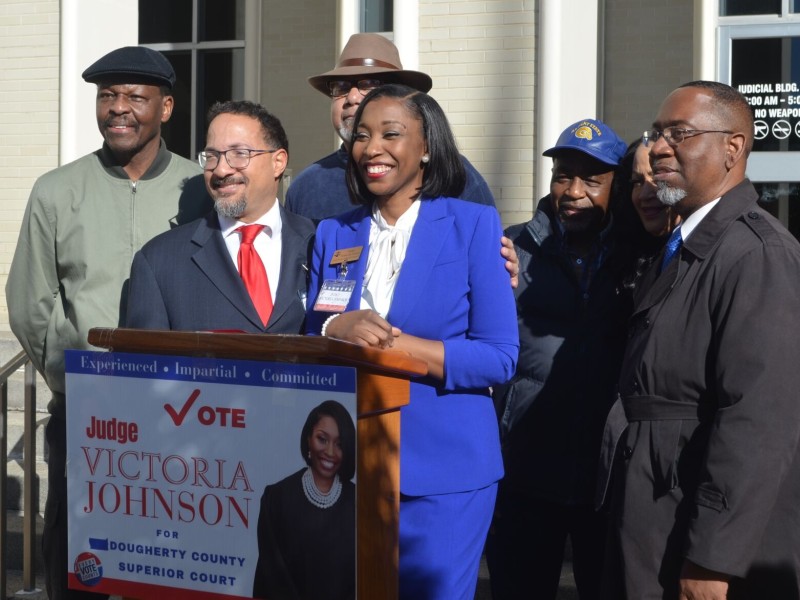
Three candidates are on the ballot to take a seat as a Dougherty Superior Court Judge: Magistrate Court Judge Victoria Johnson, Attorney General Assistant Prosecutor Michael Tabarrok and Albany attorney Valerie Brown-Williams.
The three candidates say they share the same values of treating everyone who appears in their court with respect and fairness. They come to Dougherty County ballots with unique experiences and priorities.
Victoria Johnson said she imagines most assume her greatest talent is singing. But the active Freedom Singer said it’s actually listening. She said she is fascinated by what she hears as a Magistrate Court Judge – especially when working in Superior Court.
“I’m doing a lot of listening … a lot of observing,” Johnson said. “Sometimes I’m so interested in what I’m hearing it’s not even like I’m working. I find myself most riveted when I’m in Superior Court. I feel like I’m born for this.”
Johnson’s campaign for Superior Court Judge is built off of extensive experience. She’s been a prosecutor in an array of different courts. As a Magistrate Court Judge, she’s decided more than 8,700 cases. On a weekly basis, she handles Magistrate Court, State Court and Superior Court cases.
She said because of this, she’s ready to handle the volume of Superior Court cases that await the new judge.
Johnson got her start in the law field as a Jacksonville, Fla., prosecutor at the 4th Judicial Circuit State Attorney’s Office. She said it was a fast-moving and intense environment.
She brought that intensity with her when she moved to Albany and began working as a temporary, grant-funded domestic violence prosecutor. She moved 300 cases from a backlog in her first year. Johnson said handling domestic violence cases is a passion for her after her cousin was murdered in a domestic violence incident in Florida.
“That passion was a driver for my intensity with those types of cases,” she said.
She would go on to work in the misdemeanor division, felony division, as a prosecutor in Dougherty County’s Mental Health and Drug Court and as the director and project manager for the Stop Violence Against Women Act. As director, she applied for and got more than $250,000 in grant funds to help the county hire additional prosecutors.
She was appointed to her Magistrate Court Judge position in 2018 by Judge John Stephenson. Since 2018, she’s handled an extensive caseload that encompasses three different courts, including Superior Court. She’s moved civil and criminal cases, assists with arraignments in the state court and handles probation revocation hearings and committal hearings at least once a week in the Superior Court.
“I’m already on the bench day by day in Superior Court,” she said.
Three out of four of the county’s Superior Court Judges were all Magistrate Judges before. Johnson said she believes this is because of the experience and volume of the work that is gained in the role.
Johnson said she is ready to attack the backlog of cases in the Superior Court that was exacerbated by the Court House flooding and the COVID-19 pandemic. She said she is fair and thorough and will commit to making decisions that will keep the community safe.
Johnson said it’s about balance – prosecuting those who have committed serious offenses and knowing when it is right to intervene and help people recover.
“If I needed to have mercy, I did,” she said. “If I needed to be tough, I was.”
Outside of the courtroom, Johnson serves on the board for the Boys and Girls Clubs, teaches youths at Mt. Zion Baptist Church and sings with the Freedom Singers.
“I have given my life for public service … because I really am passionate about the people of Dougherty County,” she said. “I’m not a home grown Albanian, but I’ve been here almost 15 years, and Albany is home.”
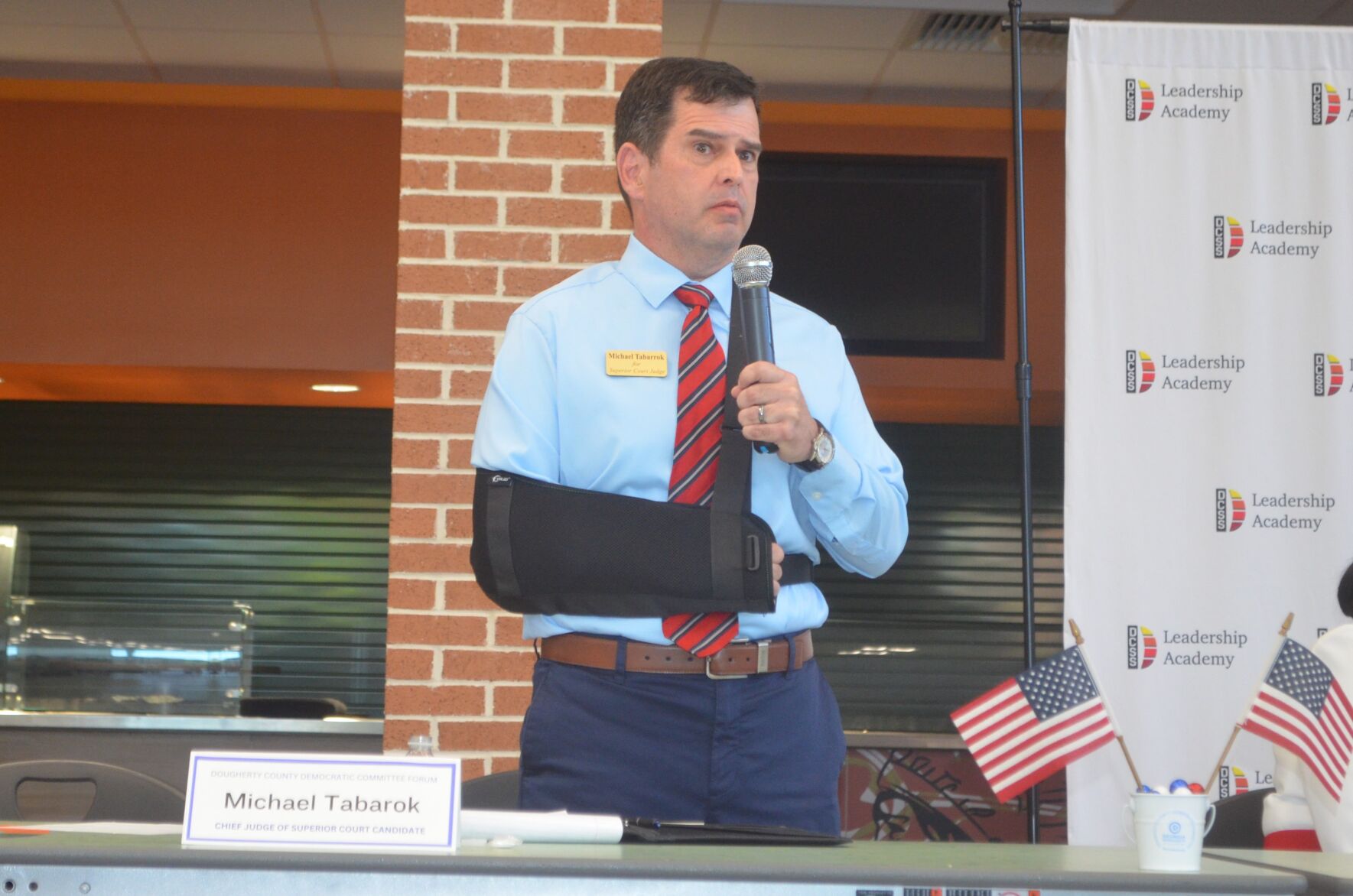
Michael Tabarrok is the Georgia Attorney General’s first regional prosecutor hired to work in the gang unit. He’s stationed in Dougherty County but travels all across south Georgia, from Columbus to Savannah, prosecuting gang-related cases.
Tabarrok said he has 22 years of civil experience and 25 years of jury trial experience being in a courtroom. In those 25 years, he said none of his cases has been overturned on an appeal.
Service is what Tabarrok said drives his work and desire to be a Superior Court Judge.
“I’m a huge believer in if you want to be a leader, you need to be a servant,” Tabarrok said. “When you have it in your heart that you want to serve other people, it shows when you’re on the bench.”
Tabarrok hosts Christmas toy drives for young patients at Phoebe Putney Memorial Hospital. He said he’s put in more than 500 hours of disaster relief, using a chainsaw to clear trees for those who can’t afford tree service. He coaches youth sports, serving as a mentor and providing sense of community to young boys
Tabarrok said his campaign is based on commonsense ideas that resonate with everyone in Dougherty County. The keystone of his platform is the creation of an adult gang court. Tabarrok said addressing the gang issue is key to changing Albany’s crime rate.
He said right now, Dougherty County isn’t doing much to break the cycle of gang-related crime. The gang court would be a step toward progress.
This is how it works:
A defendant would enter a guilty plea, which would be set aside. The defendant would then be assigned a mentor that he or she meets with on a regular basis and required to enroll in a GED program (if needed) and start working a job.
Once a month, individuals in the program would return to court where, as a Superior Court Judge, Tabarrok would work with them and assess their progress. The program would consist of a group of five individuals from different gangs. Each month they would meet as a group, interact and work with each other.
After six months of employment, Tabarrok said he plans to instill a partnership with the Albany Area Chamber of Commerce to help them find a career path.
“The idea is to work with them and give them a different path and a different option from the gang world,” he said.
Tabarrok said he’s already had conversations with community members he’d like to partner with to help make this happen, among them Travis Luke, a former gang member who now works locally in prevention.
Tabarrok’s other plans for the judge position consist of adjusting the county’s bond amounts, speeding up bond hearings and using status conferences for both civil and criminal cases to move cases along and address the backlog issue.
He said he also wants to introduce office hours where members of the community can meet with him.
“There’s a segment of Albany that feels ignored and unseen, and we need to change that,” Tabarrok said. “I want to have regular office hours where anybody can come in.”
He said he’s running for Superior Court Judge because he knows he can do more to help people than just punishment.
“I’m tired of having to prosecute people, knowing that there are people we can save,” Tabarrok said. “We can change their entire paths. If you can get a person and … change their future, you’ve changed their children’s future. You’re changed their children’s children’s. And all of a sudden we’re making a generational difference.”
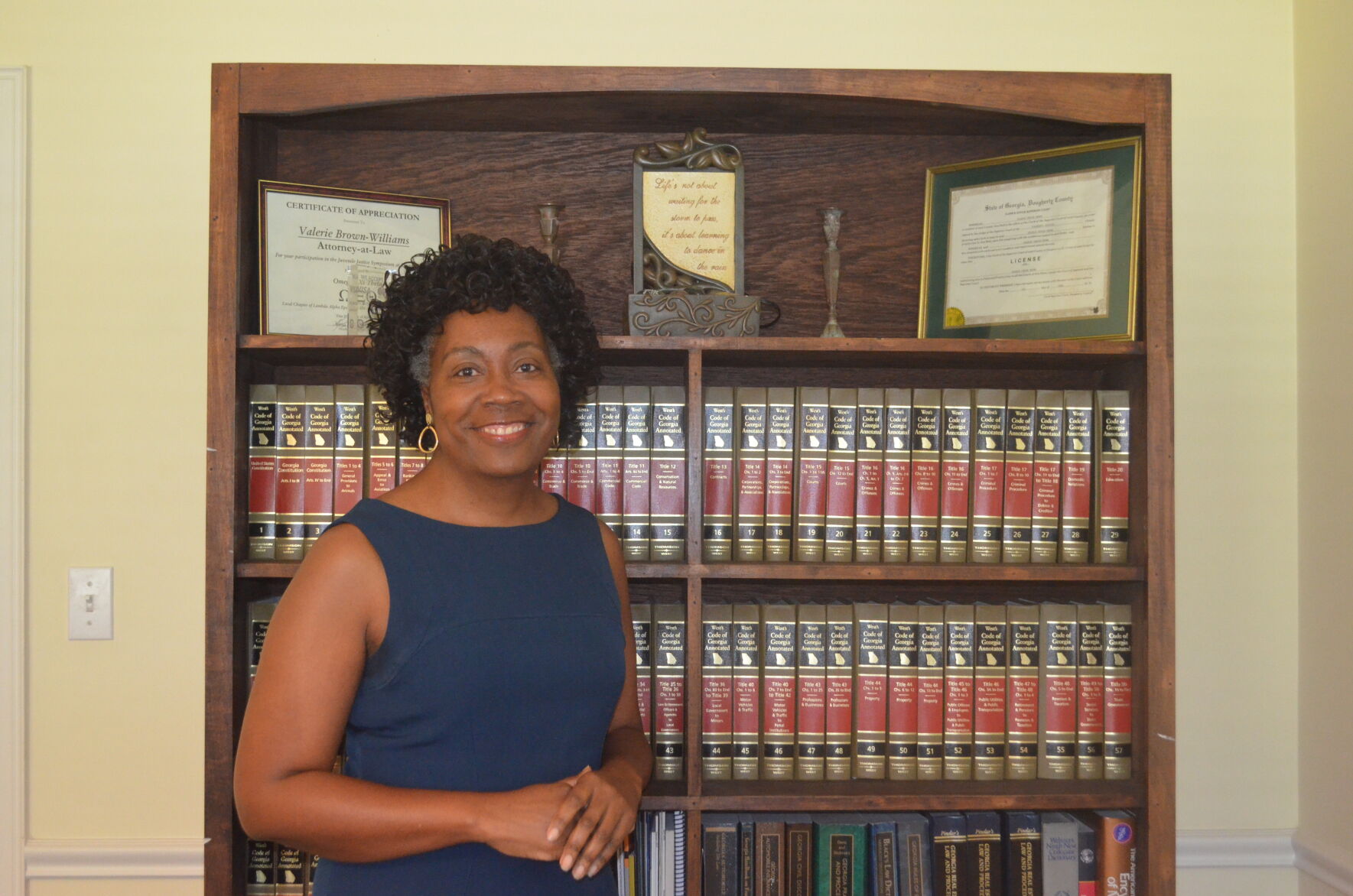
Valerie Brown-Williams is a born-and-raised Albanian. She grew up on Albany’s south side, is a graduate of Westover High School and got her degree from Albany State University in 1992.
After completing law school at Mercer University, she returned home to start her law career, which spans locally for the last 28 years.
All of Brown-Williams’ work experience is in private practice, where she said she’s handled many different types of cases. She’s worked with criminal defense, workers compensation, real estate and business work. But her passion lies in domestic cases: divorce, custody, adoption and child support.
“That’s a benefit to bring to the bench – all that experience – because you have all this knowledge about different things and how the law works with it,” she said.
Brown-Williams has both prosecuted and defended. After 28 years, she said she’s ready to do something else for the community.
“I’ve got a passion for our community and for justice, and so having … dealt with so many different types of legal issues, I realized I could do more for Dougherty County,” she said.
Brown-Williams said she’s concerned about crime in the community and ensuring that decisions are not biased against any particular group. She said she plans to bring a calm and respectful temperament to the bench.
Brown-Williams said her top priority as judge would be addressing the backlog of cases. She has several ideas to accomplish this.
Brown-Williams said she sees a need for a family court. She said last year the county had just over 1,300 civil cases, and of these cases, almost 1,000 were domestic cases.
“I know from my years of experience that domestic cases can linger,” she said. “I’ve had to wait six months to get a temporary hearing, where in that timeframe my client didn’t have alimony or child support. That’s not acceptable. We’ve got to move this stuff along.”
She said she would like to see regular calendar calls scheduling court orders.
“It will help the system run more efficiently and let folks know that we’re serious about moving cases along whether it’s the parties or the victims or whoever is involved,” Brown-Williams said.
She said she’d also like to reinstitute or maintain mandatory mediation, divorced parent seminar requirements and self-help centers
“If we could have a court that is dedicated to those family law-type matters, it frees up the other judges to move the criminal cases along,” Brown-Williams said. “It also has someone with my background of domestic work that would understand the dynamics of the domestic cases. And it would help those individuals be able to resolve their issues faster.”
Brown-Williams is also a strong believer in community support and programs to prevent crime. She’s a Girl Scout Troop Leader and has strong ties with the children and families she works with.
While she isn’t sure exactly what these programs would look like, she said she’d like to support initiatives that help young people with mental health issues to stop them from entering the court system.
“I’ve got a passion for my community and justice, and I chose to come back here and stay here after I graduated from law school,” she said. “I think that we’re losing a lot of people when they graduate college, and they don’t come back home. So we’ve got to make Albany a better place that will encourage them to come back.”
Early voting starts April 29. The Georgia State Primary election day is May 21.
Author

Related Articles

Albany Herald – July 18, 2026
Georgia Trust for Local News partners with… Adult leadership group spreads concept to… Lee County homeowners have until Aug. 1 to claim…

Classifieds – July 18, 2026
Classifieds; Legals;

Albany police make arrests in murder, robbery cases
Officials with the Albany Police Department have announced a number of arrests in cases that involved a homicide and a pair of thefts.
