
Mitchell County group that spent a year researching area’s black history share their findings for the first time
Naomi Carroll wanted Black history teachings to extend beyond Black History Month. So, she organized a group to do research on Mitchell County’s Black history. Here’s what they found.
CAMILLA – As February, also known as Black History Month, came to a close, Naomi Carroll drafted a concerned letter.
“February is about to end, and I’d like for black history to continue,” the letter read. “I’d like us to meet so we can start an ongoing black history study.”
Carroll, a Mitchell County resident and Albany native, sent copies of this letter to local churches, youth organizations and other civic organizations in Camilla. By early March 2024, a group of about 10 formed. They group collectively committed itself to researching Mitchell County’s black history for the last year. On Saturday, they put together an educational event in honor of Martin Luther King Jr. Day.
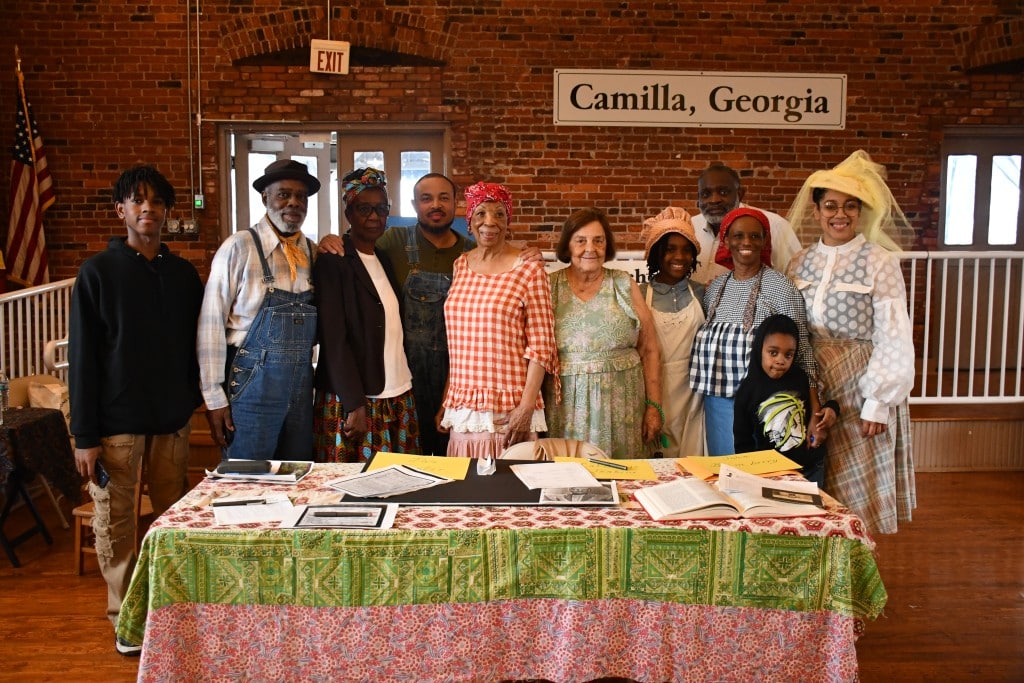
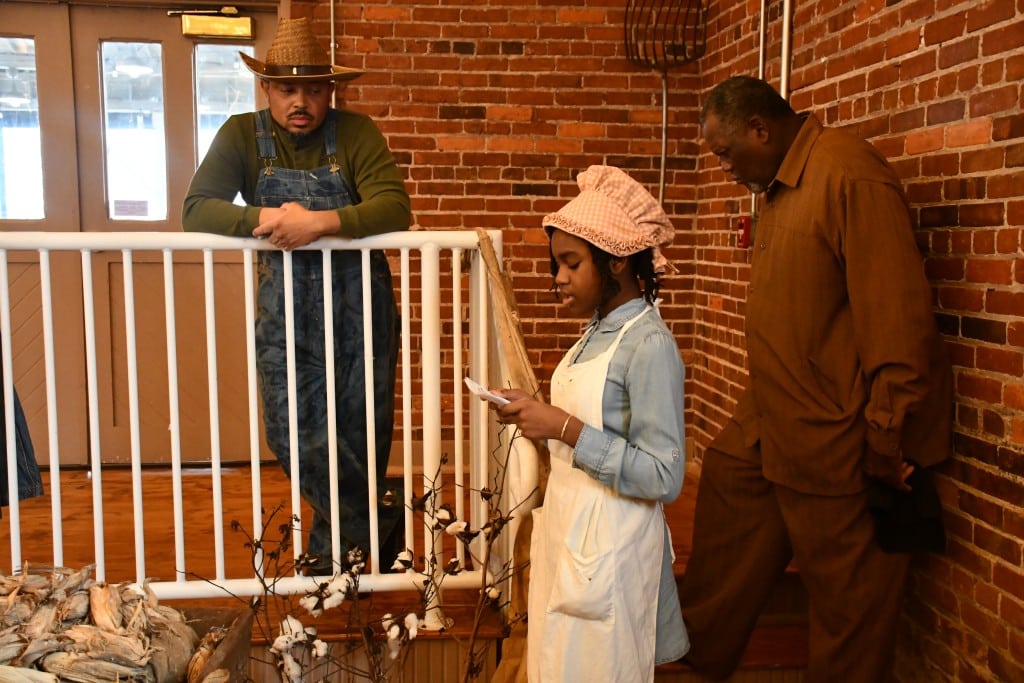
About 50 people gathered at the Camilla Depot, which was transformed into Camilla’s first black churches, schools, farms and burials, to learn what life was like for black people in Camilla from 1864 through 1890. This was a period when black residents were leaving the bondages of slavery and navigating a new life as free people. Attendees separated into four groups, hearing bits of history taught by volunteers who were playing the part of historical Camilla figures they’d researched.
Saturday’s group learned about Camilla churches that began to accept black congregants as well as the formation of early black churches. Preachers would preach to white people in the morning and black people in the afternoon. After the Civil War, black religious groups began forming Baptist church associations as a show of unity in the face of segregation. These associations helped in the creation of other black churches.
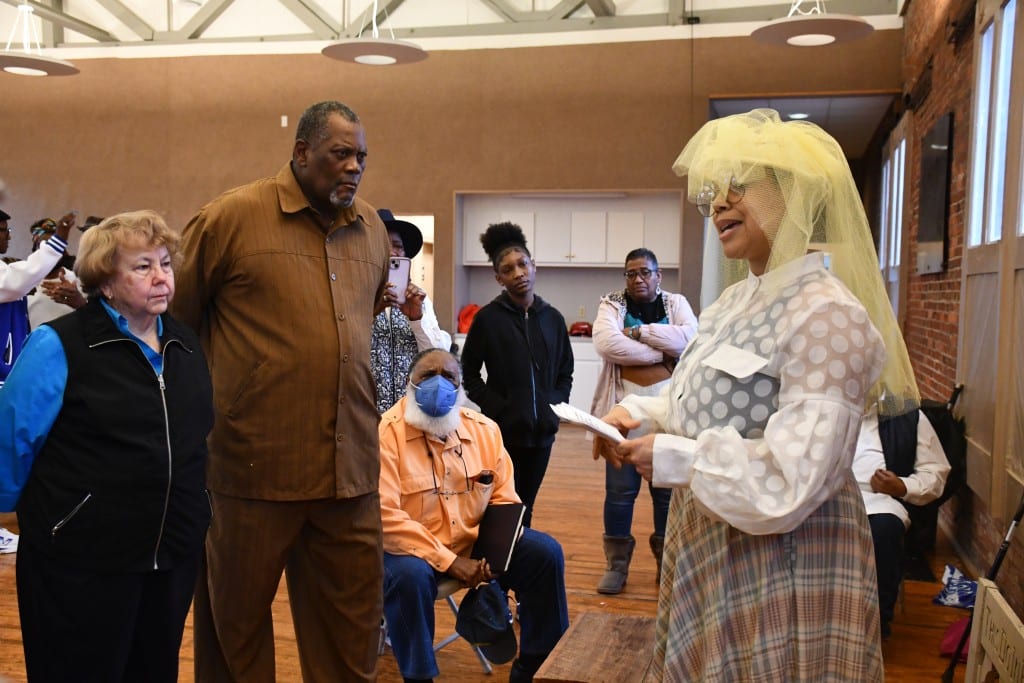
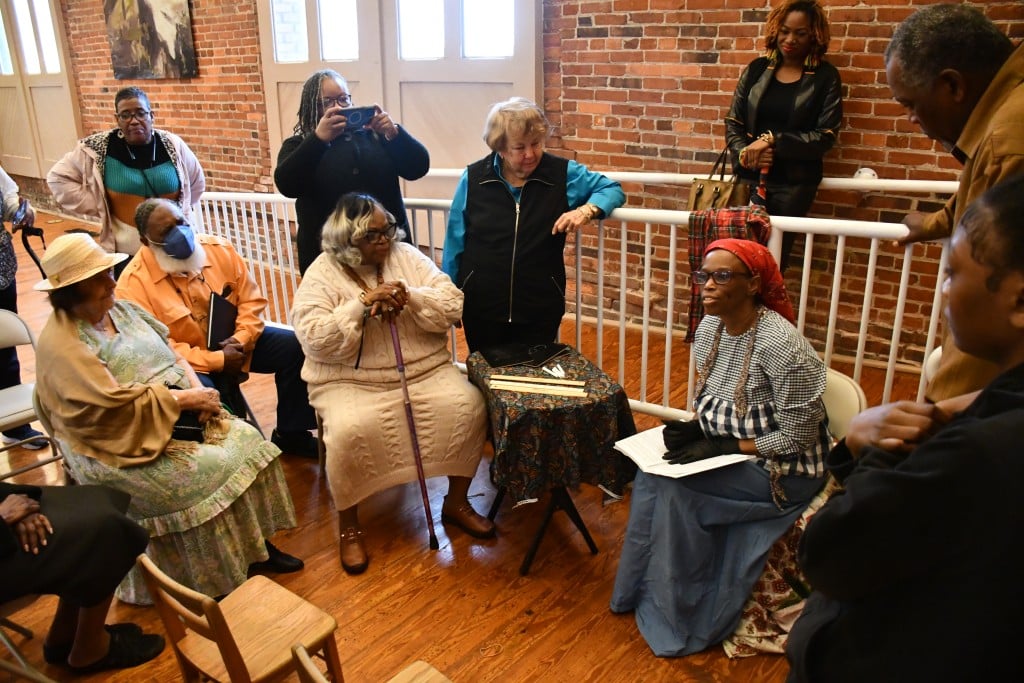
Angela Jones, a group volunteer from Albany, said the black church originated from an environment of oppression and subordination.
“Enslaved Negroes internalized the gospel,” Jones said. “It was our way of liberating ourselves and giving ourselves some home. We used it as a coping mechanism.”
The group learned about “underground schools,” or secret lessons on how to read and write that occurred among enslaved people on plantations. Jones taught attendees about the Freedmen’s Bureau, a government agency that provided assistance to formerly enslaved people in the years after the Civil War, and how it funded schools for black students in Camilla, Albany and other southwest Georgia towns.
Jones asked her groups to take her story and share it.
“In smaller areas it’s hard to find that history,” she said. “If we don’t teach it, it’ll be lost.”
The group learned about Camilla’s first black farmers, who during that time period acquired much of their land from white farmers after the Civil War.
Some of these families have maintained this farmland all the way to present day, while others sold their acres over the years. One of these legacy farms is the Robinson Farm in Baconton, which in its early days had about 700 acres of land.
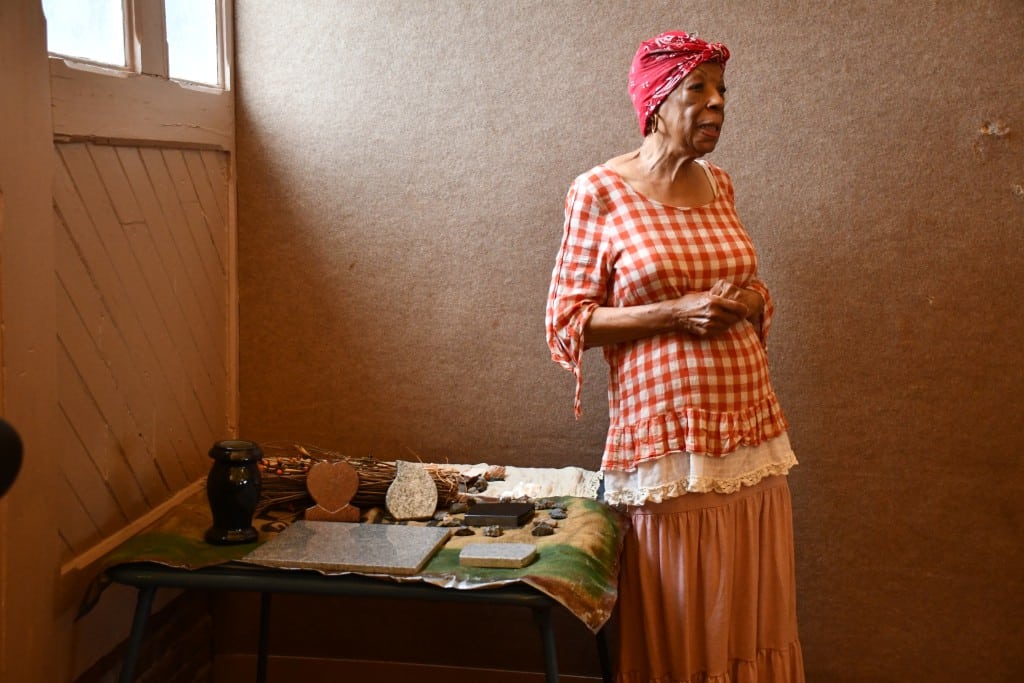
Carroll led the group in a lesson about burial practices from 1860-1890. Today, she serves as the funeral director for the historic Robert Jester Mortuary Inc., which was established 98 years ago by Robert Jester. Jester also helped other members of the black community in Arlington, Blakely, Cairo, etc. get a kickstart in the funeral business.
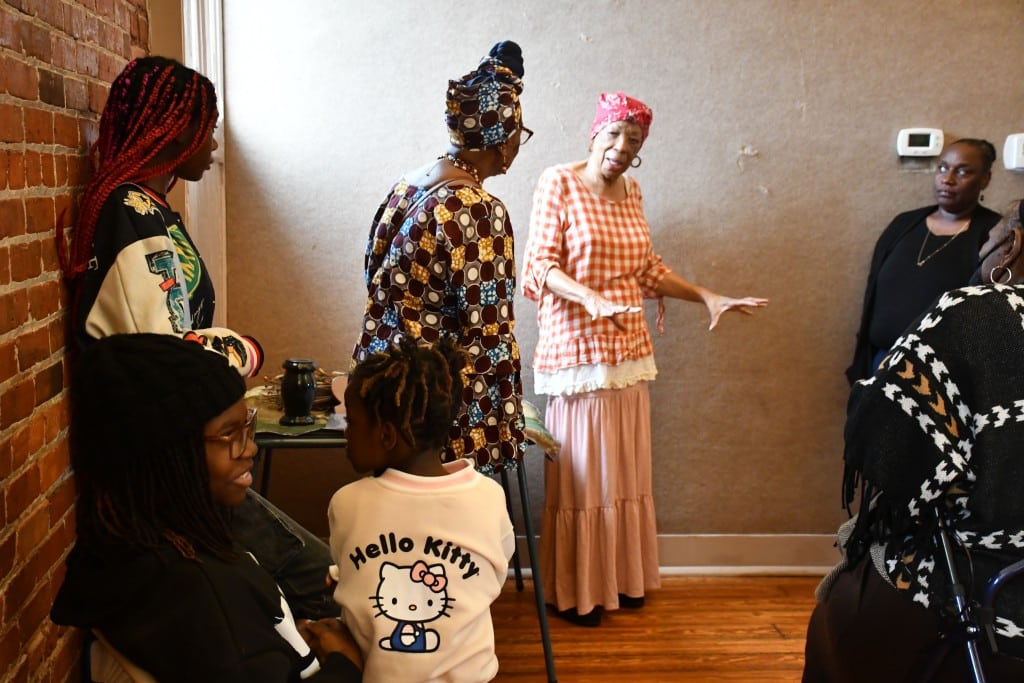
Carroll said it was only fitting for her to teach about old burial practices – like placing eggshells and rocks on top of burial plots to designate them as graves. Or how embalming techniques weren’t yet used so they had about two days to honor the body and then bury it. During the antebellum period, there were no cemeteries for black people to bury their dead.
It was a tedious process piecing together this history over the course of 10 months. Carroll said they sifted through documents, books and artifacts at libraries, churches and some owned by local families.
“It was so educational to find out all this good information about what started here in Mitchell County,” she said. “I feel like a lot of Mitchell Countians didn’t know.”
One native Mitchell Countian that the group tapped into for help was local genealogist, Marjorie Crawford.
Crawford has done extensive research on family histories in the area, but she said information on African American families is limited. Crawford couldn’t pinpoint exactly why a region that was mostly black had chronicled less black history. She said it could be a combination of factors – less prioritization on the history by black families, lack of documentation or education.
One project Crawford is tapping into now is surveying black cemeteries in Mitchell County.
She displayed research she had on the families of three people: Don Jester, Catchings Jenkins and John Brimberry. She encouraged black families in attendance to sign up to have their genealogy looked into. By the end of the event, she had more than 15 names.
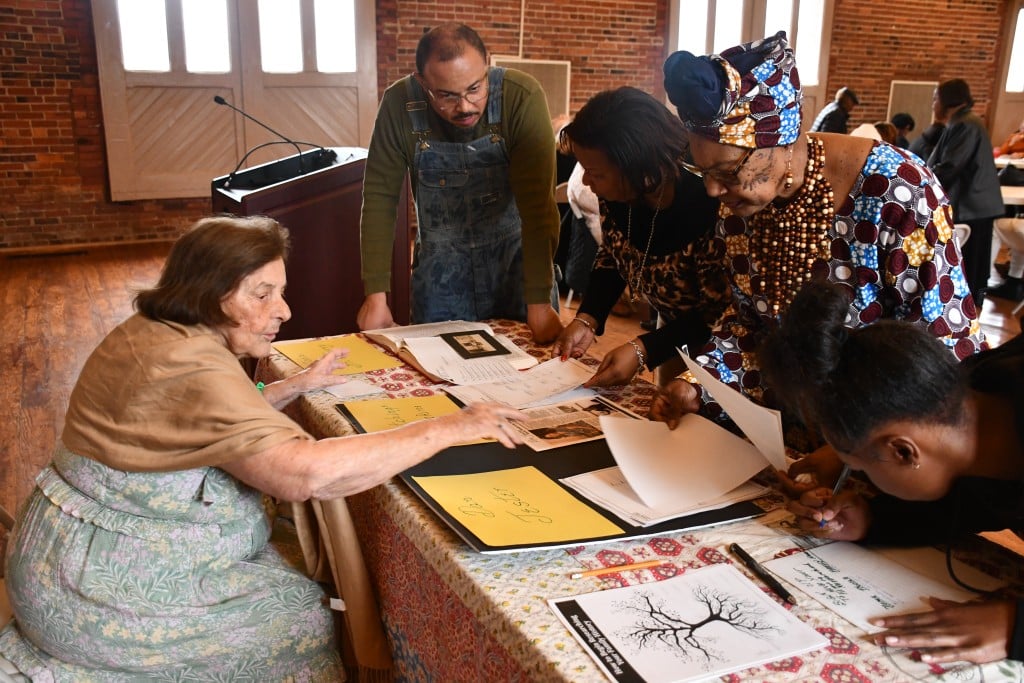
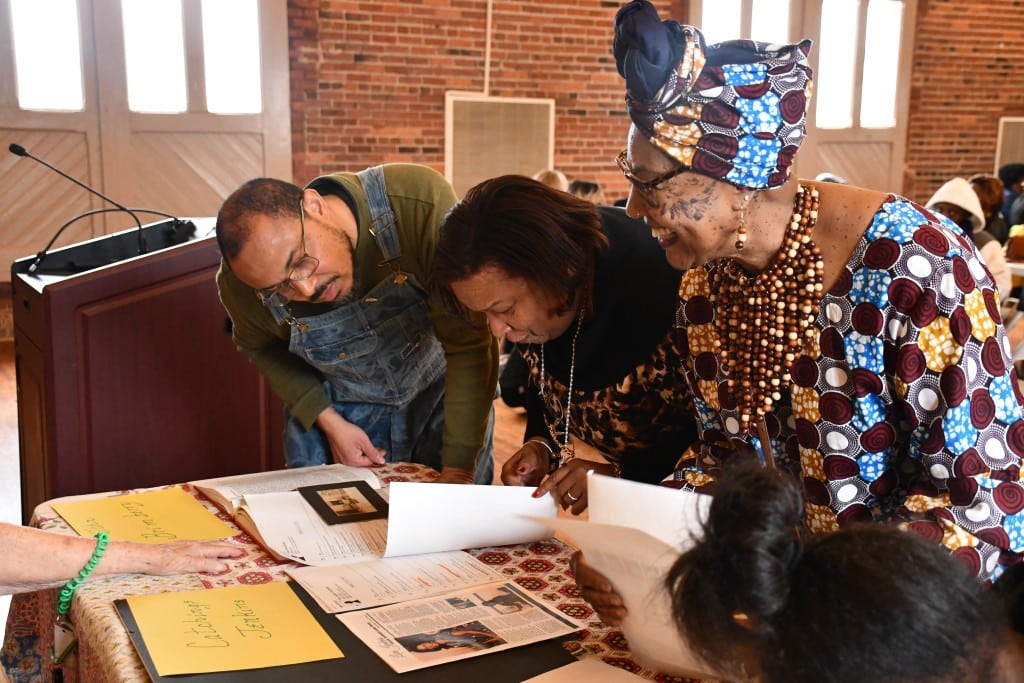
“I have a lot of work cut out for me now,” Crawford said.
One of those names was Yvonne Sherman. Sherman’s mother was born in Mitchell County. She said she grew up hearing stories from her grandmother about life in the area.
“She’d love to be here today,” Sherman said about her grandmother. “She’d have a lot to add.”
Sherman said she came out purely out of interest. She also brought her grandchildren with her.
“I just wanted them to know about the history,” she said. “And I wanted them to hear what life was like then compared to now.”
Sherman said she learned a lot at Saturday’s event and was most surprised about the burial practices.
“Today has sparked a lot of interest in me to learn more,” she said.
Azalee Vereen came to the educational event because her grandfather was born in Camilla in 1908. She grew up listening to stories about her grandfather jumping onto trains as a small boy to get from town to town in southwest Georgia.
She said she wanted to come today to learn the history but was surprised by how compelling the event was.
“I didn’t know it would be so awesome,” Vereen said. “I’m so glad I came.”
Carroll said the group isn’t done meeting, learning and teaching. They’ll continue to meet on the fourth Sunday of each month at St. Peter AME in Camilla. Since the group started its work, she said she’s had people from Albany call and ask to replicate the project in their own community.
She said there’s room for more events like Saturday’s.
“What we did today was chapter one,” Carroll said. “This is an ongoing study. We have many other chapters, and I need you all.”
Author

Related Articles

How Trump’s Endangered Species Act revisions could affect Southwest Georgia
Earlier this month, the Trump administration finalized a rule rescinding the long-standing regulatory definition of “harm” under the Endangered Species Act, removing language that had interpreted the law to include significant habitat modification or degradation that actually kills or injures protected wildlife.
Mitchell County official refutes charges made by group opposing rezoning of land to be purchased by energy giant
“At no time has NextEra mentioned a data center,” James Eubanks said of negotiations with the world’s largest electric utility holding company.

Mitchell County group fights NextEra Energy project
On June 29, the Mitchell County Board of Commissioners voted to approve a rezoning request that would change 300 acres in the northern part of the county from Agriculture to Industrial.
