
Mitchell County officials to decide if solar industry has a bright future there
File Photo: Alan Mauldin
By Alan Mauldin
[email protected]
CAMILLA — It’s no secret that a lot of farming goes on in Mitchell County. In 2021, it ranked third in the state in total farm value produced at $389 million, behind only Colquitt and Hart counties, according to the latest University of Georgia Farm Gate Value report issued in December 2022.
Mitchell County ranked first in row and forage crops at $104 million, seventh in vegetables, second in fruits and nuts, and seventh in the livestock and aquaculture category.
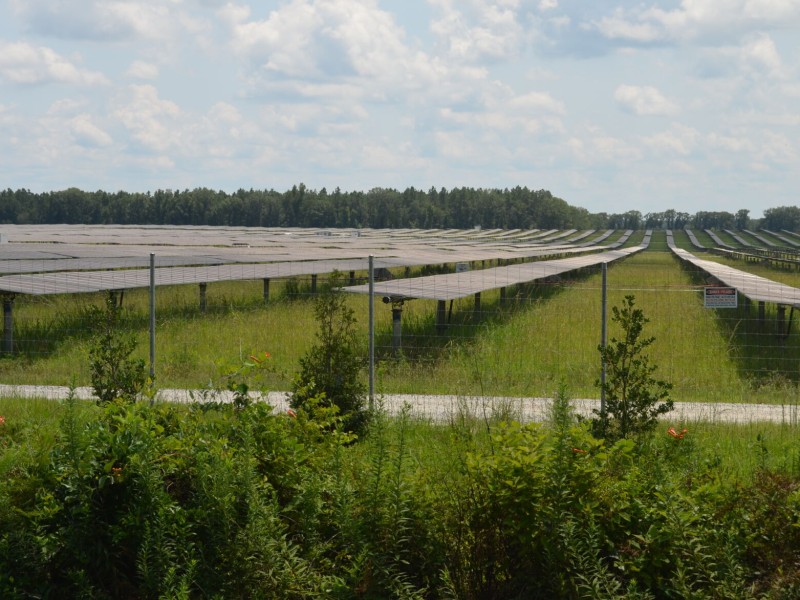
But it’s a new crop springing up from the land that has created some controversy over the last year or so. Two large solar operations, both located north of Camilla, providing electricity for Georgia Power Co. are in place, and there are other landowners looking to be part of the growing business.
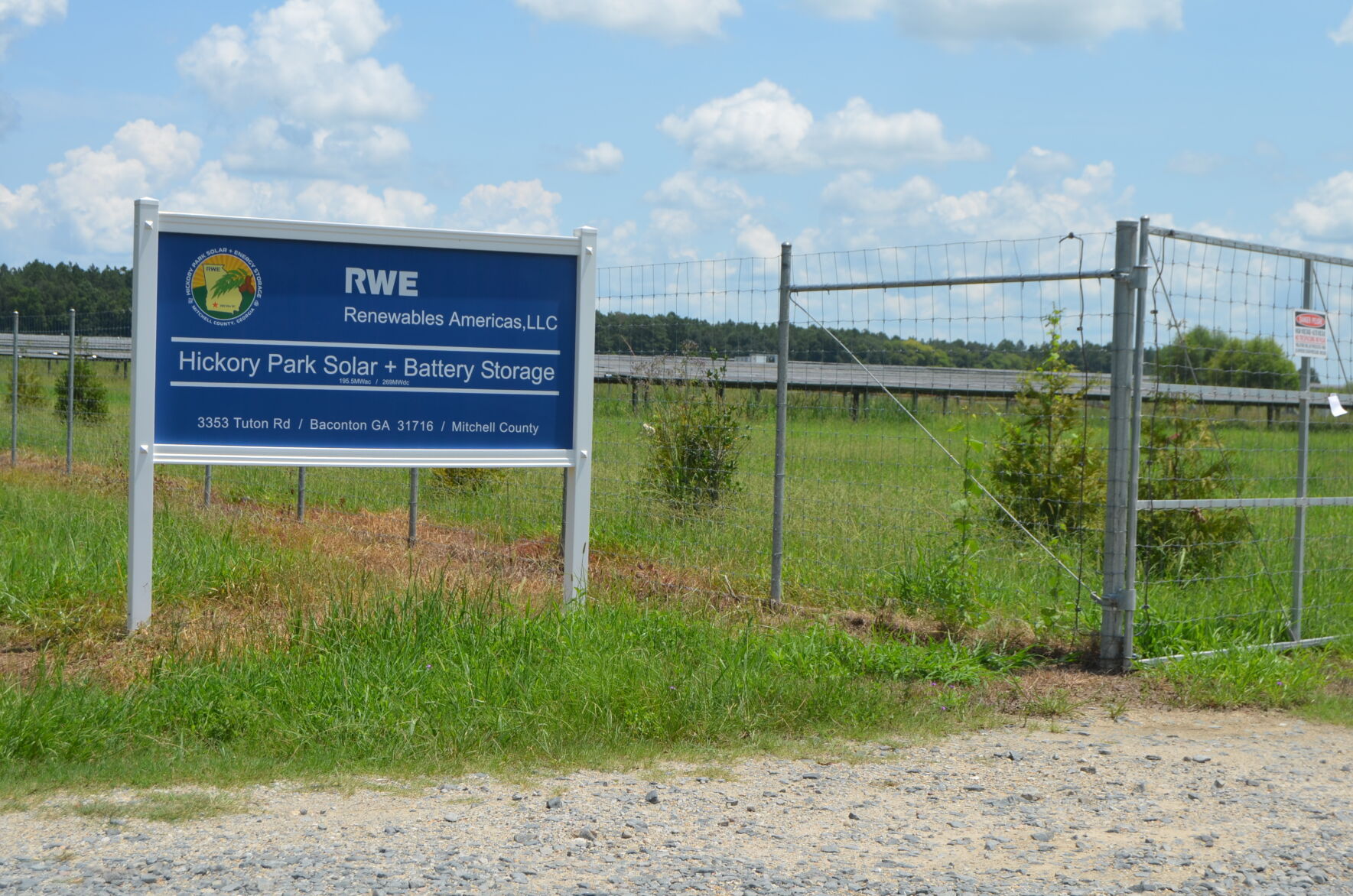
Invenergy’s largest-to-date project, the Southern Oak Solar Energy Center, a 160-MW project, was the first to go online in early 2021. Since that time the slightly larger 195-5-MW RWE Renewables’ Hickory Park project, which includes a 40-MW battery storage component, has gone into operation.
The county has received applications for additional projects, and landowners are seeking to zone property to allow siting of solar plants.
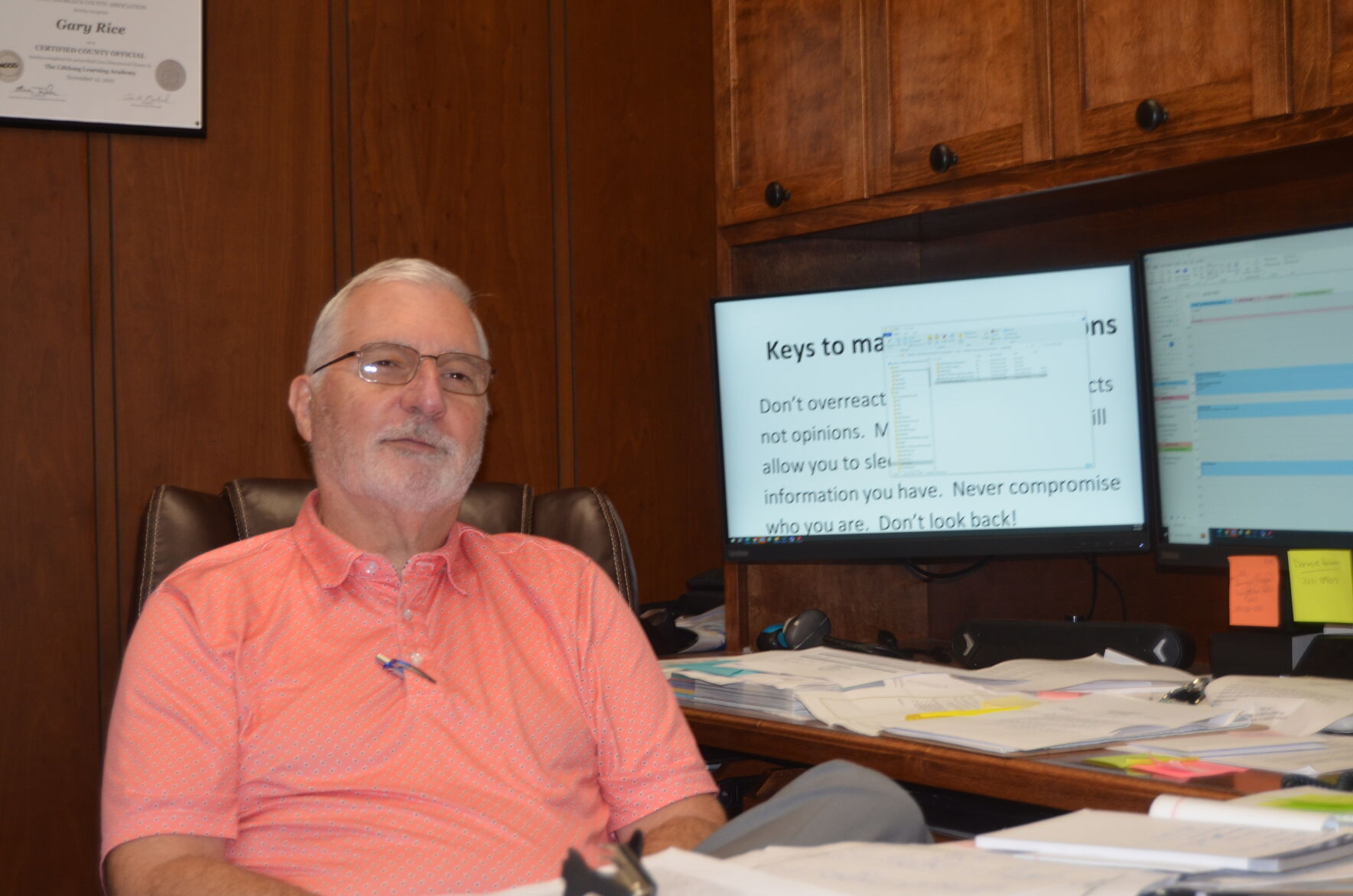
In the fall of 2022 opposition emerged when a project was proposed in southern Mitchell County, County Administrator Gary Rice said. Complaints have ranged from the appearance of the sprawling operations to the glare of lights at night, and there are concerns about the impact on wildlife and the county’s farm economy.
Pro-solar residents point to the taxes that the solar farms will provide and the right to use their property to generate income.
In February of this year, the Mitchell County Commission approved a moratorium on licensing new projects, a moratorium that was extended in June. On Tuesday, the commission will hear from pro- and anti-solar camps and could take action on a proposed set of regulations for zoning open-air business use in agricultural zones, which would apply to all industries including solar.
“You’ve got people who are very vocal on both sides,” Rice said. “We are looking at adding additional requirements to open-air businesses that we’ve developed to try and make a compromise for both sides.”
The latest moratorium is set to expire in October but can be lifted at any time with approval of the county commission. The ordinances under consideration were sent to the county’s Planning and Zoning Board, which accepted the recommendations and added a few of its own.
In addition to the solar operations visible on roadways, including Tuton and River Roads, are sings that have been planted stating “No More Solar Farms.”
“This is not about whether we need more solar,” Rice said. “This is about the zoning ordinance. We’ve tried to do a delicate balance because there’s two totally opposing sides on this issue. You have one side that’s 100% for it. You have one side that’s 100% against it.
“Let’s say it was late 2022 (when) there was a proposed project in the south end of the county. That was the project that was requested when we got an anti-solar discussion going on. We’ve tried to take into consideration what the anti-solar and the pro-solar folks were talking about.”
So far about 15,000 acres in the county have been zoned for commercial use that would allow placement of solar operations, the administrator said. Of that amount, about 7,000 acres were approved for solar use, with about half of that, 3,500 acres, actually having solar equipment in place.
“That other 3,500 acres has gone back into ag,” Rice said. “Probably about 25% of the land that’s been zoned in Mitchell County has solar equipment on it. There’s a lot of land zoned for solar in Mitchell County, but that doesn’t mean there’s that much solar development in the county.”
Rice said he doesn’t see the entire county becoming inundated with solar facilities because they must be situated relatively close to a large Georgia Power transmission line, limiting where they can be placed.
The proposed zoning regulations limit solar panels and arrays to a maximum of 8 feet above the base or mounting, require chain link fencing of at least 6 feet in height and a vegetation buffer at least 8 feet high that will completely block the sight of solar facilities within three years. Solar operators also will be required to install at least one well to monitor ground water, with two tests performed each of the first two years and then every five years, and testing prior to decommissioning.
The Planning Board’s testing recommendation is more stringent and would require a testing well for each 500 acres and soil testing along every 30-acre grid, with annual testing for the life of the project.
The tree buffer of 10 feet and the setbacks in the document are among the elements that are most controversial to the two opposing sides.
The setbacks, defined as the distance from the perimeter fence to the first solar panel, require that all land within 40 feet of solar facilities be agricultural if there are no nearby residences. The county’s recommendation is for a 150-foot setback separating solar property from a residence or recreational facility, with the Planning Commission recommending a 1,100 foot separation from the corner of a house to the first solar panel on adjoining property.
Companies also would be required to obtain a bond of $20,000 to ensure that any road damage that occurs during installation would be fixed, with the Planning Commission recommending a $500,000 bond.
Whatever action the County Commission takes, there are likely to be people dissatisfied on both sides, Rice said. But it will be a positive step in regulating future projects and, if necessary, can be altered if developments warrant.
“I don’t think there’s a perfect solution to it, but our job is to find the best solution to it,” he said. “This is one of those situations where people are passionate on both sides. I think the main thing is (people) not wanting to see them, not wanting them next to their property and the loss of farmland.
“From the pro side, what we’re hearing is ‘how are you going to tell me what I can do with my land?’ The board has tried to be very judicious in its decisions. That’s been the struggle, to make the best decision that’s going to take both sides into consideration, to do what’s best for the whole county and to try to meet in the middle as best as we can.”
After the proposed project in the southern part of the county, the group Farmers and Friends in Mitchell County was launched, with the first meeting held at the watermelon packing shed in downtown Pelham.
Azalee Vereen, a math teacher at Westwood Schools, was tasked with putting together some information on the potential costs to the county’s farm economy.
She calculated that a farmer invests about $1,100 an acre putting row crops in the ground as well as production and other costs, from $795 for peanuts to $1,391 per acre for cotton. About 2,000 acres of the county’s farmland has been dedicated to solar, she said,
Over 10 years, that land would have generated $22 million in investment, she said, and with an economic impact multiplier of 2.01 that translates to a net loss to the economy of $44.2 million.
“That’s gone,” she said. “We’ll never see that money. It’s taken out.”
The first two projects were provided with tax abatements, and the teacher estimated that cost the county a substantial amount in lost revenue.
Proponents say future projects will not come with tax abatements, which will produce more revenue in the county than the property tax paid on land zoned for agricultural use. The county has increased taxes the last two years.
Vereen is also concerned about jobs and said the county has done its share in support of solar. The two facilities in operation provide enough power for 58,220 homes in the state, while Mitchell County’s housing total is about one-fifth of that amount.
The issue is not acrimonious in the county, said Vereen, who is best friends with Jennifer Goode, the wife of solar proponent Steve Goode.
For Steve Goode, the issue boils down to people having the right to use their property to best provide for their families, at least as long as that means a legal use. He said he is looking to shift about 250 acres out of a total of 450 acres into solar energy production on the family’s property.
“I think the big thing for us is we are not farmers but we have a bunch of land, and we are trying to make everything better for my siblings and my sisters-in-law’s siblings and my grandchildren,” Goode said. “I can rent an acre for $220 or rent it to a solar farm company for $800 an acre. This is going to be better off for my family in the long run.
“A lot of people want to sell their land because they’re not interested in keeping it up anymore. We’re just looking for something that will help our children and grandchildren over the next 30 years.”
The history of farming has been one of reduction in labor use, he said. At one time not too long ago, picking cotton required three pieces of equipment to harvest and bale it; now it takes one giant machine that does all of that work. Similarly, peanut picking took five pieces of equipment that covered only a couple of rows and has been replaced by large units that pick much larger amounts more efficiently.
Solar also provides environmental benefits, but not only in terms of reducing dependence on solar fuels, Goode said.
“(Think of) the chemicals that won’t be used for farming, the water that won’t be coming out of the ground,” he said. “You’re helping wildlife because you won’t be using chemicals.”
The two wells on his property pump 1,200 gallons each, and over 24 hours could pull 3 million gallons out of the aquifer, and that water would be conserved if his land were converted to solar use, Goode said.
“The taxes that went up this year was about $500 a household,” he said. “I told the commissioners you can’t keep raising everybody’s taxes. They don’t have any new businesses coming into Mitchell County.
“This company that’s wanting to come into the county is going to give the county $2.5 million a year in taxes for this solar farm. They’re not doing any type of abatement on taxes or anything, so it’s free revenue. The county commissioners need to do what’s right for the people who live in the county.”
As predicted by Rice, the proposed business zoning recommendations have some sticking points.
For Goode it’s the 1,100-foot setback as recommended by the Planning Commission that is a disappointment. If approved, that would eliminate much of his acreage for use with a solar project.
“When you’re talking 1,100 feet, you’re talking acres and acres that would be taken out,” he said. “I can understand some distance from a personal home property. I can understand 50 feet from the fence.”
If a solar operation was sited on Goode’s property, he said, he would still pay the $5,000 in property taxes he currently does with agricultural use zoning.
“The solar company, because they’re going to be in a commercial zone, they will pay increased taxes,” Goode said. “The operators of solar farms in Mitchell County are now, I think, about 3,000 acres, but they pay 10% of the tax revenues in Mitchell County.”
Ultimately, Goode said, the issue is one of landowners’ rights.
“We started telling them you don’t have the right to tell us what we can or can’t do with our land,” he said. “They were going to try to eliminate the use of certain land for solar. I told them that if I can put solar on my roof, I should be able to put solar panels on my land across the road.”
Author

Related Articles

Voters will decide on Dougherty County Commision District 4 in Nov. 3 election
Only one competitive Dougherty County Commission race remains to be decided on Nov. 3. Democratic challenger Anthony Patterson is the challenger for incumbent Republican Russell Gray in District 4.
Lee commissioners adopt 29.71-mill tax levy, including school bond payments
Lee County commissioners adopted a combined county and school property tax rate of 29.71 mills Monday, formalizing a levy that includes 17.96 mills for school operations and a separate 0.58-mill charge to repay school bonds.
PHOTOS: Albany State and Phoebe Ceremony
Click the arrow to scroll through the images.
