
No deal: Albany, Dougherty County still can’t agree on sales tax dollars
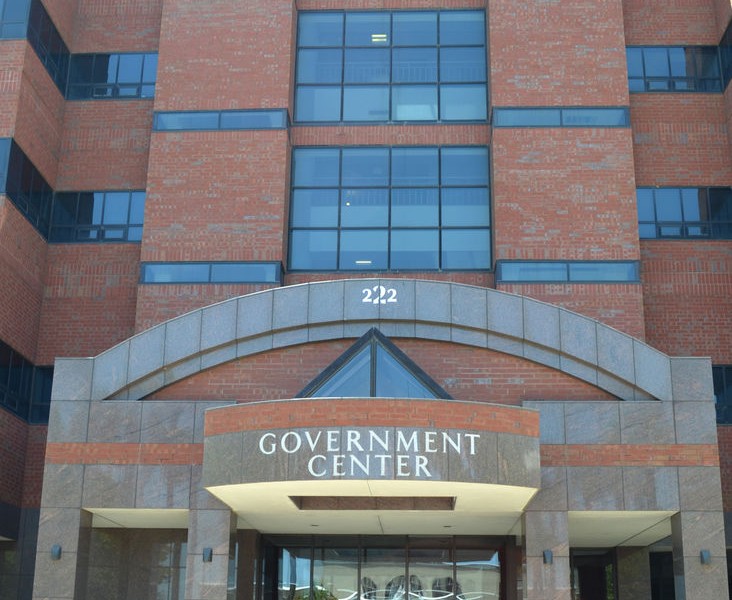
As the city of Albany’s Utilities Authority transitions to full automation for reading utility meters, some customers have seen estimated bills instead of an actual bill in recent billing cycles, many resulting in extremely high bills.
File PhotoSpecial Photo
By Alan Mauldin
alan.mauldin
@albanyherald.com
ALBANY — The Dougherty County Commission seemingly ended discussions on the split of a 1% sales tax with the city of Albany on Friday when it effectively rejected an offer made to try to break an impasse.
County commissioners voted unanimously to support the same traditional formula for the local-option sales tax that calls for the city to receive 60 percent, with 40 percent going to the county.
The county’s position seems to be its last word on the issue. Asked after the Friday special called meeting that lasted only a few minutes whether it’s a “take it or leave it” proposal, Commission Chairman Chris Cohilas seemed to suggest that was the case.
“It is what it is,” he said. “I’m not planning on reconvening for another meeting. I instead am spending Christmas with my family.”
If there is no agreement between the two sides by Dec. 30, collection of the tax would cease, eliminating a source that brings in $17 million per year. Much of the tax that supports local government operations comes from out-of-town shoppers and visitors.
State law requires that cities and counties negotiate the 1% tax every 10 years.
Last week, at the city’s request, the county sat down with a mediator who tried to help the two sides come to an agreement. County representatives left the session shortly after lunch.
The LOST can be used for pretty much any facet of government operations, including salaries and operation costs, unlike the two other 1% sales taxes shared between the two governments. By contrast, the special-purpose local-option sales tax (SPLOST) is limited to capital purchases like buildings and equipment and is divided by a formula of 64-36%, in favor of the city. The transportation special-purpose local-option sales tax (T-SPLOST) is split on a 67-33% city-to-county basis and is earmarked for transportation-related projects.
Albany officials laid out a compromise proposal in a Thursday news release. Under that proposal, the 60-40 split for the LOST would be maintained for four years, after which the city’s share would increase by 1% per year over the final six years of 10 years of the agreement.
The county is constitutionally obligated to maintain certain services, including the courts and jail, which are expensive, Cohilas said. And, unlike the city, it does not have a “cash cow” like the Utilities Department, and therefore the LOST is the only source of revenue other than property taxes upon which it can draw.
If worse comes to worst, the county has the option of initiating a homestead option sales tax, which has its own acronym, “HOST.”
“I don’t think the city leadership has grasped around the idea (that) the county has a way to move on,” Cohilas said.
Ultimately, for the chairman, the whole brouhaha, was unnecessary and again emphasizes the need for consolidation of the two governments. The LOST negotiations are a repeat of those undertaken on the SPLOST a couple of months ago, and Albany and Dougherty County should look to other consolidated governments in the state as one way to eliminate such squabbles.
“This is all stupid,” he said of the bickering. “We continue to fight over the change in the junk drawer.”
That the county did not even consider the proposal during its Friday meeting showed it was not negotiating in good faith, Albany Ward IV City Commissioner Chad Warbington said. The city also offered two other alternatives during the mediation session held last week.
“We’ve budged twice,” he said. “Actually, we’ve made three offers to them, each time moving closer to their position, and they have not reciprocated. That’s not how you negotiate. You don’t walk out the door in a temper tantrum.”
The commissioner urged taxpayers to let commission members, both with the city and county, know their feelings about what the failure to reach an agreement would have on them. By his calculations, the amount of money needed to be raised through property taxes to raise the same amount as the LOST would be about $1,000 annually on a $200,000 home.
“This is going to be a significant tax increase,” he said.
A HOST, while granting tax to homeowners, also would be problematic in that it would increase taxes for businesses and industry, Warbington said. And, renters would see a massive tax increase as well, which means about 60% of Albany’s population, which is itself 80% of the residents of the county as a whole.
The Association County Commissioners of Georgia is behind a push for counties to use the HOST as a bargaining tool in negotiations, Warbington said, and that scenario is playing out in Tift and Chatmam Counties, where county commissions are contemplating letting LOST initiatives lapse as well.
And with that 80% of the population living in the city and the proceeds of the HOST being placed in the county’s hands, city residents would have little incentive to approve the tax break in a referendum, the commissioner said.
While the city made some proposals, those ultimately were based on faulty numbers, District 4 County Commissioner Russell Gray said.
Gray, who sits on the county’s Finance Committee that formulates the annual budget, said the city’s proposal to basically receive $5 million more over the 10 years would wreck the county’s revenue stream.
“When they calculated the expenses they think the county pays that benefit the city, they completely forgot the Health Department,” he said. “That’s $855,000 that comes out of the county’s operational budget every year.
That agency provides everyday benefits like sexual health and wellness and was instrumental during the COVID-19 pandemic when it provided testing and vaccinations when they became available, he said.
The county compromised on the SPLOST, providing an additional $3.5 million over the 64-36 split for the city’s stormwater/sewer separation project, Gray said, but there comes a time when the city should stop using that massive project as an excuse for justifying receiving more money on subsequent tax issues.
“At the end of the day, the county does not have the resources the city does,” he said. “We don’t have rates and fees we can raise. We have property taxes. The county is living solely on our property tax base.
“We’re pretty fundamental. There’s not much (extras) the county can do. People choose to live in the city if they want those extra services. We can’t continue to keep having pressure put on the county to help pay for the (sewer) project each time we negotiate.”
Warbington and Albany Mayor Bo Dorough are insisting that there be a “winner” in what should be a process focuses on residents, Gray said. Any small benefit the city could accrue through receiving more of the tax money would come at a large cost to the county, with its much smaller budget and source of revenue.
“To me, this is nothing to play around with,” he said. “I think we should take it very seriously.”
For his part, the mayor said the county has increased its revenue with several tax hikes since the last time the LOST was negotiated. Those increases have amounted to $14 million more a year in revenue for the county, while the city has rolled back its tax millage rate several times during the same period.
“I’m disappointed the county has taken the position the 60-40 split ought to continue,” he said.
The county also has failed to fulfill the statutory requirement to negotiate in good faith, the mayor said. He also refuted the contention that the city raises rates arbitrarily to increase its budget.
“We are trying to keep our utility rates as low as possible,” he said. “We had millions of dollars in past-due (bills); we had millions of dollars in bad debt, especially during COVID.
“At the end of the day, utility rates have nothing to do with LOST.”
Author

Related Articles
Albany Herald – July 11, 2026
Putting on the Ritz… Food, mini menagerie provide… Albany City Commission set to vote on… Following Lee’s lead, Terrell County hits…

Classifieds – July 11, 2026
Albany Classifieds and Legals: Real Estate; Merchandise, Misc…
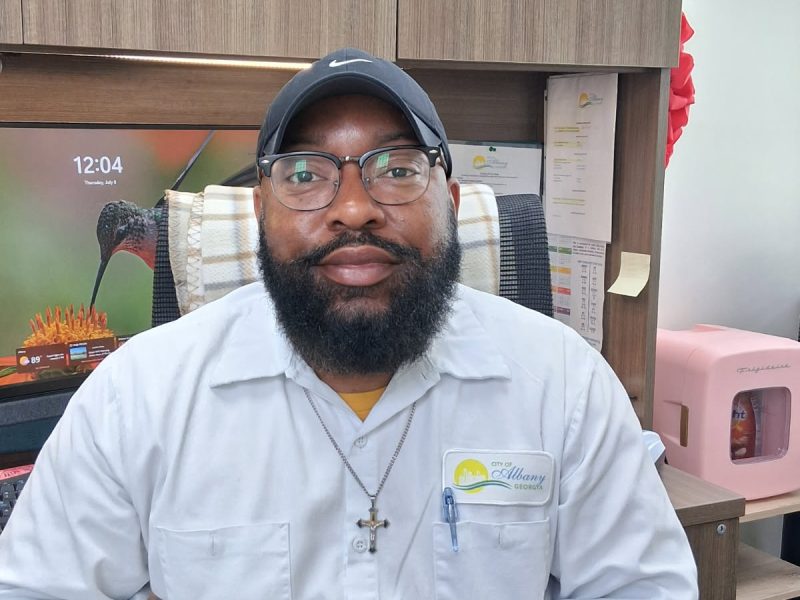
Small actions can help save big on utility bills
The high temperatures of July and August can bring scorching utility bills as air conditioners hum to keep houses cool. Albany Utilities Residential Conservation Auditor Willie Jackson offered some tips on making summer cooling bills more manageable.
