
No public turnout as Dougherty schools unveil $178.7M budget
The proposed FY 2027 budget projects General Fund revenues of approximately $178.7 million, down from an estimated $186.2 million in FY 2026, a decrease of about 4%. Expenditures are projected at $181.8 million, resulting in a planned use of approximately $3.1 million from fund balance.
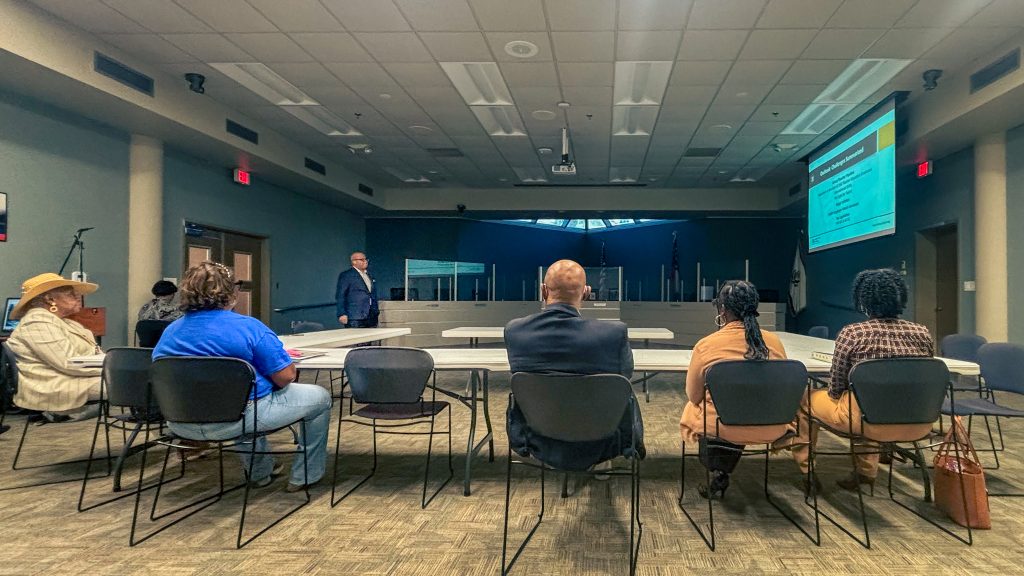
ALBANY — Dougherty County School System officials presented a proposed $178.7 million General Fund budget for Fiscal Year 2027 last week, describing a spending plan designed to absorb rising employee benefit costs, preserve classroom services and gradually reduce the district’s reliance on reserves despite declining state revenue.
No members of the public attended or offered comments during the hearing, despite the district publishing legal notices and promoting the meeting through multiple communication channels for an extended period of time ahead of the budget hearing.
The proposed FY 2027 budget projects General Fund revenues of approximately $178.7 million, down from an estimated $186.2 million in FY 2026, a decrease of about 4%. Expenditures are projected at $181.8 million, resulting in a planned use of approximately $3.1 million from the system’s fund balance.
That deficit is smaller than the approximately $4.7 million drawdown projected in FY 2026 and continues a broader trend of declining reliance on reserves. Budget documents show the district’s projected ending General Fund balance falling from approximately $41.3 million in FY 2023 to $40.7 million in FY 2024, $39.6 million in FY 2025, $34.9 million in FY 2026 and a projected $31.8 million in FY 2027.
District leaders characterized the approach as an effort to make measured adjustments rather than rely indefinitely on reserves to offset revenue pressures.
“We saw about a $1.6 million decrease in QBE funding this year compared to last year, but we were able to make cost adjustments and efficiencies to absorb that reduction,” Superintendent Ken Dyer said.
Even with the planned drawdown, Dyer said the district expects to maintain substantial reserves.
“Even after this budget, we’re projected to have more than $30 million in reserves,” he said.
He described the reserve fund as a tool to manage economic uncertainty and support strategic priorities.
“That reserve is there to help smooth out operations during economic cycles and to fund one-time expenditures or initiatives that we think are critical to our mission,” Dyer said.
While revenues are projected to decline, district officials said employee benefits continue to be among the largest sources of budget pressure.
“For FY 2027, the Teacher Retirement System employer rate will be 22.32%, which is up 0.41 percentage points over last year,” Dyer said. “That doesn’t sound like a lot, but when you’re dealing with a personnel budget of more than $100 million, it is a lot.”
Dyer also pointed to rising health insurance costs.
“Our state health benefit obligation for FY 2027 is almost $10 million. In 2019, it was below $4.5 million,” he said. “That $10 million represents about a third of our entire local tax digest.”
Despite those pressures, the proposed budget includes step increases for eligible certified and classified employees and maintains the district’s $15-per-hour minimum wage.
“We felt strongly that no Dougherty County Schools employee should live in poverty. We raised the minimum wage to $15 an hour and are committed to maintaining that,” Dyer said.
Budget documents indicate district leaders concentrated many of their reductions outside direct instructional services. Instruction remains the largest expenditure category at approximately $100.2 million, accounting for more than half of General Fund spending. However, instructional spending is projected to decline by roughly $4.4 million, or 4.2%, compared with FY 2026.
Some of the largest reductions appear in administrative and support functions.
General administration spending is projected to fall from approximately $5.9 million in FY 2026 to $4 million in FY 2027, a reduction of more than 31%. School administration expenditures are projected to decrease by approximately 9.3%, student transportation spending by about 10.5%, and business services by roughly 7.5%.
Dyer said part of those reductions stem from the district’s approach to staffing vacancies and retirements.
“Every time we have a vacant position, we don’t just fill it because it’s vacant,” Dyer said. “We ask, ‘Is that position needed to continue operations?’ If it’s not needed, we don’t fill it.”
He added that employee turnover has also contributed to lower personnel costs.
“Some of the reductions are positions that were left vacant, and in some cases retirees with 30- or 34-year careers and higher salaries were replaced with employees coming in at lower salaries,” Dyer said.
The budget also continues funding for strategic priorities outlined in the district’s recently adopted 2026-2030 strategic plan, including literacy initiatives, teacher apprenticeship programs, expanded pre-kindergarten access, student mental health services, workforce credential programs, career pathway development and family engagement efforts.
Another significant unknown facing the district is Dougherty County’s ongoing countywide property revaluation, which is expected to be completed in July.
Budget documents note that the school system’s final millage rate will not be set until more complete tax digest information becomes available. As a result, local revenue estimates included in the proposed budget remain preliminary and could change once the revaluation process is finalized.
The updated digest could have implications for the district’s long-term financial outlook. While increased property values can generate additional tax revenue, Georgia’s rollback provisions generally require local governments and school systems to reduce millage rates to offset growth attributable solely to reassessments rather than new construction or economic growth.
Because the revaluation has not yet been completed, district officials have not publicly quantified whether the final digest could reduce the amount of reserves needed to balance the budget or materially alter local revenue projections for FY 2027.
Dyer said the board’s goal remains controlling costs before seeking additional revenue from taxpayers.
“This board has always maintained that we don’t want to raise taxes,” he said. “We want to cut costs responsibly before we raise taxes on taxpayers.”
The Dougherty County Board of Education is scheduled to consider final adoption of the FY 2027 budget on June 11.
Related Articles

Judges denies residency challenge; Edward Brown to claim Senate District 12 seat
An email ruling issue this week paves the way for Albany businessman Edward Brown to enter the Georgia Senate next year. A Superior Court judge denied candidate Corey B. Morgan’s challenge to Brown’s residency in the District 12 race.

Dougherty County to mail 2026 property assessment notices this week
Dougherty County will mail 2026 Notices of Assessment to property owners this week.

Albany animal trainer seeking to fulfill dream of establishing a pet food pantry
“(If) you lose a job, you have a healthcare crisis, what do you do with the cat? What do you do with the dog? Now you will at least have someone who can help you with the food.”
