
Online delivery boosts interest in UGA Extension
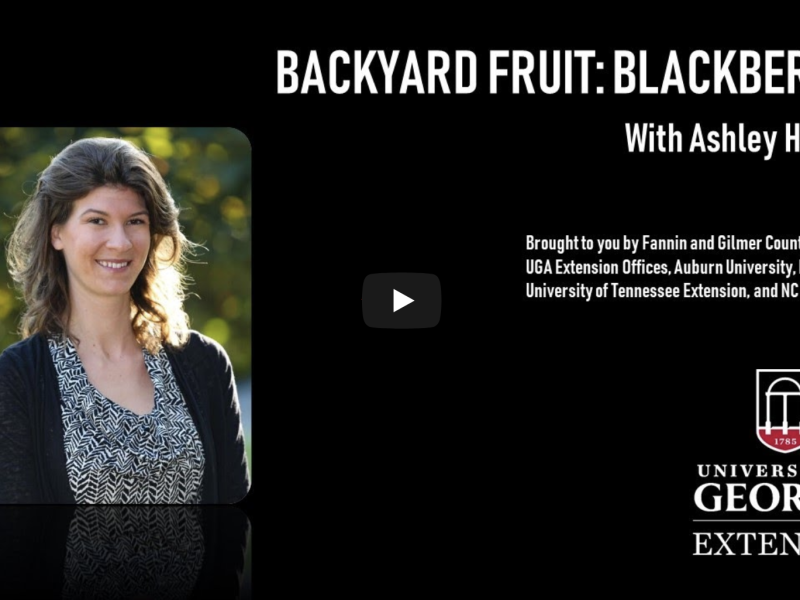
Special Photo: UGA/CAES
By Josh Paine
CAES News
ATHENS — Due to social distancing and shelter-in-place guidelines necessitated by the COVID-19 pandemic, University of Georgia Cooperative Extension agents and specialists quickly shifted gears to deliver in-person programs online. But they didn’t expect the overwhelming response they received from the public.
In Fayette County, Agriculture and Natural Resources Agent Kim Toal and Program Assistant Cynthia McCrary have been offering hour-long programs via Zoom three days per week since March.
“To me, it’s been a really great experience. I’ve had people email me saying they have enjoyed the online format because they usually weren’t able to come in person,” said Toal, who previously organized weekly in-person seminars on Tuesdays. “We try to do weekly themes and offer a mix of programming on vegetables, ornamentals, etc. Native plants and pollinators have been really popular.”
The response to online delivery has been much higher than Extension employees originally expected, with an average of 50 people logging in to each online session versus 30 to 35 participants attending weekly face-to-face meetings, according to Toal.
Camden County ANR Agent Jessica Warren has seen a similar jump in numbers. Her Friday “lunch and learn” series has attracted 25 to 60 people each week, double or triple the previous average number of participants. If that many people were to show up in person, they wouldn’t be able to fit in the local extension office.
“When we started working at home, I thought I wouldn’t hear from anybody, but it’s just the opposite,” Warren said. “It’s also less of a commitment to take a lunch break and learn something online (than to travel to attend in person).”
While UGA Extension was already using digital platforms for professional development and meetings, this has changed the way many agents and specialists will use technology for outward-facing programming.
“In an effort to continue to provide educational content to the citizens of Georgia during the periods of reduced mobility and social interaction, extension has significantly increased its use of digital learning technologies,” said Mark McCann, assistant dean for extension in the College of Agricultural and Environmental Sciences. “The most popular method has been through online webinars. This is a platform that UGA Extension has used frequently in the professional development of our faculty and staff over the past several years.”
Already a tight-knit community of colleagues, producing new online content has increased opportunities for collaboration among extension specialists and agents across the state and beyond.
For a four-week backyard fruits webinar series, Fannin and Gilmer County Agent Ashley Hoppers is collaborating with Josh Fuder in Cherokee County and Ashley Brantley in Muscogee County, as well as colleagues from Auburn University, the University of Tennessee and North Carolina State to present sessions on everything from berries to specialty fruits.
Faculty have found that online sessions have attracted their “regular” local audiences as well as participants from all over the U.S.
“It has been neat to see who has tuned in and to see this level of engagement. It’s very humbling, actually. I had no idea this program would be embraced like it has,” said Hoppers, who surveyed participants to see where they were tuning in from, including one from Italy.
Poultry science extension specialists who previously held fee-based poultry housing workshops for 100-125 individuals on campus, with additional attendees via webinar, have held eight free weekly webinars. These have reached more than 8,000 people with 5,800 live viewers and nearly 3,000 more watching recordings.
“It’s been sort of an explosion of interest,” said Michael Czarick. “We’re reaching smaller farmers, a broad and more diverse audience than was held before.”
He and his colleague Brian Fairchild have seen their reach expand to 40 states and 77 countries. Their email list, which they use to announce workshops, has doubled in the number of subscribers through their website, poultryventilation.com.
Extension specialists and agents have shared their expertise about trending topics to employees statewide and answered questions via webinars. Subjects have included specific health information related to COVID-19, working and parenting at home, personal finance, gardening and many others. These resources are available at extension.uga.edu/emergencies.
The webinars have served a public relations role for extension as well, reaching audiences that were previously unaware of its many offerings.
“One of the questions in my pre-webinar survey is whether this is your first extension program and many people said yes,” Hoppers said. “I think it is growing our base in a way that was unanticipated. Through this program alone, having an online presence is engaging with new audiences. They are tuning in and then become interested in finding their own local office. UGA Extension is a statewide entity and we are letting people know that extension exists in their own home counties and that extension is here and ready to help regardless of where they are located.”
People aren’t just listening, they’re engaging and following up, too.
For a list of upcoming Extension programming, visit extension.uga.edu/calendar.
Find recordings available on the Extension YouTube channel at www.youtube.com/user/ugaextension or contact a local UGA Extension office for more information by visiting extension.uga.edu/county-offices.
Related Articles
PHOTOS: Albany State’s How To Dress For Success Forum
Click the arrow to scroll through the photos.
PHOTOS: Albany State Principal Investigator Appreciation Day
Click the arrow to scroll through the photos.

PHOTOS: Albany State President’s Speaking Series Forum
Click the arrow to scroll through the photos.
