
Helping Hands to serve 1,100 Dougherty families weekly with help from Paula Deen foundation
Paula Deen’s Bag Lady Foundation has donated money to Helping Hands Ending Hunger, providing enough funding for about 1,100 cooler bags as the Dougherty County School System program begins another year of getting unused school food into the homes of local families.
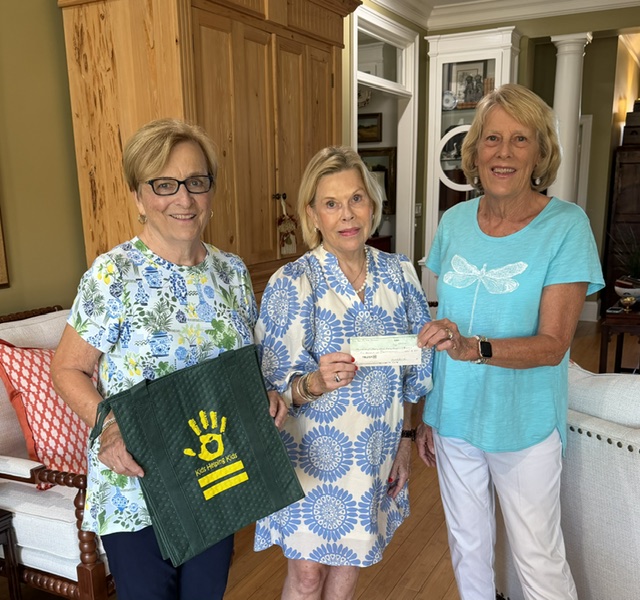
ALBANY— Paula Deen’s Bag Lady Foundation has donated money to Helping Hands Ending Hunger, providing enough funding for about 1,100 cooler bags as the Dougherty County School System program begins another year of getting unused school food into the homes of local families.
The bags are an integral part of the process, with each one corresponding to a family requesting food through the program this school year, Helping Hands Ending Hunger Administrator Cathy Revell said.
And Revell says the demand is growing.
“There’s definitely more than there has been in the past,” she said. “We’ve always had a lot of kids that want the food. But it does seem like there’s more now.”
Some schools have already received more than 100 requests for food, she said, including schools where organizers might not traditionally expect to see the greatest need.
“The need is across the board,” Revell said.
Helping Hands Ending Hunger, known as HHEH, operates in 20 Dougherty County schools, where students can donate unopened, factory-packaged food they do not eat during breakfast or lunch. Instead of being discarded, those items are collected throughout the week and packed on Fridays for students who have signed up to take food home.
“If they didn’t want their cheese stick, they donate that cheese stick at the end of the lunch or breakfast period,” Revell explained. “We collect those and keep them through the week until Friday when we send the filled bags home with kids.”
The program does not require families to prove financial hardship or qualify through federal income guidelines.
Every student is given the opportunity to participate. Families simply indicate that they would like to receive the additional food by filling out a paper that is sent home with students at the beginning of the school year.
“We don’t want it to be any kind of designation of need,” Revell said. “It’s a choice that you want the bag.”
That approach makes the roughly 1,100 requests particularly significant. Rather than representing children identified by the school system through a poverty measure, the number reflects families themselves saying the additional food would help.
The need exists within a school system that has historically served some of Georgia’s most economically disadvantaged student populations. State direct-certification data — which identify students automatically eligible for federal meal benefits through participation in programs such as SNAP — have previously documented exceptionally high rates at some Dougherty County schools.
In 2021, for example, 91.7% of students at Alice Coachman Elementary and 90.4% at Morningside Elementary were directly certified, placing both among the 10 highest rates in Georgia outside residential and juvenile facilities.
HHEH’s experience this year, however, suggests food insecurity is not confined to the schools traditionally associated with the highest levels of poverty.
The food students take home is only part of what the program rescues.
During the first weeks of school, before the Friday bags begin going home, volunteers collect perishable items such as milk and distribute them to 18 nonprofit organizations. Excess food continues to go to those organizations throughout the year.
Over the program’s history, HHEH has rescued hundreds of tons of food — an amount Revell said becomes particularly striking when considering the size of the individual items being collected.
“That’s a lot when you consider it’s juice or a cheese stick,” she said.
The program will begin sending this year’s food bags home next Friday.
Revell, a retired educator, serves as a volunteer overseeing the Dougherty County program. Each of the 20 participating schools has its own coordinator who manages the program at the school level, while Revell oversees those coordinators.
The operation itself is powered by volunteers and community support.
“Our entire program has been funded by the community,” Revell said. “We’ve not received any kind of government money.”
Volunteers collect food and transport it to nonprofit partners, while others pack the bags sent home with students. Participating schools have dedicated storage areas equipped with refrigerators, freezers, shelving and bins purchased as the program has developed.
The Bag Lady Foundation’s involvement also predates this year’s donation.
Paula Deen, who is from Albany, established The Bag Lady Foundation in 2012, naming it after her first business. The foundation focuses on nourishment and assistance for women and families.
“She gave us money early on to get started,” Revell said.
This year, a friend of Revell’s who serves on the foundation board contacted her to ask what HHEH needed. One of the immediate expenses was the cooler bags required at the beginning of the school year.
“They funded that,” Revell said.
For Revell, the evidence that the program matters is not found only in pounds of rescued food or the number of bags packed. It comes from children.
“We’ve gotten notes from students themselves, like second- and third-graders, who are thanking us and glad they get the food,” she said.
Sometimes children recognize her when she walks into one of the schools.
“They’ll run up to me and ask ‘Am I going to get my bag this week?'” Revell recalled. “They’re anxious to get it.”
Parents have delivered the same message from the other side of the schoolhouse door.
“We have a lot of parents that will tell us that without that food that we send home, it would be very difficult for them,” Revell said.
For a retired educator who said she has long understood the needs students can carry with them into the classroom, those encounters are enough to demonstrate why the work matters.
Helping Hands Ending Hunger will begin its ninth year in Dougherty County schools this year. Over its first eight years, the program reports benefiting more than 71,000 families and rescuing more than 1.18 million pounds — about 563 tons — of food.
Superintendent Kenneth Dyer has also supported the program as part of the district’s broader emphasis on services addressing needs beyond academics, Revell said.
“He’s got a lot of wraparound services, and this fits right into those services,” she said, “providing for the kids and the families.”
This year, about 1,100 of those families will begin taking food home in bags purchased through The Bag Lady Foundation — while food that might otherwise have gone unused continues moving from school cafeterias to children and community organizations that can use it.
Related Articles
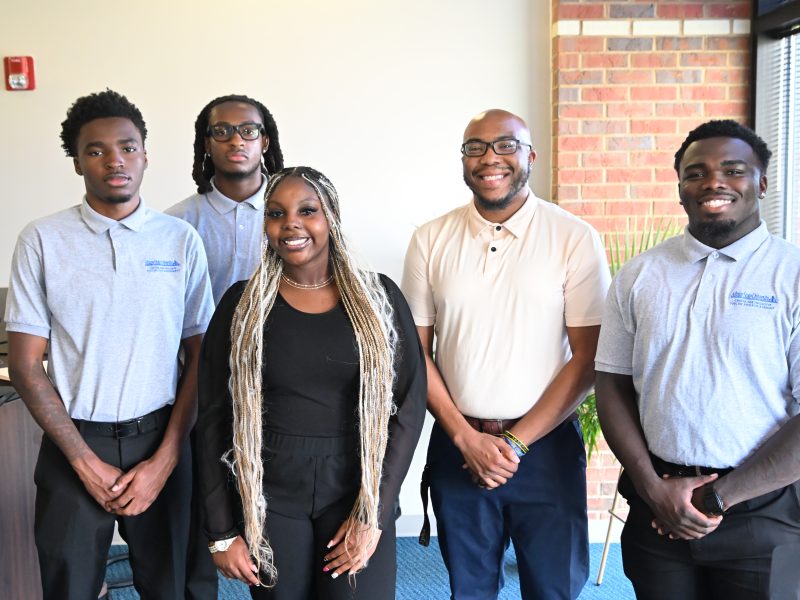
PHOTOS: Albany State – CISA Executive Exchange
Click the arrow to scroll through the photos.

Months of unresolved records requests leave Dawson taxpayer questions unanswered
The City of Dawson will move ahead with its fiscal year 2027 budget before completing external audits that remain unfinished, city officials told The Dawson News on July 31 — more than three months after the newspaper began requesting the financial records behind the city’s decisions.
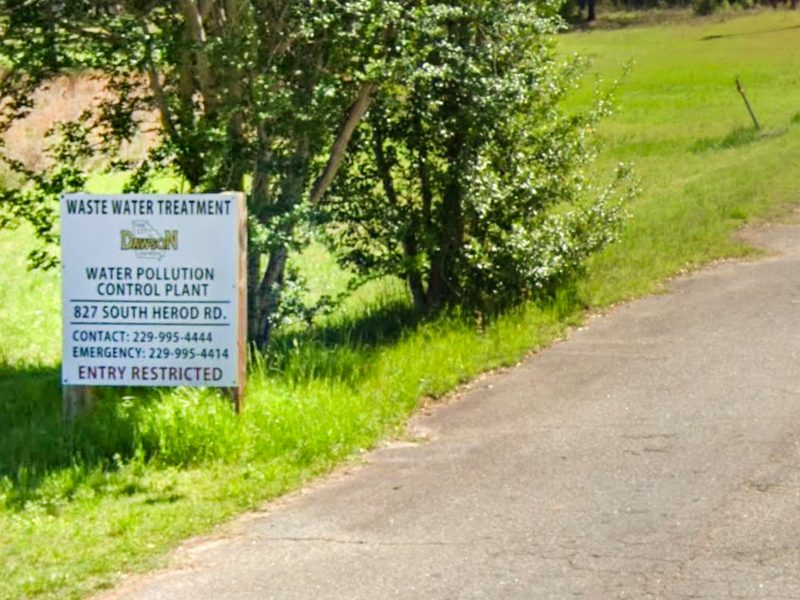
Dawson’s $10.2 million sewer project leaves major financial questions unresolved
As Dawson’s finance director resigns and operating pressures mount, records show $10.2 million in sewer funding, frozen loans, missing audits and gaps in the public accounting of project money.
