
Racing toward Election Day, control of Senate, House up for grabs
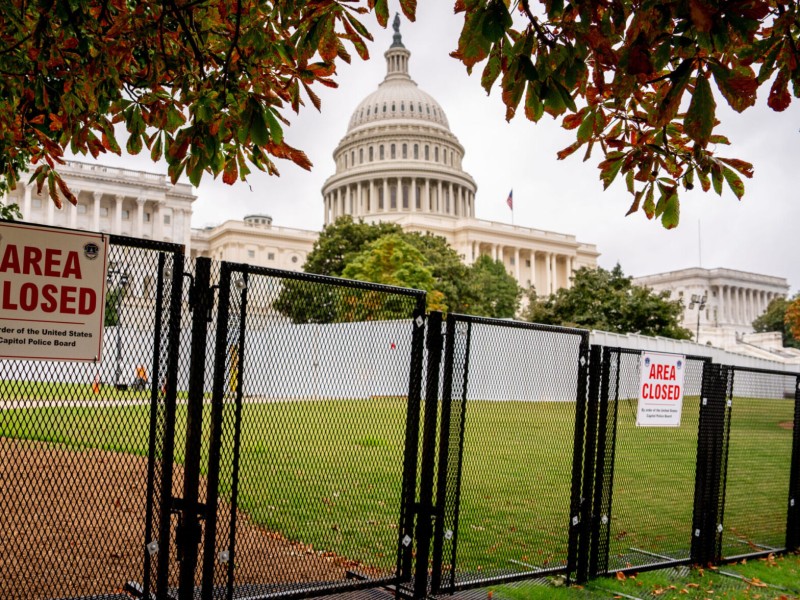
Special Photo: Andrew Harnik via Georgia Recorder
By Ashley Murray & Jennifer Shutt
Georgia Recorder
WASHINGTON — The country’s next president will need a friendly Congress to make their policy dreams a reality, but control of the two chambers remains deeply uncertain with just weeks until Election Day — and whether the outcome will be a party trifecta in the nation’s capital.
Recent projections tilt in favor of Republicans taking the U.S. Senate, an already closely divided chamber that is sure to be near evenly split again next Congress.
And though Vice President Kamala Harris injected a jolt of energy into the Democratic Party, prognosticators still say the prizewinner of the House is anybody’s guess.
“The House is highly close and competitive, and really could go either way. And I say the same thing about the presidential race,” Kyle Kondik, managing editor of Sabato’s Crystal Ball at the University of Virginia Center for Politics, told States Newsroom on Thursday.
Control of the 435-seat House remains a toss-up, with competitive races in both the seven swing states and in states that will almost certainly have no bearing on who wins the top of the ticket. The GOP has held a slim majority this Congress, and Democrats need to net only four seats to gain control.
“It really is right on the razor’s edge,” Kondik said. “It’s pretty crazy that, you know, we’ve had two straight elections with just 222-seat majorities. And it’s pretty rare historically for there to be majorities that small twice in a row — unprecedented.”
Sabato’s recently adjusted its ratings on five races, including moving Democratic Rep. Mary Peltola of Alaska to the “toss-up” category from a safer “leans Democratic.” Kondik also nudged the race for Republican Rep. Mike Lawler of New York to “leans Republican” from “toss up.”
The National Republican Congressional Committee, the party’s fundraising arm for House races, announced in June nearly $1.2 million in ad buys in Alaska. The organization launched a new ad in the state this month that accuses Peltola of not supporting veterans.
In addition to Peltola, Kondik ranks nine other Democratic incumbents — of the nearly 40 competitive races — as toss-ups.
Among the toss-ups is the seat currently held by Rep. Matt Cartwright of Pennsylvania, a key swing state in the presidential race. Cartwright’s Republican challenger, Rob Bresnahan, runs an electrical contracting company in the northeastern Pennsylvania district that he took over from his grandfather.
Democrats are investing in the seat: Cartwright is running a new ad featuring union workers praising him, and just last week Harris hosted a rally in the district, which includes Scranton.
But the NRCC thinks they have a pretty good chance of flipping his seat.
But Sabato’s also nudged three seats toward the Democrats’ favor on Thursday.
Kondik moved Rep. Derrick Van Orden of Wisconsin from the safety of “likely Republican” to the weaker “leans Republican” category.
Rep. Suzan DelBene, chair of the Democratic Congressional Campaign Committee, sees an “important opportunity” in Van Orden’s district. The GOP congressman, who represents central and western Wisconsin, became known for his profanity-laced outburst at young Senate pages for taking photos of the Capitol rotunda.
The Democrats are running challenger Rebecca Cooke, a small business owner, in the hopes of unseating him.
“We have an incredible candidate in Rebecca Cooke (against) one of the most extreme, which is saying a lot, Republicans in the House,” DelBene told reporters on a call Monday.
DelBene said she’s confident in the Democrats’ chances to flip the House, citing healthy coffers and revived interest.
“We have seen huge enthusiasm all across the country. We have seen people, more and more people turning out to volunteer, to knock on doors, to make phone calls,” she said.
Erin Covey, a House analyst with The Cook Political Report with Amy Walter, wrote on Sept. 5 that Democrats have a brighter outlook after Harris assumed the top of the ticket, though November remains a close call.
“Now, polling conducted by both parties largely shows Harris matching, or coming a few points short of, Biden’s 2020 margins across competitive House districts,” Covey wrote.
The DCCC announced Friday it raised $22.3 million in August, bringing its total for this election cycle to $250.6 million.
Republicans are inching closer and closer to flipping the Senate red during this year’s elections, thanks to a map that favors GOP incumbents and puts Democrats on the defensive in several states.
West Virginia Gov. Jim Justice is widely expected to win his bid for the upper chamber, bringing Republicans up to 50 seats, as long as they hang on in Florida, Nebraska and Texas.
But Democrats will need to secure wins in several challenging states, including Arizona, Michigan, Montana, Nevada, Ohio, Pennsylvania and Wisconsin — and break the 50-50 tie through a Democratic presidency — if they want to remain the majority party. That many Democratic wins seems increasingly unlikely, though not entirely out of the realm of possibility.
Montana, where Sen. Jon Tester is looking to secure re-election against GOP challenger Tim Sheehy, has been moved from a “toss-up” state to leaning toward Republicans by three respected analysis organizations in the last few weeks.
The Cook Political Report wrote in its ratings change earlier this month that several “public polls have shown Sheehy opening up a small, but consistent lead.”
Republicans winning Montana’s Senate seat could give them a firm, though narrow, 51-seat Senate majority.
That, however, would require the Republican incumbents in states like Florida and Texas — where it’s not clear if evolving trends against Republicans will continue — to secure their re-election wins.
And it would mean holding off a wild card independent candidate in the Cornhusker state.
The Cook Political Report says it’s “worth keeping an eye on a unique situation developing in Nebraska, where independent candidate Dan Osborn is challenging Republican Sen. Deb Fischer.”
CPR also noted in its analysis that Democrats’ best pick-up opportunities, which could rebalance the scales a bit, are Florida and Texas.
“Today, the Lone Star State looks like the better option because of the strengths and fundraising of Democrats’ challenger there, Rep. Colin Allred,” CPR wrote.
If Democrats do hold onto 50 seats, through whatever combination of wins and losses shakes out on election night, majority control would depend on whichever candidate wins the presidential contest.
Given the close nature of several Senate races, it is entirely possible control of that chamber isn’t known until after recounts take place in the swing states.
The National Republican Senatorial Committee, led this cycle by Montana Sen. Steve Daines, is confident the GOP will pick up the Senate majority following November’s elections.
The group highlighted a Washington Post poll this week showing a tie between Democratic Sen. Bob Casey and GOP candidate Dave McCormick in the Pennsylvania Senate race.
NRSC Spokesman Philip Letsou sent out a written statement after the poll’s release that Casey is in the “race for his life … because Pennsylvania voters know Casey’s lockstep support for Kamala Harris and her inflationary, anti-fracking agenda will devastate their economy. Pennsylvanians have had enough of liberal, career politicians like Casey and Harris.”
The GOP acquisition of a handful of seats would still require the next Republican leader to constantly broker deals with Democrats, since the chamber is widely expected to retain the legislative filibuster.
That rule requires at least 60 senators vote to advance legislation toward final passage and is the main reason the chamber rarely takes up partisan bills.
A Republican sweep of the House, Senate and White House for unified government would give them the chance to pass certain types of legislation through the fast-track budget reconciliation process they used to approve the 2017 tax law.
How wide their majorities are in each chamber will determine how much they can do within such a bill, given Republicans will still have centrist members, like Alaska’s Lisa Murkowski and Maine’s Susan Collins, balancing the party against more far-right policy goals.
Author

Related Articles

Albany Rescue Mission in recovery but still can use some help
“We can’t do this without the community. We are so grateful for the willing vessels. We just can’t thank them enough. We also appreciate the other ministries that have sown seeds into our ministry.”

Plenty of oil, not enough diesel — and southwest Georgia farmers are paying for it
Sedrick Rowe doesn’t spray herbicides on his 10 acres of organic peanuts. He fights weeds with his tractor instead, which means he runs it more often than most farmers — and burns at least 30 gallons of diesel on a typical day. This harvest season, every one of those gallons costs more than it has at any point on record.

Dougherty schools plan task force as SNAP changes raise concern over free meals
The Dougherty County School System plans to create a task force to help families retain food assistance and navigate new reporting requirements as district officials warn that declining SNAP participation could eventually affect the federal provision that allows every student to eat free at school.
