
Report: ‘Flood’ of book bans engulfs U.S. school districts
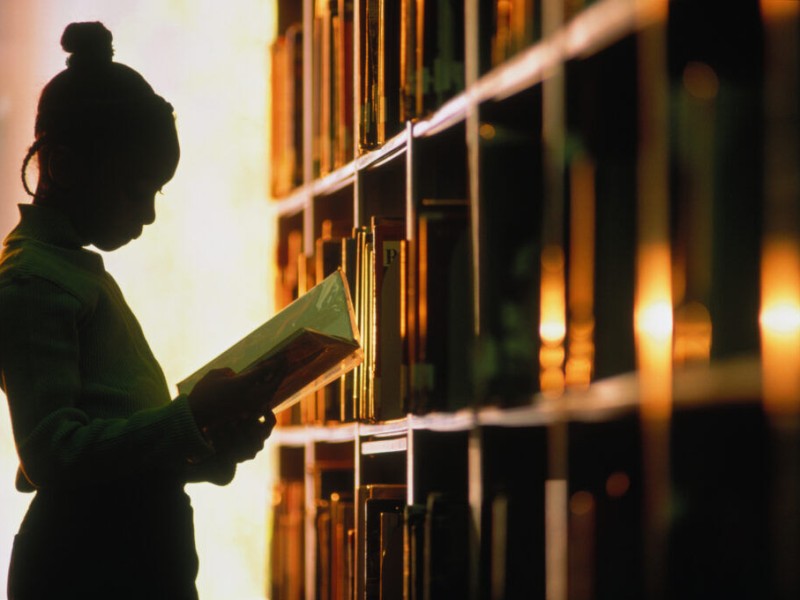
Special Photo: Terry Vine via Georgia Recorder
By Ariana Figueroa
Georgia recorder
WASHINGTON — More than 1,600 book titles across 32 states were banned from public schools during the 2021-2022 school year, with the bulk of the ban requests coming from a handful of right-wing groups pushing for censorship of books that feature LGBTQ characters and characters of color, a new report said.
“What I want to be really clear about is the books are a pretext,” Ashley Hope Pérez, an author of a banned book, said. “(Book banning) is a proxy war on students who share the marginalized identities of the authors and characters in the books under attack.”
In 2015, Pérez wrote “Out of Darkness,” a young adult romance about a Mexican American girl and an African American boy set in the 1930s, but the book was banned from school districts last year.
The states with the most incidents of banning are Texas, Florida, Pennsylvania and Tennessee, according to an updated report released by PEN America, a group that is dedicated to fighting book bans and advocates for the First Amendment. Overall, there were 2,532 incidents of banning across the United States.
“[T]he scope of such censorship has expanded drastically and in unprecedented fashion since the beginning of the 2021—22 school year,” the report found.
In total, 1,648 unique book titles that were banned in 2021-2022. PEN previously published a report in April that found 1,586 instances of individual books banned, affecting 1,145 titles, in 86 school districts across 26 states.
The new report found that 50 groups at the state, national and local level, with as many as 300 chapters, “have played a role in at least half of the book bans enacted across the country during the 2021—22 school year.” Of those groups, 73% were formed in 2021, according to the report.
“Those who are advocating on this issue are within their rights, their freedom of assembly, mobilization, using their voices, and that’s perfectly appropriate,” Suzanne Nossel, chief executive officer of PEN America, said during a press briefing with reporters. “But when the end goal is censorship, as a free expression organization, it’s our obligation to call that out and to point out that even the use of legitimate tactics of expression can sometimes lead to a spurious and speech-defeating result.”
Georgia is among the states with book bans, according to the PEN report.
“The unprecedented flood of book bans in the 2021—22 school year reflects the increasing organization of groups involved in advocating for such bans, the increased involvement of state officials in book-banning debates, and the introduction of new laws and policies,” according to the report. “More often than not, current challenges to books originate not from concerned parents acting individually but from political and advocacy groups working in concert to achieve the goal of limiting what books students can access and read in public schools.”
The report was released in connection with Banned Book Week, an annual campaign by the American Library Association and Amnesty International to celebrate the freedom to read and to push back against censorship.
The ALA also released its own report that found from Jan. 1 to Aug. 31 of this year, there were 681 attempts to “ban or restrict library resources, and 1,651 unique titles were targeted.”
Some of those groups that have challenged school boards include Moms for Liberty, an organization formed in 2021 that has strong GOP ties and local chapters that “target local school board meetings, school board members, administrators, and teachers” to push right-wing policies, as reported by Media Matters. Moms for Liberty has about 200 local chapters across 37 states.
Republican lawmakers at the state level are also joining the movement to ban books from public schools and libraries.
Friedman said that book bans occurred in 138 school districts, representing 5,049 schools, across 32 states. He added that the bans affect nearly 4 million students.
“Overwhelmingly we are seeing people Google what books have LGBTQ content whatsoever,” he said. “Even just a book that has an illustration of a same-sex interracial couple gets thrown onto one of these lists and ends up banned in some districts.”
Cheryl Lewis Hudson, an author and publisher specializing in children’s books celebrating black culture and black history, said that book bans are about power and that they are nothing new. She said the trend of book bans is not only censorship, but erasure of marginalized communities.
“We can recall historically that in the United States, enslaved persons were prohibited by law from learning to read or write, and slave masters really understood that this special control of slaves was a sense of power — if you couldn’t control slaves’ bodies, you could control their minds by denying them access (to knowledge,” she said.
Hudson said Jim Crow laws prevented her from accessing public libraries, and she was not able to get her first library card until she was 13. She added that the segregated school she attended did not have a library for students.
Author

Related Articles
Brie’s Gift offers a helping hand for families affected by leukemia
“I think that would be beautiful. Brie loved her school, she loved her city. I think that would be wonderful.”
Classifieds – June 30, 2026
JOBS: Full-Time – Fire Fighting Pilot for Thrush Aircraft, LLC… SERVICE … DIRECTORY: Health – Private Caregiver… Home Repair/Remodeling: Enhanced Remodeling & Drywall…
Albany Herald – June 30, 2026
Albany Commission approves $358.2
million budget… State Bar of Georgia honors Willie Lockette with… Red light violations will bring citations at…
