
Senate study committee to consider education funding
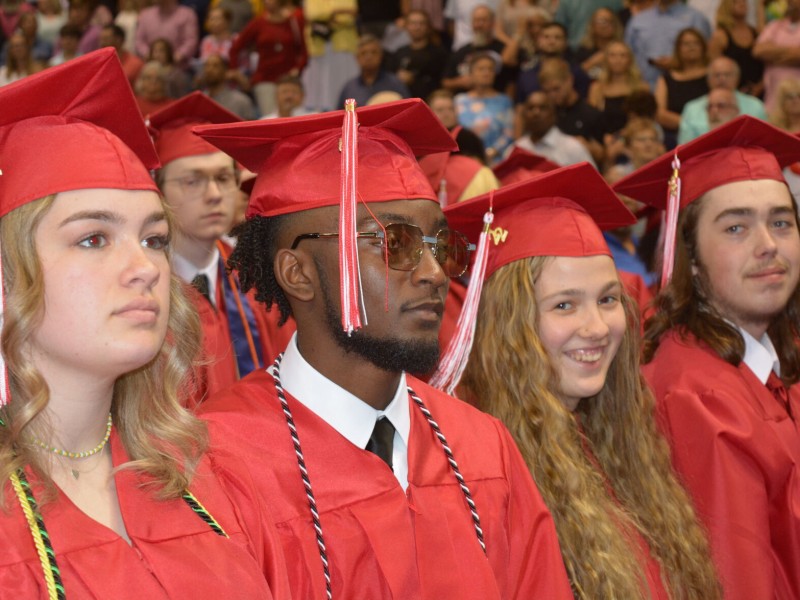
File Photo: Carlton Fletcher
By Rebecca Grapevine
Capitol Beat News Service
ATLANTA — The Georgia Senate Study Committee to Review Education Funding Mechanisms will meet Friday to consider what changes are needed to how schools are funded in the Peach State.
Senate Majority Leader Mike Dugan, R-Carrollton, is chair of the committee.
Other members of the committee are Sens. Chuck Payne, R-Dalton; Nan Orrock, D-Atlanta; Blake Tillery, R-Vidalia; Lindsey Tippins, R-Marietta; and Billy Hickman, R-Statesboro.
The committee grew out of a senate resolution passed in this year’s legislative session. It will prepare recommendations for the General Assembly to consider during the 2023 session.
The committee likely will focus on the Quality Basic Education formula. That formula allocates school funding based on the number of students in a district and other factors.
“Education has changed, and what we need for our students has changed, but we’re still operating off of an antiquated formula,” Lisa Morgan, president of the Georgia Association of Educators, said. “The resources should be available so we are providing a well-rounded education for every child.”
She pointed out that teachers and schools are now asked to do much more than they were in the past.
“The formula does not provide for enough counselors, social workers, nurses, and that is something we know is necessary,” Morgan said.
Some key school employees — like cafeteria workers and bus drivers — are not listed in the state salary schedule, meaning it’s up to school districts to set their salaries, Morgan said.
“We have shortages … in those support positions and part of the reason is because there is no pay scale for those positions to guarantee at least a minimum livable salary,” she said.
Some advocates are calling for the committee to look at revamping the formula to ensure districts get enough resources to help educate children living in poverty.
Georgia is one of six states that lack an “opportunity weight,” which would provide extra funds for school districts to educate low-income students.
“Easily the biggest blind spot our education funding system has is for those students living in poverty,” Stephen Owens, a senior policy analyst at the Georgia Budget and Policy Institute, a thinktank in Atlanta, said. “The state recognizes the unique needs of students with disabilities, those learning English, kids in Career, Technical, Agricultural Education.
“It’s time to support the largest challenge we have in schools: the connection between opportunity and parental income.”
“It simply costs more money to educate a student living in poverty … to get the same academic outcomes,” Dana Rickman, president of the Georgia Partnership for Excellence in Education, an independent nonprofit focused on improving education in the state, said. “It’s doesn’t have anything to do with their intellect or potential — it’s just they have more challenges and so you have to account for that.”
Rickman said she hoped the committee would consider conducting a cost study to better understand Georgia’s education costs.
“We have all these discussions with teachers and administrators, that we are expecting these sorts of results from our students,” she said. “But we don’t know how much it would really cost to actually get the results. “It would help guide our decisions if we understood the cost structure behind what we’re spending our money on.”
With the state’s current budget surplus, this is a good time to take a big-picture look at the cost of education, she added.
Some advocates are likely to push to widen Georgia’s voucher and school-choice programs,
“School choice for every family must become a reality for Georgia,” Cole Muzio of Frontline Policy Council, a conservative organization, said. “Dollars should follow the child — allowing each individual child to reach their goals, empowering parents, and elevating education across Georgia.”
Others — such as Terrence Wilson — disagree.
“The funds dedicated to vouchers should be reinvested into public schools that can meet the needs of all students, particularly those with disabilities,” Wilson, the regional policy director for the Intercultural Development Research Association, a nonprofit devoted to educational equity, said.
One model for the committee comes from Georgia’s neighbor to the north, Tennessee. That state revamped its education funding system earlier this year.
The Tennessee reform effort was successful because it moved forward quickly and collected detailed feedback from stakeholders across the state, Christian Barnard wrote in a piece published by the Georgia Public Policy Foundation.
“If Georgia legislators want a K-12 finance reform strategy to stick this time around, they need to focus on setting a clear vision, establishing a transparent public engagement process, and following an efficient timeline,” Barnard said.
The study committee will meet Friday at 1 p.m. at the state Capitol. The committee also has set up a website through which Georgians can livestream the meeting, sign up to testify via Zoom, and submit written testimony.
The committee also will meet in Savannah on Sept. 16 and in Columbus on Oct. 21.
Author

Related Articles
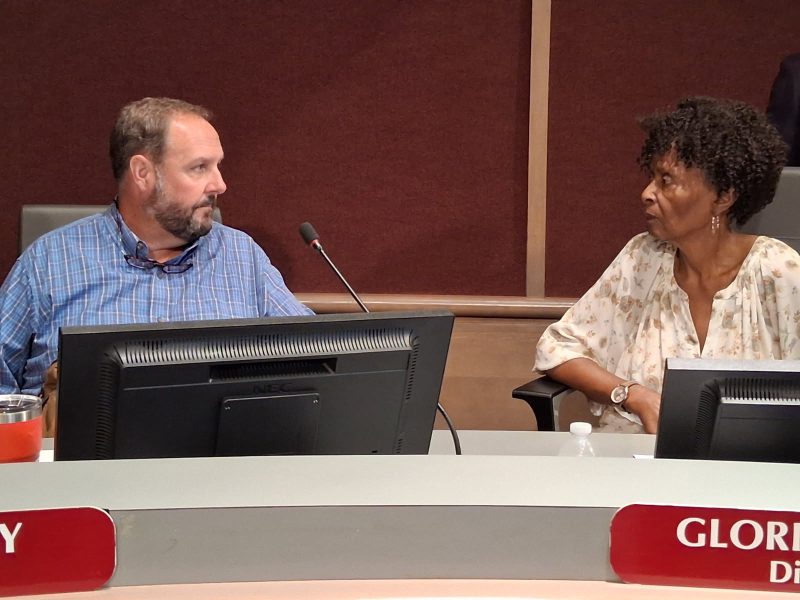
Dougherty Commission considers $104 million budget for 2026-2027 budget year
“The other side of the coin is you could have higher revenues than projected. We’re very conservative in budgeting revenues. That also reduces the need to use fund balance”
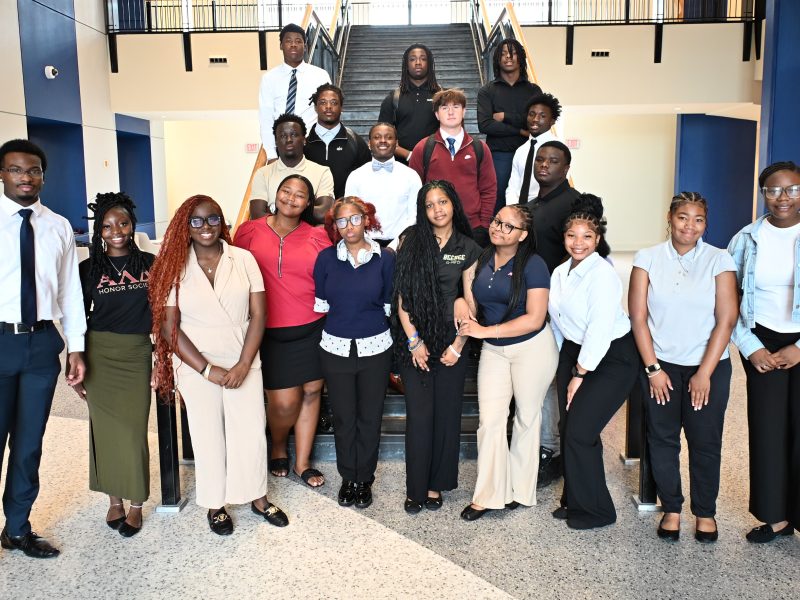
PHOTOS: Albany State Summer Success Academy
Photos by Reginald Christian, Albany State University

Albany gas prices among Georgia’s lowest as summer fuel costs decline
According to AAA, the average price for a gallon of regular gasoline in the Albany metro area was approximately $3.45 this week, making Albany the second-least expensive metro market in Georgia behind Dalton at $3.41 and slightly ahead of Brunswick at $3.48.
