
Spinnerbaits are versatile lures for out-of-the-way places
Bob Kornegay
If one enjoys catching fish, it’s hard to find more productive baits than earthworms, crickets, or minnows. All these natural offerings have been around for centuries. They are also relatively inexpensive, effective, and easy to use.
However, should an angler prefer artificial lures, it might be equally difficult to find a better weapon than the spinnerbait; that well-known, weird-looking contraption that, in form, resembles no real creature Mother Nature ever conceived.
Outdoor writer Bob Brister once quoted an old fellow who referred to the deadly lure as a “sinner bait.” While this elderly angler was in reality merely committing a grammatical gaffe, Brister pointed out he was actually pretty accurate.
“Sometimes spinnerbaits can be so effective it almost seems a sin to use them,” he said.
“I haven’t looked up the origin of the modern spinnerbait or the identity of the person who first thought of it,” said angler and lure collector Barton Willingham. “I would, however, like to thank whoever long ago decided to go against all convention and stick a rubber skirt, a hook, and a couple of whirling blades on a weighted ‘safety pin’ and tell fishermen a fish might want to eat it.”
Since that time, bass anglers in particular have made the spinnerbait an integral part of their all-season fishing arsenal in all types of cover and water conditions. Few bass fishermen can be found today who don’t keep at least a minimal selection of spinnerbaits at the ready inside their tackle boxes.
“Fishermen don’t live by bass alone, though, and neither does the spinnerbait,” Willingham added. “Defining a spinnerbait as a ‘bass lure’ is like calling Thomas Edison nothing but a light-bulb manufacturer. This bait is a deadly weapon on countless other fish species as well.”
Nowhere does the spinnerbait better prove this point than in small waters off the beaten path. These waterways include shallow creeks, irrigation canals, beaver ponds, “back-to-nature” farm ponds, and shallow backwater arms off major rivers and reservoirs. There, Nature pretty much does as she pleases and predatory fish species like chain pickerel (jackfish), bowfins, gars, and some of the larger bullhead catfishes abound.
The bass, of course, are there as well, but they must compete with these less “glamorous” species for food and living space. On any given day, any or all these fishes are actively feeding and constantly on the lookout for any vibration, flash, or movement that alerts them to the possibility of a quick meal.
And the spinnerbait does just that. As a “reaction” lure, the bait often motivates an aggressive fish to strike indiscriminately, without pausing to identify the “prey.” Some experts believe this might be the reason why the spinnerbait does not necessarily need to look like something real.
“Its value as a fish-catching tool is in action and reaction, not exact true-to-life imitation,” Willingham said.
If variety is the spice of life, then the spinnerbait can be used to “spice” up virtually any fishing trip to a body of water where various species of predatory fishes dwell.
“I often compare remote-water spinnerbait fishing to bottom-fishing in saltwater,” Willingham explained. “You just never know what you’re going to catch. Retrieve the lure through grass or submerged vegetation, and a bass may hit it in traditional fashion. Fish it in exposed roots or bank structure and it may be inhaled by a chain pickerel or a hungry gar.”
Likewise, let the helicoptering contraption fall into deep holes beneath overhanging limbs and a prehistoric bowfin might greedily engulf it. Slow-roll it along the bottom and a fat bullhead may surprise you. Truly, virtually any fish larger than a three-finger bluegill looks upon the spinnerbait as perhaps the ultimate equal-opportunity lure.
The spinnerbait offers another advantage in these waters that are often weed-choked and filled with lure-snagging wood structure. It is not a bait that hangs up easily and can be cast into places where crankbaits and other reaction-type lures cannot. With a minimum of practice, virtually anyone can learn to adroitly fish a spinnerbait in even the thickest cover.
The one drawback to fishing spinnerbaits for certain species other than bass has to do with lure destruction rather than lure loss. It doesn’t take many battles with chain pickerel and bowfins (both toothy, strong-jawed critters) to make a mauled spinnerbait literally disintegrate in one’s hand. The solution to this is simple: Buy the cheapest spinnerbaits available. These are not baits one would purchase for use in a big-money bass tournament, but for bowfins, pickerel, and the like they serve quite well.
So, if you’re interested in some fishing variety and need a truly versatile lure, look to some off-the-beaten-path waterway and arm yourself with a bargain-basement spinnerbait. You might just discover that “sinner bait” isn’t such a strange nickname after all.
“That sort of fishing probably won’t get you many guest shots on an outdoor television show,” concluded Willingham, “but I guarantee it’ll put a big smile on your face.”
Related Articles

Bringing (positive) changes to The Herald’s Squawkbox
The Herald, as part of The Georgia Trust for Local News, is altering the way the Squawkbox is presented.
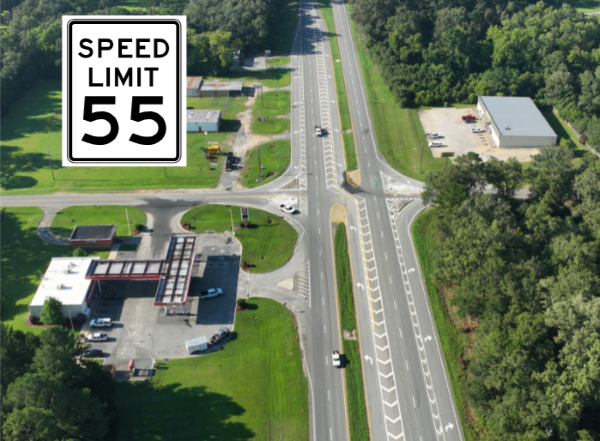
U.S. 19 speed limit reduced for traffic approaching Nelms Road intersection
The speed limit for U.S. 19 traffic approaching the Nelms Road intersection has been reduced from 65 mph to 55 mph.

PHOTOS: Albany State New Student Orientation
Photos by Reginald Christian, Albany State University
