
State legislators take aim at foster care; U.S. Sen. Jon Ossoff opens inquiry
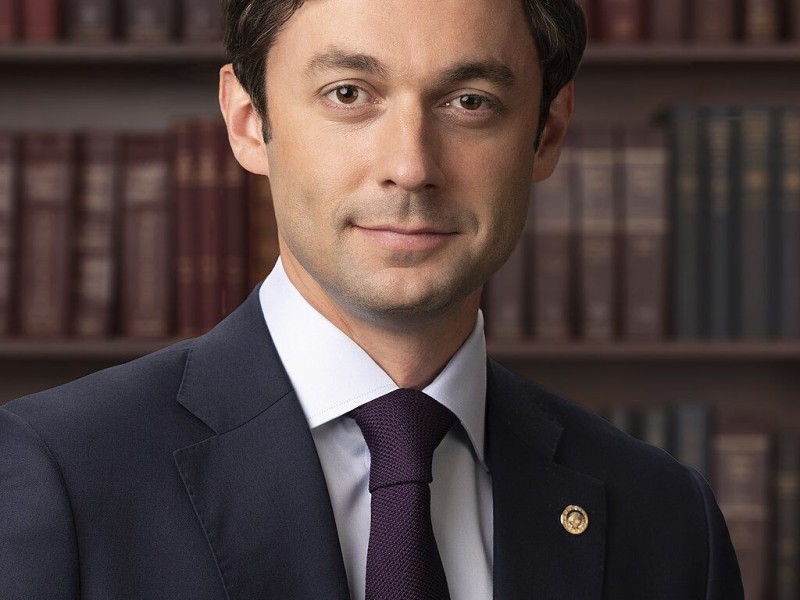
Jon Ossoff
Special photoBy Rebecca Grapevine
Capitol Beat News Service
ATLANTA — The state legislature is considering bills to address the problems Georgia’s foster care system faces, including the practice of housing children in hotels or state offices when placements cannot be found.
“With the full weight of the governor’s and lieutenant governor’s leadership behind these efforts, we have a real opportunity to make lasting positive change for Georgia’s children,” Department of Human Services Commissioner Candice Broce told the Senate Committee on Children and Families this week.
A package of four Senate bills would streamline or expedite the process of making legal decisions about the transfer of children to state custody and adoption proceedings.
For example, one bill would allow doctors to testify without being present in person to ensure expert testimony can be provided within the quick timeframe needed for child custody proceedings.
“What we’re trying to do here is … get the law in sync with the time pressures that we have in these very important situations,” Sen. Bill Cowsert, R-Athens, said.
Georgia’s hoteling problem has drawn national attention, with U.S. Sen. Jon Ossoff, D-Ga., announcing Friday that he and Sen. Marsha Blackburn, R-Tenn., are launching a bipartisan inquiry under the auspices of the U.S. Senate’s Human Rights Subcommittee, which Ossoff chairs.
Ossoff released a letter he and Blackburn sent to DHS requesting further information about departmental policies, the number of children living in hotels or office buildings, and staff vacancy rates.
While Ossoff’s focus is on Georgia, hoteling is a national problem, with many other states also using the practice for foster children when placements cannot be found.
“We have received the letter, and we look forward to sharing our efforts to protect Georgia’s children,” officials with the Division of Family and Children Services, the division of DHS that oversees foster care, said in a statement issued in response to Ossoff’s letter.
Georgia’s hoteling problem is complicated by health care failures and other stresses, experts have testified during legislative hearings this year.
Children who are not receiving adequate behavioral health services are very difficult to find placements for, Dr. Michelle Zeanah, a Statesboro pediatrician, told lawmakers in January.
“Who wants to sign up to take care of a child who fights and spits and hits all day every day?” Zeanah asked lawmakers. “It makes it very hard for the difficult children to be placed and get services.”
Such children often fail to get needed behavioral health services because of problems with Georgia’s foster care insurer, Amerigroup, Zeanah and others said.
Georgia pays Amerigroup, which is owned by the large for-profit insurer Elevance (formerly Anthem), a monthly rate for each child insured by the company, whether or not children receive health care services.
DFCS officials contend that Amerigroup routinely denies needed care for children in foster care. The problem has gotten so bad that DFCS has established its own in-house legal team to address the insurer’s denials.
“Every day, my office will review all medical treatment denials, and we will file appeals if we determine that such treatment is medically necessary for the child or the youth,” Brian Pettersson, the lawyer who leads the new team, told lawmakers in January.
By the end of last year, the DFCS legal team had filed, and won, 26 appeals against denials of placements for children in state custody in psychiatric residential treatment facilities. An additional 10 such appeals were pending as of December, according to a DFCS memo. DFCS plans to expand the program this year, according to the memo.
Other problems facing the agency are a lack of foster care placements for children who need them and a shortage of caseworkers.
DFCS has an overall turnover rate of 30.3%, according to a Fiscal 2022 work force report published by the state’s Department of Administrative Services.
Starting pay for a DFCS caseworker is low, and the job comes with many stresses, from having to work after hours and transport children in personal vehicles to wrangling with the legal and health care systems.
“This is why our staff quit: We are here to protect children from their caregivers who may be maltreating them,” Audrey Brannen, a complex care coordinator at DFCS, told lawmakers at the January hearing. “We cannot do that when so many of our resources, both staff and financial, are trying to plug the holes in our health care system.”
Author

Related Articles

Albany teen, 16, makes bodybuilding debut at Atlanta OCB Pro/Am
Crockett, an Albany resident and student at Albany Technical College Academy, placed second in the teen bikini division this weekend at the OCB Immortal Muscle Pro/Am Bodybuilding Competition in Atlanta, becoming the youngest competitor across all categories at the event.

Retired Albany educator makes an impact as jail school instructor
Shortly after taking office in January 2025, Dougherty County Sheriff Terron Hayes initiated the “Jail to Jobs” program that helps students prepare for the GED exams, and Benjamin Johnson was tapped as the inaugural instructor.

Skills Challenge attracts more than 250 high school construction students
For hundreds of area students, the 2025 AGC South + Southwest Georgia Skills Challenge was a chance to display their talents in construction skills and get a look at what a career in one of those fields could mean.
