
State-of-the-art Poultry Science Building will give researchers, students a high-tech roost

Special Photo: UGA/CAES
By Eric Butterman
ATHENS — Agriculture has an enormous effect on how our modern global society functions. The University of Georgia’s “Effects of Global Agriculture on World Culture” course is a way of introducing university students to the role that agriculture plays in our daily lives today and throughout human history.
“I start with early history and go forward to the agriculture revolution 10,000 years ago — and all the way to today,” said Brian Kiepper, associate professor in the CAES Department of Poultry Science. “I explain to students across campus how agriculture plays a role in everyone’s life and how it allows us to do what we want, instead of spending every day finding our food.”
Kiepper puts students into member group discussions partly to push them to explore their own lives as it relates to agriculture and also to spark what interests them about the topic.
Guest lecturers are a highlight, giving students a chance to learn from producers of varying experience and perspectives. The class was developed about a decade ago by former poultry science colleague Robert Beckstead. Kiepper guest lectured for Beckstead’s course and began teaching it in fall 2016.
He said he hopes students come away with an understanding that they have choices for careers outside of agriculture because of agriculture.
“Not so long ago, there was only one job: hunter-gatherer,” he said. “It’s when we looked into creating a surplus of food for others that it all changed.”
The bird is the model species for the “Reproductive Endocrinology” course offered by UGA’s Department of Poultry Science, and the curriculum touches on subjects ranging from follicular development to embryology.
Although the class focuses primarily on poultry, it also covers cows and even makes some time for humans, said Adam Davis, associate professor at CAES.
“It’s a chance to understand scientific cause and effects, and what the course brings up often takes students by surprise,” Davis said. “When they hear what putting off having children until after age 30 can do to the chances for pregnancy, you can see many are surprised by the statistics. They are even more amazed to learn that advanced assisted reproductive technologies cannot simply negate these age-related deficits.”
The challenging nature and format of the class makes it good preparation for future standardized tests students may take, such as the MCATs, Davis said.
“We work on our deductive reasoning and analytical skills,” he said, “About 80% of students are pre-vet or pre-med, and the kind of deeper thinking we do here can help them in the future when it comes to diagnosing a patient. We’re going past just learning facts to true application.”
Poultry scientist Andrew Benson is out to make his students chicken experts. An assistant professor in the Department of Poultry Science, Benson now teaches “Introductory Poultry Science,” the same course that convinced him to become a poultry science major at CAES more than 20 years ago.
“This is truly a cornerstone course,” said Benson, who earned his doctorate from CAES in 2006. “Poultry is a $47 billion industry in Georgia and they need all the great talent they can get. You also get as much hands-on activity here as in any course at the freshman-sophomore level. You can take that to any career, but this is our chance to introduce them to our state’s largest agricultural industry.”
Conducting two scientific projects in the laboratory portion of the class — one in nutrition and one in endocrinology — students author a scientific report for each experimental trial. By having students analyze documentaries and articles about poultry production, Benson aims to immerse them in the intricacies of the science, strengthening their knowledge in performing experiments and collating data.
From embryoalogy to processing, the class covers the spectrum of poultry science topics.
“It is a privilege to help students understand the industry and the evidence-based practices that go into making it a success,” Benson said. “It’s multilayered, it’s fascinating and it’s a necessity.”
Author

Related Articles

Federal agency to investigate Monday paragliding fatality
The death of a 63-year-old man who was killed in a paragliding accident on Monday is under investigation by the National Transportation Board, according to Dougherty County Coroner Michael Fowler.
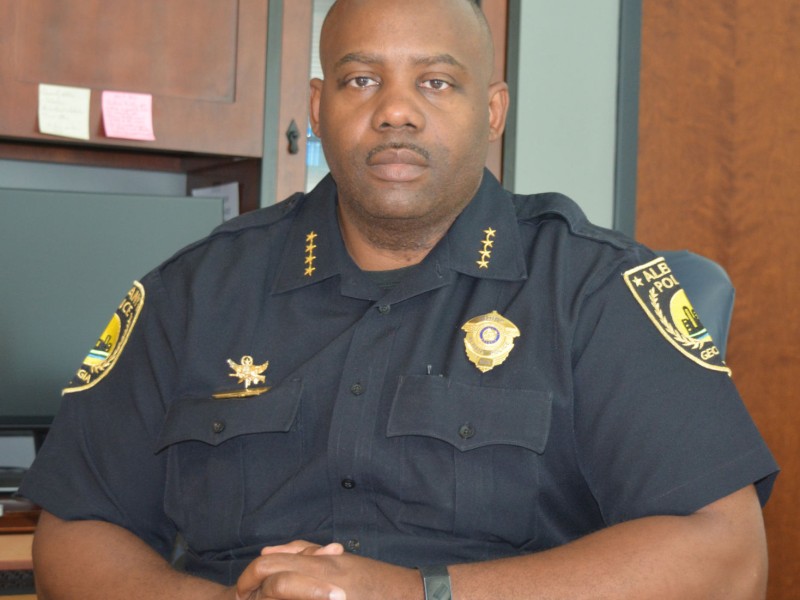
Audit of police surveillance cameras results in arrests of five former APD officers
“The bottom line is when we find people who have misused resources that they have, we’re going to hold them accountable. These resources help fight crime, but we will not tolerate when they are misused.”
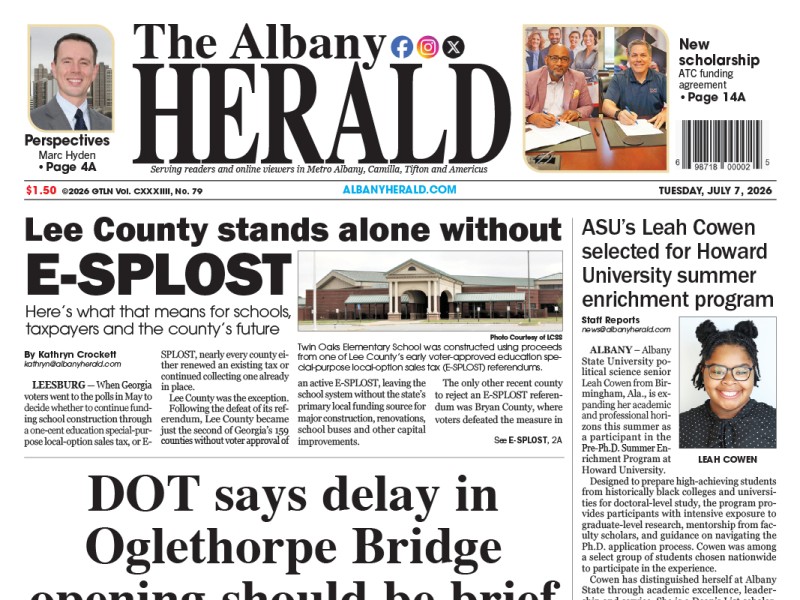
Albany Herald – July 7, 2026
Lee County stands alones without… DOT say delay in Oglethorpe Bridge… ASU’s Leah Cowen Selected for…
