
State Sen. Freddie Powell Sims says economic development, education and health her chief concerns
Brad McEwen
ALBANY — Economic development, education and health care are the three major areas of focus for State Sen. Freddie Powell Sims, D-Dawson, as she reviews legislation and policy that affects Southwest Georgia.
Sims addressed these areas of focus while discussing some key pieces of recently passed state legislation at the regular meeting of the Kiwanis Club of Dougherty County Monday.
“Everything, every bill that comes across my desk and across the desks of the committees that I serve on, I look at how this benefits southwest Georgia,” said Sims.
In terms of economic development, Sims said one of the most important pieces of legislation that was passed through this year’s general assembly, was House Bill 170, better known as the “Transportation Bill,” which reshapes the way the state funds transportation projects.
The bill calls for a state excise tax on gasoline of 26 cents per gallon and a 29 cents per gallon excise tax on diesel, along with several other measures that the state hopes will generate much needed revenue to help fund projects throughout the state including road and bridge maintenance.
“House Bill 170 is this voluminous transportation bill and I can’t begin to tell you all the things that are there, but it generates an estimated $900 million in additional annual funding for maintenance,” said Sims. “You’d be surprised at the number of bridges that are just unsafe, roads that are crumbling and I travel over the roads in southwest Georgia all of the time.”
Improving the roads, Sims said, will help Georgia be more competitive economically.
“Those back roads that I travel on are very narrow, very unsafe and we need to have our infrastructure in this state to do well,” Sims said. “Because, you go back to economic development. How do we expect entice industry to come to southwest Georgia or anywhere in the state?”
“We are interconnected in this state,” said Sims. “We are inter-dependent in this state. One part of this state cannot do well without the other part. In Southwest Georgia we are huge in agriculture. Agriculture is the largest industry in this state. We are so important to the rest of the state. We are an $80 billion industry in ag. But in order to move products and produce from this part of the state to someplace else you’ve got to have good roads. It’s roads, it’s air, it’s train traffic, all of that.”
Sims said that this year’s legislative session included the passing of a few key pieces of legislation dealing with education that she feels will have a significant impact on Southwest Georgia.
Sims said the new budget of $21.8 billion, 55 percent devoted to education, includes funding for a new fine arts building at Albany State University as well as funding for Darton State College and the public school system.
Sims said that the funds for education are expected to go to local school systems to eliminate furlough days and to increase teacher salaries. There were also funds, Sims said, to continue to fund health benefits for bus drivers and cafeteria workers.
“Bus drivers and cafeteria workers were targets this year,” said Sims. “The state wanted to eliminate their health care altogether and you know most bus drivers and cafeteria workers are part timers and they work those jobs just to have the health care.”
Sims also discussed House Bill 1 and House Bill 429.
House Bill 1, Sims said, will allow the use of cannabis oil consisting of no more than five percent THC (Tetrahydrocannabinol) to be used in the treatment of certain medical conditions such as cancer, ALS (Lou Gehrig’s Disease), seizure disorders related to epilepsy or head trauma, multiple sclerosis, Crohn’s disease, Parkinson’s disease and sickle cell disease.
Despite the controversial nature of the subject, Sims assured the audience Georgia was not going to legalize marijuana across the board any time soon.
“House Bill 1 dealt with medical cannabis and that’s the bill that everybody was concerned about,” Sims said. “We’re not a Colorado. We won’t be a Colorado for a very long time. This bill authorizes the use of cannabis oil to treat certain medical conditions in this state.”
House Bill 429 deals with autism, another medical issue that is impacting a significant number of Georgians, Sims said. Sims said Georgia insurance carriers will be required to cover the cost of treatments for young autism patients ages six and under, up to $35,000 per year.
Related Articles

Federal agency to investigate Monday paragliding fatality
The death of a 63-year-old man who was killed in a paragliding accident on Monday is under investigation by the National Transportation Board, according to Dougherty County Coroner Michael Fowler.
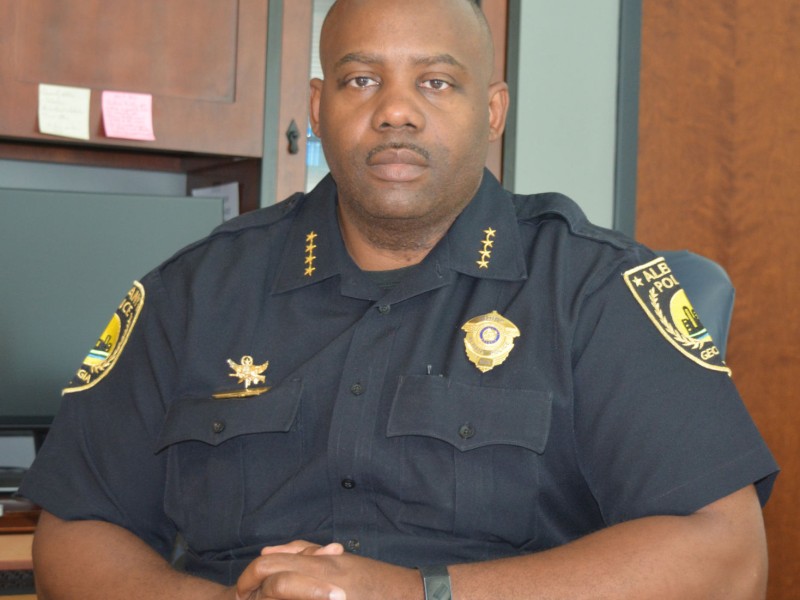
Audit of police surveillance cameras results in arrests of five former APD officers
“The bottom line is when we find people who have misused resources that they have, we’re going to hold them accountable. These resources help fight crime, but we will not tolerate when they are misused.”
Albany Herald – July 7, 2026
Lee County stands alones without… DOT say delay in Oglethorpe Bridge… ASU’s Leah Cowen Selected for…
