
CARLTON FLETCHER: State senator’s proposal ignores legacies of HBCUs
Staff Photo
By Carlton Fletcher
[email protected]
Tijuana Malone got plenty of “Amens” and shouts of approval when she noted at a town hall meeting to discuss the future of Georgia’s three public historically black colleges and universities, “We get a school, we advance it and somebody comes up and says, ‘Let’s put ‘em in a slave house.’ The effort is to shackle us in some kind of subcontext.”
Malone’s comments came during a forum Thursday during which state Sen. Freddie Powell Sims discussed the genesis of and the possible outcome of Senate Bill 278, which was presented on the final day of the recent legislative session at the state Capitol by state Sen. Lester Jackson, D-Savannah. Some of the provisions of that bill include a call to make the state’s three public HBCUs — Albany State, Savannah State and Fort Valley State universities — “agriculture and mechanical” universities, separate them from the University System of Georgia, and place them under leadership of a board, 11 of whose 19 members would be selected by the state’s governor.
Sims said Jackson was a member of a study committee — along with Democratic Sens. Nikema Williams, Gail Davenport, Harold Jones, Tonya Anderson and Sims — that was convened to study ways to help sustain HBCUs struggling with enrollment, finances and retention. The plan, according to Sims, was to find ways to “save and preserve our HBCUs,” but she said she and other members of the committee were “blindsided” by Jackson’s proposed bill, which originally had the names of the other study committee member attached.
When those members took their names off the bill in anger, Jackson refiled it in a slightly altered form.
Malone’s efforts to draw parallels to slavery and the efforts of “white folks” to hold African Americans back, which drew general approval from the more than 250 attendees of the meeting, might have been more of an effective metaphor had it not been for the fact that the author of the legislation happens to be an African American.
That fact notwithstanding, Sims’ accounting of the process leaves one to wonder what motivated Jackson to propose a bill that has been almost universally blasted by supporters of HBCUs and higher education. One would think that the respected dentist would have known what kind of a can of worms he would open with his proposed legislation.
But then again, maybe not. As Sims noted during a question-answer session at the forum hosted by Ward I Albany City Commissioner Jon Howard, “I don’t recall (Jackson) going to a single one of the study committee’s meetings.”
Jackson held a press conference at the Capitol on April 2, the final day of the 2019 legislative session, to discuss the details of SB 278, a title altered from SB 273, which was rendered moot when the other five members of the study committee — all of whom attended HBCUs — removed their name from the proposed legislation. Since then, though, as a “massive backlash” has erupted, he has kept mostly quiet about the proposal.
Albany State English professor Gwendolyn Alford offered an interesting tidbit for attendees of the town hall meeting to chew on when she, at the end of the question-answer session, asked, “When are we going to stop looking at everything as black and white and start looking at what’s right and wrong? Our students deserve better than what we are giving them.”
Jackson’s proposal to chop the three state public HBCUs out of the University System of Georgia does not offer any apparent means by which the educational offerings of students at those three universities will improve. And by proposing a “takeover” of sorts by some government-appointed board shows the senator’s complete lack of understanding of the legacies of these three institutions.
Perhaps Jackson would have had a clearer understanding of the impact his proposed legislation would have if he’d attended a couple of the meetings of the committee he was part of.
Related Articles
The U.S. president who lived in Plains public housing
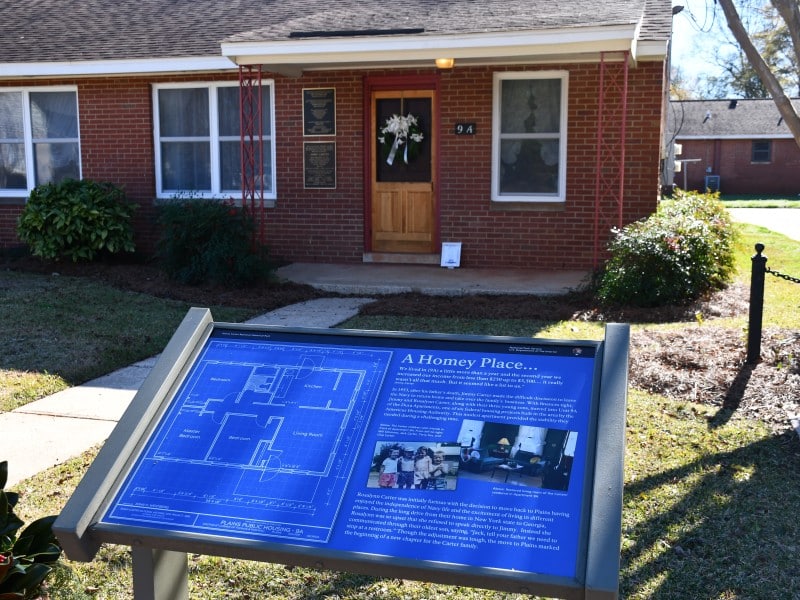
In 1986, Unit 9A was dedicated as a place of historical significance, with the permission of Jimmy Carter. For years, a plaque marked the apartment, located on Paschal Street in Plains. However, in 2019, the Americus Housing Authority and Plains Historic Preservation Trust began working to turn the site into a museum.
Friends and neighbors of Jimmy Carter reflect on the passing of the President from Plains: ‘It leaves us with a big job to carry on their legacy’
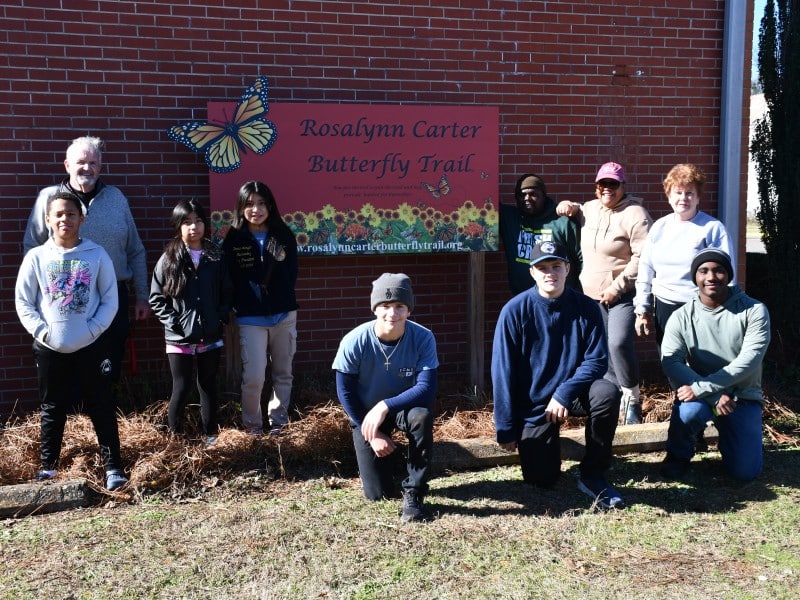
Jimmy Carter, who died on Dec. 29 was the only president from Georgia. Friends and neighbors say it was his Plains upbringing that developed his attitude for service.

Child care study committee releases recommendations
Tax credits are the weapon of choice for Georgia lawmakers looking for ways to make child care more accessible and affordable.
