
GDOT funding allocated for Oglethorpe bridge replacement
Preliminary engineering of vital east-west corridor bridge could start in ‘16
By Carlton Fletcher
ALBANY — For local drivers who found the drawn-out reconstruction of the downtown Broad Avenue bridge inconvenient, a warning: You ain’t seen nothing yet.
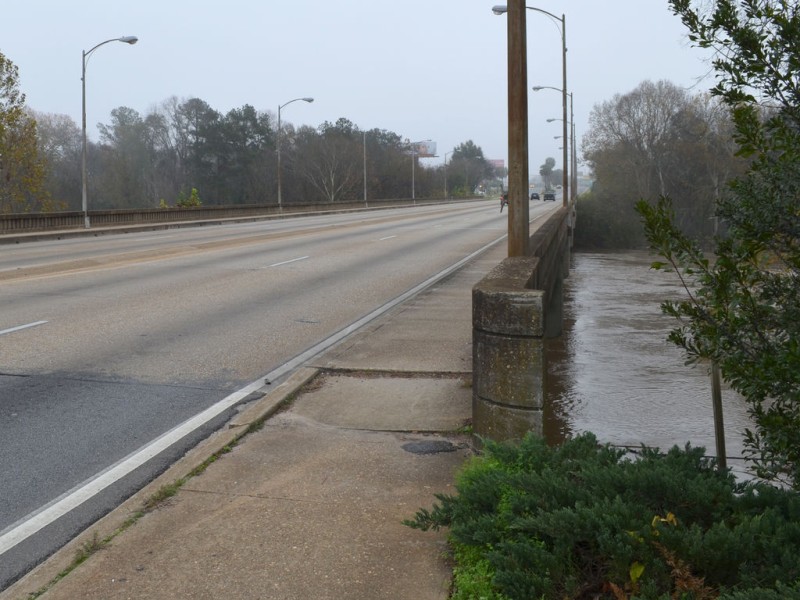
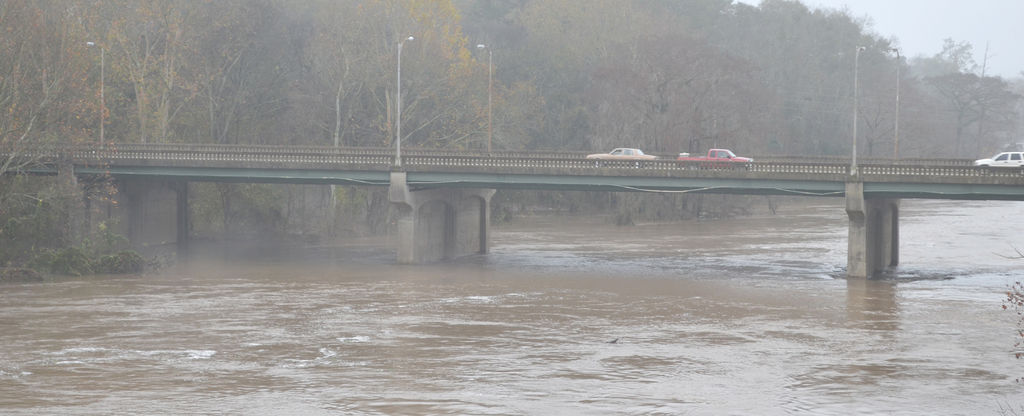
Georgia Gov. Nathan Deal’s proposed statewide transportation projects list released recently includes funding for the engineering necessary to start what is expected to be complete replacement of the Oglethorpe Boulevard bridge, one of Albany’s most prominent east-west connectors.
City officials have already started talking about plans to reroute traffic during what could realistically be a five- to eight-year process.
“My expectation is that we would work closely with Department of Transportation officials to find the most effective, and time-sensitive, way to complete this project,” Albany City Manager Sharon Subadan said. “It certainly will have a major impact on traffic into and out of the city.”
While Deal’s plan allows for engineering funding in 2016 needed to start the planning process for the overhaul of the Oglethorpe bridge, Albany drivers got a taste of what to expect with the replacement of the renamed Broad Avenue Memorial Bridge. That structure, which was condemned in 2009, was finally finished and reopened six years later, on Nov. 11 of this year.
Albany/Dougherty Planning Services Director Paul Forgey, who serves as chairman of the Dougherty Area Regional Transportation Study Coordinating Committee, said that while it is not immediately clear if DOT’s plan is to completely replace the Oglethorpe bridge, he would not be surprised if that is the case.
“The last time before their most recent inspection, DOT found that the Oglethorpe bridge was ‘low quality,’” Forgey said. “There could be a way to structurally repair the bridge without replacing it completely, but everything I’ve read indicates the bridge needs to be replaced. It’s still safe enough to drive on right now, but there appears to be a feeling that that won’t last too much longer.
“What I’ve gathered from the governor’s transportation plan is that there will be funding for preliminary engineering in the next year. After that has been completed and approved, construction will follow. I think the general feeling (of DOT officials) is that this bridge needs to be replaced within the next 10 years, so why not do it now?”
City officials, meanwhile, will be left to ponder how the planned bridge construction will impact traffic, especially as it relates to ongoing development of the city’s downtown district.
“It will be important that we work with DOT to make sure the impact on traffic is as manageable as it can be,” Subadan said. “We don’t want (the planned project) to slow the momentum we’ve generated with downtown redevelopment.”
Funding for the Oglethorpe bridge engineering will be a minimal part of what is expected to be an almost $1.6 billion GDOT budget for the coming fiscal year. The state is also expected to receive more than a billion dollars in federal transportation funding from the recently approved federal transportation bill, opening the possibility that transportation spending will increase significantly in the state.
Georgia Department of Transportation Deputy Commissioner Mike Dover said increased funding generated by the state’s fuel tax increase implemented July 1 of this year will amount to an almost $750 million increase in DOT’s budget for FY 2016. Dover, in a meeting sponsored by the area’s state legislative delegation, said up to $200 million would be earmarked for maintenance projects that would primarily be outsourced to small and minority businesses that qualify as state contractors.
Subadan acknowledged that Albany, Dougherty County and Southwest Georgia in general had been the beneficiary of a significant amount of state funding for local transportation projects in the last couple of years, and she said she hopes Dover’s announcement would mean even more dollars for local projects.
“I would certainly hope, with the significant increase in transportation funding going into the new fiscal year budget, that we would be the recipient of funding that will impact our region,” the city manager said. “I’m certainly optimistic that we will.”
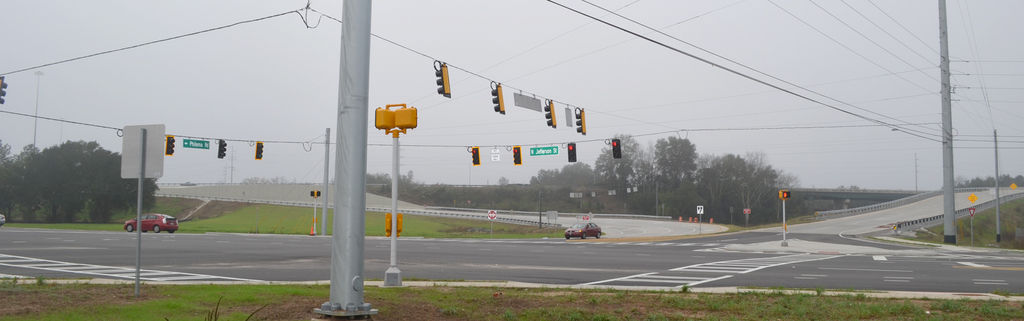
Forgey said such high-profile area projects as the U.S. Highway 19 Bypass/Jefferson Street Interchange, the Broad Avenue bridge completion, work on the Leesburg Bypass and the letting of contracts for two more sections of Georgia Highway 133 that will four-lane the strategic thoroughfare from Albany to Valdosta are indications that the region has gotten a significant amount of DOT funding in recent years. The first three of those projects came with a combined price tag in excess of $35 million.
And the DARTS Policy, Citizens’ Transportation and Technical Coordinating committees will work with DOT to see that the flow of state and federal funding continues for such vital area projects as the Westover Road Extension that will connect that road to Ledo Road and relieve traffic congestion on Nottingham Way, improvements at the Southwest Georgia Regional Airport, capacity improvement on Oglethorpe Boulevard to the 19 Bypass, and better access to Phoebe Putney Memorial Hospital on Jefferson Street.
“DARTS (which comprises Dougherty County, Albany, and the southern portion of Lee County from Leesburg to the Dougherty/Lee line) prioritizes projects within the Albany Metropolitan Planning Organization, which receives federal funding,” Forgey said. “We’re responsible for doing an updated Transportation Improvement Plan every two years and a Long-Range Transportation Plan that looks as far into the future as 20 years out. Obviously, those priorities change over time.
“You can’t just dream up and prioritize projects and they get done. There are projects that have been on the books for 10 years or longer and are no closer to being funded than they ever were. Plus, you have to adjust to needs. For example, there was, after the floods of ‘94 and ‘98, a plan to expand Clark Avenue and build a new bridge. But the population decrease in the region convinced DOT that there were not enough people to justify the cost.”
Other projects, Forgey noted, move up the priorities list.
“The Westover Road Extension project is seen as a higher priority now because of the continued traffic problems on Nottingham Way,” he said. “By extending Westover from the Albany Mall, under the (U.S. 19) bypass to Ledo Road, we’ll be able to alleviate much of the congestion on Nottingham, which has been the site of the most traffic accidents in the region for the last several years.”
While millions of state and federal dollars have been allocated for projects in the DARTS area for the next two to three years, projects that include road improvements, an upgrade of the city of Albany’s traffic signal system, and the purchase of vehicles and equipment and maintenance of the city’s public transportation system, Dover said up to a 30 percent increase will be seen in Local Maintenance Improvement Grant funding, which allows for resurfacing of city and county streets.
In Fiscal Year 2015, LMIG funding paid for resurfacing on 46 Albany and Dougherty County streets.
Still, Forgey knows that such issues as population flux, general need and access to funding will be constant factors that weigh in the amount of money the area receives for transportation projects.
“With our transportation needs, it’s all about the planning process,” the Planning director said. “And planning is a long-term process. We have to take a detailed and realistic look at our needs, and we have to address them before they’re needed.
“As for the increase in transportation funding in the state this year, my hope is that we’ll be able to address some of our basic infrastructure needs along with some of the more high-profile projects. We need to use that money to fund the things we should have been doing all along.”
Author

Related Articles
The U.S. president who lived in Plains public housing
In 1986, Unit 9A was dedicated as a place of historical significance, with the permission of Jimmy Carter. For years, a plaque marked the apartment, located on Paschal Street in Plains. However, in 2019, the Americus Housing Authority and Plains Historic Preservation Trust began working to turn the site into a museum.
Friends and neighbors of Jimmy Carter reflect on the passing of the President from Plains: ‘It leaves us with a big job to carry on their legacy’
Jimmy Carter, who died on Dec. 29 was the only president from Georgia. Friends and neighbors say it was his Plains upbringing that developed his attitude for service.

Child care study committee releases recommendations
Tax credits are the weapon of choice for Georgia lawmakers looking for ways to make child care more accessible and affordable.
