
Spaceport supporters and opponents clash over claims
By Gordon Jackson
The Brunswick News
KINGSLAND (TNS) — Supporters and opponents of a proposed spaceport in Camden County are at odds over claims they believe will determine the fate of the project.
Opponents are confident the project won’t be approved after an ongoing study from the Federal Aviation Administration is completed.
Camden County resident Steve Weinkle said he attended a state Senate subcommittee hearing earlier this month when proposed legislation to provide nuisance protections was rejected and discussion about other protections for spaceport operators was tabled.
Supporters of the project don’t believe launches over the barrier island will be an issue. Opponents say there are no spaceports where rockets are launched over areas occupied by people. Most are on barrier islands where the rockets are over the ocean as quickly as possible.
Weinkle said supporters and opponents showed identical maps of Cumberland Island with conflicting information to subcommittee members.
Weinkle said the map shown to the Senate subcommittee by a consultant hired by Camden County illustrated a trajectory of spacecraft flying over Cumberland Island through an “unrealistically narrow path impacting as few properties and residents as possible.”
If the Camden spaceport site follows most of the trajectories for launches at Kennedy Space Center, Weinkle said Little Cumberland Island and possibly parts of Glynn County would have to be evacuated for safety.
The map shown to the Senate subcommittee by Kevin Lang, a lawyer and president of the homeowners association representing property owners on Little Cumberland and Cumberland islands, identified as many as 34 homes that could be impacted by spacecraft launches.
The Cumberland Island map shown to committee members by Andrew Nelson, a consultant hired by Camden County to be an advocate for the project, identified two homes that would be impacted by launches.
Nelson has more than 25 years of aerospace experience as an engineer, aviation regulatory specialist and corporate strategist, including 10 years in vertical launches for NASA and a private company. He said the reason for the discrepancy is opponents don’t understand FAA rules regarding safety and hazard zones.
“He’s never run those algorithms,” Nelson said of Weinkle’s concerns regarding the conflicts on the maps. “I understand how they can look at these maps and draw conclusions. They’re comparing apples and oranges. It’s clearly defined in the regulations.”
The difference in the estimate on the number of homes affected is based on the definition of how often they are occupied, Lang said.
“They don’t want to count anyone who is not a permanent resident on Cumberland Island or Little Cumberland Island,” he said. “They only wanted to count the people who filed a homestead exemption.”
Lang said there are five full-time residents on Little Cumberland Island and two on Cumberland Island. But how often the homes are occupied should not be the issue.
“These people will be deprived of their use of private property,” he said.
Lang said FAA approval of the spaceport project is a “longshot,” at best. There have been enough accidents in the commercial spaceflight industry to make launches over the island a concern.
“Our position is the fact we are not there 365 days a year doesn’t prevent the risk to the homeowners and a national seashore,” he said.
Despite the concerns expressed by opponents, Nelson said the debate surrounding the proposed project will not impact the decision made by the FAA .
“We’re counting on the FAA process,” he said. “The county is doing the right thing. They’ve been very transparent.”
Related Articles
The U.S. president who lived in Plains public housing
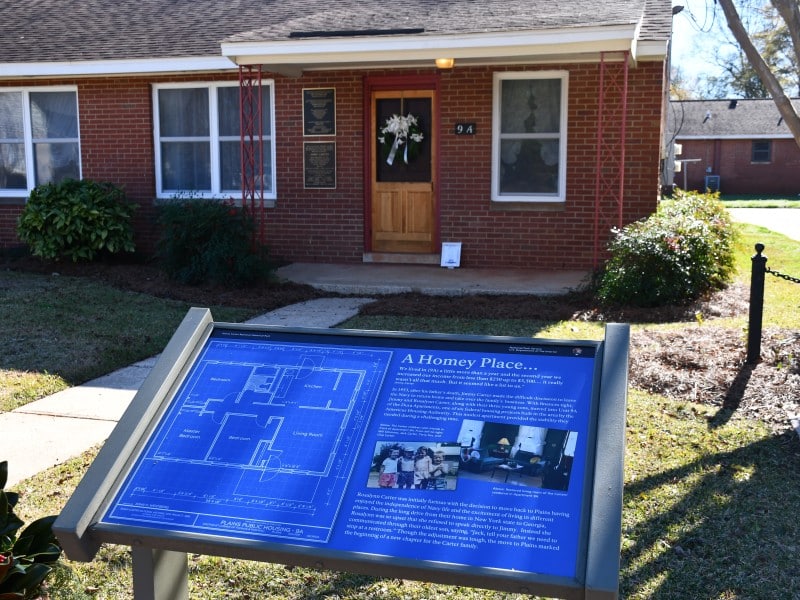
In 1986, Unit 9A was dedicated as a place of historical significance, with the permission of Jimmy Carter. For years, a plaque marked the apartment, located on Paschal Street in Plains. However, in 2019, the Americus Housing Authority and Plains Historic Preservation Trust began working to turn the site into a museum.

Friends and neighbors of Jimmy Carter reflect on the passing of the President from Plains: ‘It leaves us with a big job to carry on their legacy’
Jimmy Carter, who died on Dec. 29 was the only president from Georgia. Friends and neighbors say it was his Plains upbringing that developed his attitude for service.

Child care study committee releases recommendations
Tax credits are the weapon of choice for Georgia lawmakers looking for ways to make child care more accessible and affordable.
