
UNREVIEWED: Tifton couple visit Selma
TIFTON — March 7 was a day filled with inspiration and positive energy for many who participated in the 50th anniversary of the Selma to Montgomery Voting Rights March in Alabama, including Tifton resident and former Tift County State Court Judge Larry B. Mims and his wife, Joyce.
As a Montgomery native, Joyce Mims and her husband, along with some childhood friends, attended the 50th celebration in Selma, Ala. President Barack Obama was joined in attendance by former President George W. Bush in Selma on March 7 to celebrate the 50th anniversary.
She said President Obama, who was introduced by Congressman John Lewis, spoke from a platform just a short distance from the Edmund Pettis Bridge to commemorate Bloody Sunday, when Alabama state troopers assaulted marchers on March 7, 1965 as they tried to cross the bridge on their way to Montgomery to protest the lack of voting rights for blacks. The event shocked the nation and helped with the passage of the Voting Rights Act just a few months later.
Mims said after the president’s speech, he was joined by his family and hundreds of other elected officials, celebrities, dignitaries and citizens as they reenacted the march across the Edmund Pettis Bridge. It is estimated that more than 40,000 people attended the event.
Mims said the event was well organized and the atmosphere was upbeat and positive. She noted officials working as security were wonderful as well.
“It was a great experience,” she said, noting the group was very diverse and there for many different reasons.
“It really was a celebration,” Larry added. While there, they visited Brown Chapel AME Church and the St. James Hotel.
Mims, who was born at Hale Hospital in Montgomery, Ala., shared her recollections of a very pivotal time in our nation’s history.
“My father was a great tailor in downtown Montgomery and my mother was a well-known hair stylist downtown as well. Both of my parents were entrepreneurs,” she said. “They believed in working for themselves, working hard and saving money. The fact that this African-American man and woman ran businesses in downtown Montgomery was almost unheard of. They were pioneers and set great examples for me and my friends.”
She said her parents participated in the Civil Rights Movement by spreading the word about the bus boycott and encouraging their family and friends to register to vote.
“I grew up in a very loving, nurturing and supportive environment. We enjoyed each other and shared in the simple pleasures of life. Our greatest asset was the love we had for each other,” she said.
Mims became involved in the Civil Rights Movement at a very early age.
“Ms. Johnnie Carr, a neighbor and family friend, spearheaded our efforts to get people to register to vote. As a young girl, I often accompanied Ms. Carr to various neighborhoods, passing out literature and encouraging people to register to vote,” she said. “Ms. Carr and another family friend, Ms. Nellie Hardy, always stressed the importance of education and church attendance.”
Mims said her father was a close friend of Rosa Parks.
“She was a seamstress in downtown Montgomery, and they often shared work or referred customers to each other,” she said. “Ms. Parks was a quiet unassuming woman whose presence commanded respect. Little did I know that this woman would change the course of history.”
On the eve of the celebration of the 50th anniversary of the march from Selma to Montgomery, Mims says she was reminded of the flurry of activity that took place when the marchers congregated at a local school.
“That night, Ms. Nellie Mae Hardy picked up my brother, Jerome, and I, and we, along with her daughter, Beverly, went to St. Jude School to attend a rally,” she said. “When we arrived, there were so many people there. I didn’t completely understand what was going on, but Ms. Hardy knew that it was important and would have a lasting effect on our lives. I walked the halls of the school, not realizing how important the event was and its impact on the Civil Rights Movement.”
Mims says she learned some very important life lessons from that time — “always help others, education is the key, be proud of who you are, pass it on (knowledge and happiness) and respect all people.”
She said as a young girl, she didn’t realize the importance of the march or voting, but she does now as an adult.
Society has come a long way, but “we still have a lot to do,” she says.
“If you look for better change, you won’t get it unless you help to do it,” she said. “A lot of times we think it should happen automatic, but a lot of things don’t happen automatic. You have to be there and have a positive voice. I believe in coming to the table with anything.”
When asked if she thinks society will ever get there with equality, Mims replied, “I think we can get there, but we’re not going to get there thinking that it’s an easy task. The word ‘work’ let’s you know you have to do something. Chances are good, but we have to work hard at it.”
Larry said at the celebration, the president talked about how difficult change is sometimes “and that you have to understand that change is not always nice and pretty and convenient.”
“It comes with some hardship, but he also talked about how we have to move forward,” he added. “That’s probably the message that Selma gives us is that we still have to move forward.”
Related Articles
The U.S. president who lived in Plains public housing
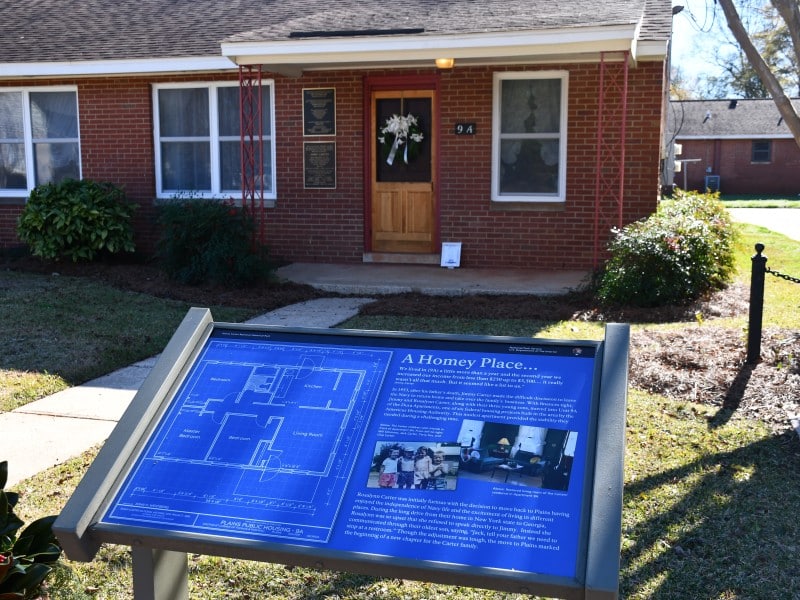
In 1986, Unit 9A was dedicated as a place of historical significance, with the permission of Jimmy Carter. For years, a plaque marked the apartment, located on Paschal Street in Plains. However, in 2019, the Americus Housing Authority and Plains Historic Preservation Trust began working to turn the site into a museum.
Friends and neighbors of Jimmy Carter reflect on the passing of the President from Plains: ‘It leaves us with a big job to carry on their legacy’
Jimmy Carter, who died on Dec. 29 was the only president from Georgia. Friends and neighbors say it was his Plains upbringing that developed his attitude for service.

Child care study committee releases recommendations
Tax credits are the weapon of choice for Georgia lawmakers looking for ways to make child care more accessible and affordable.
