
Study: More farmers turn to alcohol to cope with issues
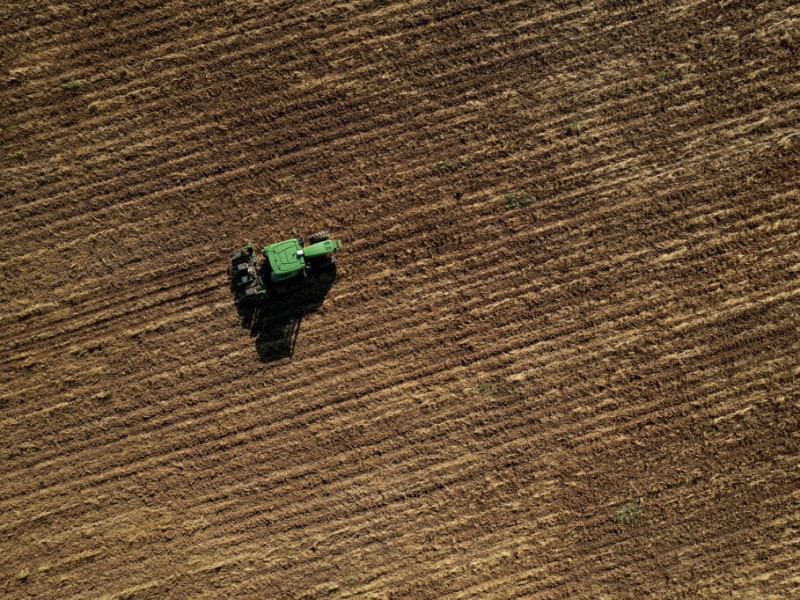
Special Photo: Andrew Davis Tucker/UGA
By Lauren Baggett
[email protected]
ATHENS – A new University of Georgia study reveals that one in five U.S. farmers reports binge drinking when they experience high levels of stress.
The paper underlines the link between farmers using alcohol to cope with stress.
Farming is a uniquely stressful vocation. Farmers work long hours performing labor-intensive, repetitive and often dangerous tasks. In fact, farming is among the top 10 most dangerous jobs in the U.S., according to the Occupational Safety and Health Administration.
Then there’s the financial burden of managing a farm. Farming is notoriously high-risk, with profits living and dying by a good harvest.
“Alcohol is the most acceptable way to deal with that stress versus actually going to talk to somebody about that stress, or it’s a way to be able to talk about that stress with friends,” Christina Proctor, lead author of the study and a clinical associate professor at UGA’s College of Public Health, said.
In addition to the barriers to care that most rural communities face — lack of specialists, longer wait times, long distances to drive to health care facilities — the researchers have identified more farming-specific barriers, including stigma and a lack of trust in health care providers.
“There’s a stigma associated with reaching out to get mental health care that exists in rural populations, but the farming community can be very tight-knit, and there could be impacts on their day-to-day operations,” Proctor said.
In her previous work interviewing farmers about their experiences handling stress, many of them expressed a fear that seeking mental health care would be interpreted by fellow farmers or the companies paying them to produce that they can’t handle their operation.
“It’s much easier for them to turn inward and just consume alcohol,” she said. “And it’s also more acceptable in rural areas to do that than it is to go to a mental health care facility.”
Ninety-six percent of farmers drink. More than 1 in 3 have multiple drinks a week.
Proctor and her co-author, doctoral student Noah Hopkins, surveyed 1,045 farmers nationwide who produce a wide range of high-demand commodities including beef, corn, wheat, and fruits and vegetables.
The survey dug into their alcohol use and their perceptions of their own ability to deal with stress, measured as resilience.
Almost all, 96%, of farmers reported drinking alcohol, and more than one-third said they consumed two to three drinks per week.
That amount puts farmers on par with many Americans’ drinking habits — for example, 21.7% of U.S. adults reported drinking five or more alcoholic beverages in the last month, according to the last National Institute on Alcohol Abuse and Alcoholism, compared to 22.5% of farmers.
But these numbers worry Proctor because of how they fit into the larger picture of mental health stigma.
“Knowing the stigma that exists within rural farming populations about seeking care and then looking at death by suicide numbers, it really is a public health issue because there are drastic, traumatic outcomes associated with not being able to ask for that care, using alcohol to cope and then feeling hopeless,” she said.
But farmers who reported that they could rely on community resources and peers, which are key factors in resilience scores, were less likely to drink to excess.
The authors said leaning into that desire to help a fellow farmer or a fellow community member is key to helping farmers overcome stigma and accept mental health care resources when they are available.
The future of farmers’ well-being — and our global food supply — depends on taking action now.
“If the networks don’t exist, we’ve got to train our bankers,” Proctor said. “We’ve got to train, you know, farm bureau agents; we’ve got to train feed store managers. Everyone in rural areas has to be willing to have those open and honest conversations about mental health. It starts so basic, but it’s so big.”
The study was published in the Journal of Agromedicine.
Author

Related Articles

Albany Herald – June 27, 2026
Phoebe welcomes family medicine… Dougherty sherrif’s summer camp celebrates… For Community Care Department head Debra Wiley…

Special Sections – June 27, 2026
Interesting facts related to Independence Day,,, Fire up true American flavor on the grill… The nicknames of all 50 states… 9 facts about the Declaration of Independence…

Classifieds – June 27, 2026
Full Time Job: Women’s Recovery & Substance Use Services Director… Real Estate for Sale: 230 Frost St…
