
Terrell County’s Golden Triangle RC&D helps with access to clean and running drinking water
The nonprofit is in need of support until it can access more funding for its well water and septic program.
Nonprofit is in need of support until it can access more funding for its well water and septic program.
DAWSON – In rural Georgia, clean and reliable drinking water is not a given.
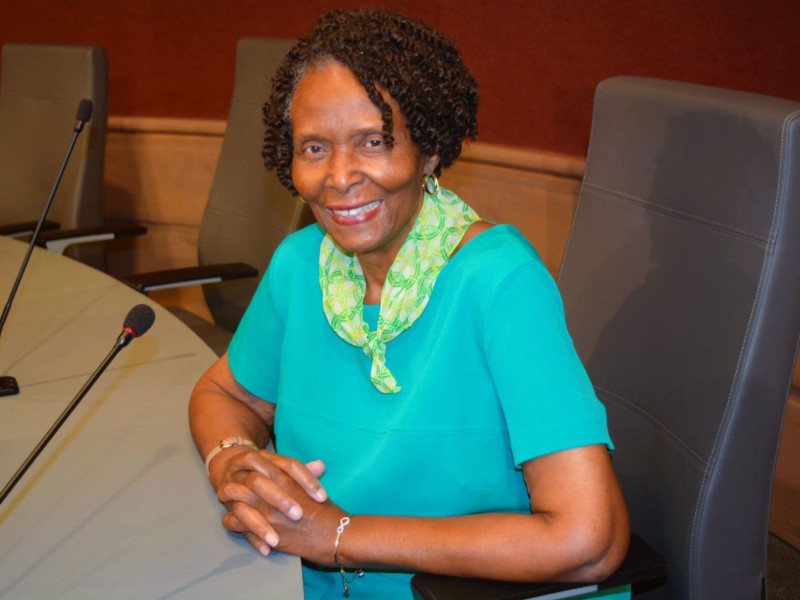
Dorothy Ross, a 76-year-old Camilla resident, shared a community well with eight other households, each paying a monthly fee to the person who owned the well. The water came up dirty and sandy, meaning Ross often relied on bottled water she purchased to drink and clean her laundry.
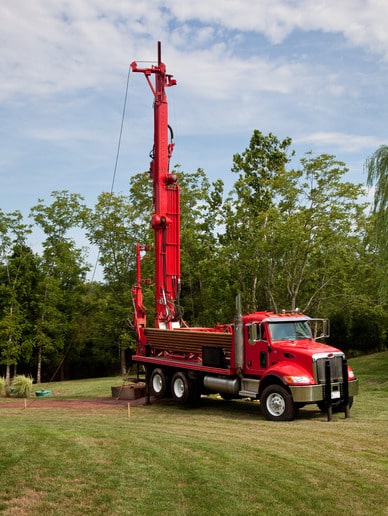
“Most people don’t think about water … you go to the sink, and you turn on the spigot, and it’s there,” Rhonda Gordon, the executive director of the Golden Triangle Resource Conservation & Development, said. “You don’t think about it until you don’t have it, and then it’s a really big deal.”
The Golden Triangle RC&D, a Terrell County-based nonprofit, is one of few organizations in rural Georgia that helps low income households have access to clean, reliable water through its Water Well, Septic and Water Testing Programs. Since its creation in 2010, it’s completed more than 135 well and 21 septic tank installs. In just the last six months, it’s helped 22 families. The uptick in its work means it ran out of funding for the first time in its history.
Ross is a recent recipient of a replaced or repaired well. The Golden Triangle helped her on a low-interest loan program to pay for her well. Her niece, Brenda Wade, said it’s changed her life.
“It’s just a big help with the hardships that she’s faced day to day … having water that was not clear … getting groceries, gas, paying for medicine,” Wade said. “Now, she has her own working well, and in the next couple of years, she’ll get it paid off.”
Ross joins a group of recipients who all have unique stories: from a veteran with a household of 10 without water, to a senior couple who lived off of three-liter water bottles from a local church for more than five years.
The University of Georgia estimates that about 1.7 million Georgians rely on 681,000 household water wells for drinking, cooking and bathing. The Chattahoochee Riverkeeper reported that despite this number representing 10% of Georgians, the state lacks a centralized source of data or information on household groundwater drinking well quality or quantity. There are also limited regulations in place to protect the quality of well water. This means Georgians are ultimately responsible for testing their own well’s water quality.
Many homes in southwest Georgia lie far from municipal water lines, miles apart along unpaved roads and close to agricultural fields and wells. Wells can fail for a number of reasons. Gordon said many of them are too shallow, drying up during drought. Many people are water-sharing, meaning they may run a hose from a neighbor’s or relative’s house with little water pressure.
“It’s just enough to get by with, but it’s very difficult,” Gordon said.
Shallow drinking wells that are adjacent to industrial or agricultural wells may have water drawn away. They may be contaminated by surface water with bacteria or contaminants including arsenic, lead, radon, uranium or nitrate, according to water quality monitoring data.
The USDA’s Rural Decentralized Water Systems Grant makes it possible for the Golden Triangle to issue a 1% loan to qualifying low-income homeowners to repair or replace damaged, contaminated or non-functioning household drinking water wells or septic tanks. This can look like drilling a deeper or more protected well from contaminants or adjacent well operations.
Some of these repairs are urgent emergency repairs to help families stay safe and avoid costly disruptions. The Golden Triangle also conducts free water testing to help families detect contamination.
The USDA’s program can be implemented by any nonprofit or any of Georgia’s 11 Resource Conservation and Development organizations, but the Chattahoochee Riverkeeper reported that it’s underutilized.
The Golden Triangle normally repairs or replaces 10 to 12 wells or septic tanks per year across the 19 counties it serves.
“What happens is these individuals lose access to running water … and don’t have the financial resources to drill,” Gordon said. “It depends on how deep … but some of these wells can run up to $20,000, and low income individuals just can’t afford that.”
The Golden Triangle gets the word out through church organizations and local well-drilling companies. Wade found out about the opportunity through her job at the Southwest Georgia Regional Commission during a conference. She said it was a simple process, seeing if her aunt qualified for the program, then getting the required water quality inspections and filling out needed documentation.
Gordon said the program tries to meet rural communities where they’re at. While the application can be filled out online, she said many individuals don’t have access to a computer or to the internet. The nonprofit will send applications by mail or send out its water well specialist, Kelsey Powell, to collect applications.
“I’ve met people … in the parking lot of a Dollar General and filled out their application on the hood of my car,” Gordon said. “She and her husband were both very ill … sometimes it’s hard for people to get out, and we just want to find the easiest way to make sure they get the information they need.”
Gordon said it takes about 30 days, sometimes fewer, to complete the application process, take bids from local drilling companies and to complete the repair or replacement. She said well-drillers in the area are often backed up with work by a couple of weeks.
“A lot of times … well-drillers will move them to the top of the list if a family is without water,” she said.
Twenty-two projects in six months is unusual for the nonprofit, which Gordon said is seeing an uptick in requests after the nonprofit spread the word about the program. The Golden Triangle requests the competitive federal funds each year.
“Sometimes we run a little short, but we always have some resources,” Gordon said. “If we don’t have the funding, we will help find the funding.”
For example, she said the community in Mitchell County banded together for one client to help fund a well project.
Gordon said she’s not worried about losing the funding, but the Golden Triangle won’t know until October if its application was approved. She said so far the grant program hasn’t been impacted by budget cuts.
“I know that several of our liaisons that we’ve worked with in the past maybe took an early retirement package … there are fewer rural development employees,” she said. “But the funding, as far as I’m aware, is still OK.”
Until October, the Golden Triangle RC&D is asking for support to resume its well-water program services until it receives more funding. Currently, the organization has five pending applications for services, a number that could grow.
Gordon said the program helps so many people.
“When you can help somebody that doesn’t have water, and they tell you their story, it makes you want to go to work every day,” she said.
To donate or learn more, visit www.goldentrianglercd.org.
Author
Related Articles
Dawson City Council uninformed as state freezes sewer loans, audits remain incomplete
With three overdue audits, no Mauldin & Jenkins briefing on Thursday’s agenda and funding deadlines approaching, the larger question is increasingly urgent: How will Dawson pay to finish the work, and what will further delay mean for the future reliability of the city’s water and wastewater systems?
Across a county line, foster care rates reveal stark divide
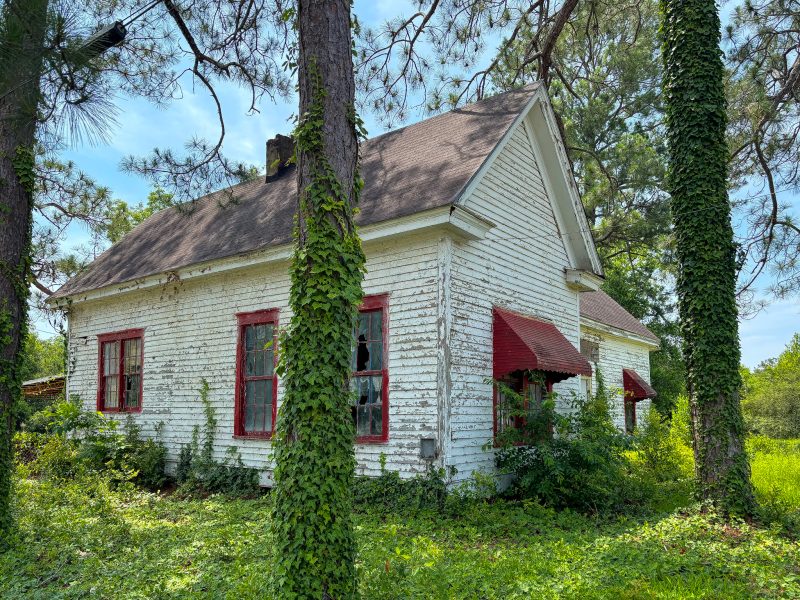
An abandoned home in Dawson sits overgrown and deteriorating, one example of the city’s ongoing struggle with blighted and unusable housing. Dawson’s long-range planning documents identify both a high vacancy rate and a need for more safe, affordable housing. Staff Photo: Kathryn Crockett
Dougherty Commissioner Gloria Gaines to serve as honorary sponsor of 2027 international conference in Atlanta
“By Alan Mauldin
[email protected]
ALBANY – In 1898 academic and sociologist W.E.B. Du Bois traveled to southwest Georgia during his summer break from teaching to investigate the lives of black residents in the “Black Belt” and later covered his sociological studies of the region in two chapters of his book “The Souls of Black Folk.”
The academic and peace activist’s visit and subsequent account was more than an intellectual exercise, however, according to Dougherty County Commissioner Gloria Gaines.
Du Bois’ account inspired South Carolina native Joseph Winthrop Holley to move Albany, where he founded the Albany Bible and Manual Training Institute. The institute later became part of the University System of Georgia and became a four-year college in 1943 before its last renaming in 1996 as Albany State University.
Holley was inspired by Du Bois’ writing, said Gaines, who will be an honorary sponsor of The International Conference on W.E.B. Du Bois: Race, Democracy and Global Justice in 2027. The conference is scheduled for April 9-11 in Atlanta.
“I am in admiration (of) his impact on the founding of Albany State University,” she said. “I also appreciate his political philosophy as well. He was clearly identified with Atlanta University and education.”
During her time at Albany State Gaines worked in the office of civil rights attorney C.B, King.
She holds a master’s degree in community development and worked as an assistant general manager for MARTA.
Her travels also have taken her to Africa, where she worked and met Nelson Mandela and Archbishop Desmond Tutu.
For the 2027 conference, Gaines has collaborated with individuals including professor Preston King, C.B. King’s youngest brother..
Last year she traveled to Accra, Ghana, where DuBois died after he was stranded out of the United States for his opposition to nuclear weapons and had his passport renewal denied, for his 157th birthday celebration.
The conference will feature discussions of democracy, equality and human dignity, Gaines said
“Those are issues that were important to him,” she said. “Now is a good time to talk about democracy. Some may see it as under threat. I think this conference will be timely. It’s a timely issue, not just for black folks as well as human dignity and equality within the country.”
