
Unexplained checks, missing records, benefit errors surface in Terrell schools audit
A payroll performance review commissioned by the Terrell County School System found widespread documentation deficiencies, unexplained payroll discrepancies, inconsistent employee benefit deductions and weaknesses in internal controls, while also crediting district leadership for taking steps to improve oversight after significant staff turnover.

DAWSON — A payroll performance review commissioned by the Terrell County School System found widespread documentation deficiencies, unexplained payroll discrepancies, inconsistent employee benefit deductions and weaknesses in internal controls, while also crediting district leadership for taking steps to improve oversight after significant staff turnover.
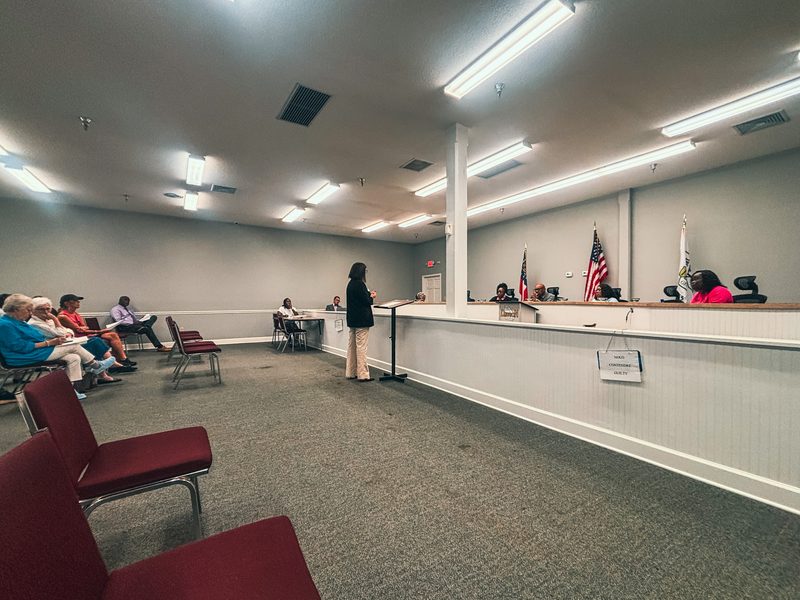
The findings were presented publicly during the Terrell County Board of Education’s June 2 work session as representatives from accounting and consulting firm Mauldin & Jenkins outlined the results of a months-long review of payroll practices dating back to 2023.
The review examined payroll processing, employee compensation, benefits deductions, employment contracts and related financial processes over the past three years. Investigators reviewed payroll records from 36 pay periods and analyzed payroll reports, employee records, benefits invoices and general ledger transactions.
The district serves approximately 950 students and employed 274 people during Fiscal Year 2025.
Among the report’s most significant findings was the discovery of 18 off-cycle payrolls issued between January 2023 and June 2025. The payments, which were made through physical checks rather than the district’s normal monthly direct deposit process, ranged from a single check totaling $462.49 to payrolls containing as many as 43 checks totaling $22,482.20.
Auditors said documentation provided by the school system did not clearly identify the source or purpose of many of the payments.
In many instances, employees received both their regular monthly paycheck and one or more additional physical checks in the same month.
The district issued 10 separate off-cycle payrolls in June alone over the three-year period, including three payrolls in June 2023, five in June 2024 and two in June 2025.
Because of limited documentation, auditors said they could not determine whether all of the payments represented taxable income or whether required tax withholdings and reporting to the Internal Revenue Service occurred.
The report also found substantial discrepancies between employee benefit deductions and insurance provider invoices.
Auditors tested 16 benefit deduction codes and found significant variations in at least 11 of them. Over the three-year review period, auditors calculated a net discrepancy of $35,790.55 between employee deductions and amounts billed by benefit providers.
The report found that in some cases the district deducted money from employees that did not correspond to actual insurance premiums, raising concerns that employees may have believed they had insurance coverage that did not exist. In other cases, employees were enrolled in benefits, but payroll deductions were insufficient or nonexistent, resulting in the district using school system funds to cover employee premiums.
The discrepancies totaled approximately $9,434.91 in 2023, $9,155.82 in 2024 and $17,199.82 in 2025.
Auditors also identified individuals receiving benefits who either were not current employees or may not have been full-time equivalent employees.
The report recommends that the school system conduct a complete audit of benefit enrollments, determine whether ineligible individuals are receiving benefits and establish written policies governing benefits for retirees and less-than-full-time employees.
The review also raised concerns about employee compensation records.
Auditors found that some individual paychecks fluctuated by 50% or more from month to month without clear explanations in the documentation provided. In some cases, budget codes remained the same while amounts funded through those codes increased or decreased by approximately $2,000 to $3,000.
The district also lacked historical documentation of employment contracts and personnel files. Auditors reported that current staff indicated some employee files either did not exist or could not be located following turnover among central office personnel.
Under Georgia law, certified educators are required to have written employment contracts.
The report recommends ensuring that all certified employees, including less-than-full-time educators, have written contracts and that the district establish formal hiring and employment procedures.
Auditors further identified payments made to employees outside the payroll system.
One employee received two payments totaling $3,000 through an “Other Expenditures” account, but supporting documentation could not be located because of recordkeeping challenges.
The review also identified four employees who received fixed monthly travel payments. Auditors noted that under IRS rules, flat travel stipends that are not tied to documented travel expenses are typically considered taxable wages and should generally be processed through payroll.
The report additionally noted a potential issue involving a retired employee who may have returned to work under contract arrangements that could conflict with Teachers Retirement System guidelines governing good-faith retirement separations. Auditors recommended that the district review the circumstances and self-report any violations if identified.
Beyond financial issues, the report highlighted broader administrative concerns.
Current administrators told auditors they inherited inconsistent filing systems and unorganized documentation. The district also reported that it experienced a cyberattack in spring 2025 that damaged or removed records stored in its financial system.
Auditors found that previous staff had access to financial information and permissions beyond what was necessary for their roles and reported instances in which log-in credentials for key financial systems were shared.
The report also found the district had accumulated a backlog of unprocessed employee leave requests, leaving leave balances inaccurate and creating the possibility that employees could take paid leave without available balances or receive unearned payouts upon separation.
Despite the findings, auditors said the school system has taken meaningful steps to strengthen controls.
Since the beginning of the 2025-26 school year, the district has hired a new human resources director, finance director, and payroll and benefits coordinator and reorganized responsibilities to improve segregation of duties. The district also has implemented a new timekeeping system and tightened information technology security practices.
Mauldin & Jenkins concluded that the district now has an opportunity to address critical issues and establish stronger payroll practices before the next fiscal year.
The report recommends regular audits, additional documentation requirements, secondary review procedures, standardized timekeeping practices and continued efforts to limit off-cycle payroll payments.
While the report lays out 13 recommendations in all for addressing deficiencies identified in payroll, benefits administration and recordkeeping, the Board of Education has not publicly established an implementation timeline. As a result, taxpayers and employees remain without a clear roadmap for when the issues identified by auditors will be corrected or how progress will be monitored.
Officials with Terrell County Schools could not be reached for comment regarding the implementation timeline before publication.
Related Articles
No budget, overdue audits: Dawson extends spending through November
More than five weeks into its fiscal year without an adopted budget, Dawson has authorized spending through November while officials work to close a projected general fund shortfall.

Dawson City Council update: Downtown plans, sewer work and medical office lease
Efforts to reactivate Dawson’s Downtown Development Authority should include an open application process to identify residents interested in helping shape downtown’s future, a Georgia Municipal Association representative told the City Council on Oct. 8.

PHOTOS: Albany State Homecoming President’s Circle Recognition
Click the arrow to scrol through the photos.
