
The industrial park filled, Lee County’s tax base didn’t notice
Part Two: Twenty years after county planners warned that homeowners were carrying too much of the load, residential property makes up a larger share of the tax digest than it did then.
Part Two: Twenty years after county planners warned that homeowners were carrying too much of the load, residential property makes up a larger share of the tax digest than it once did.
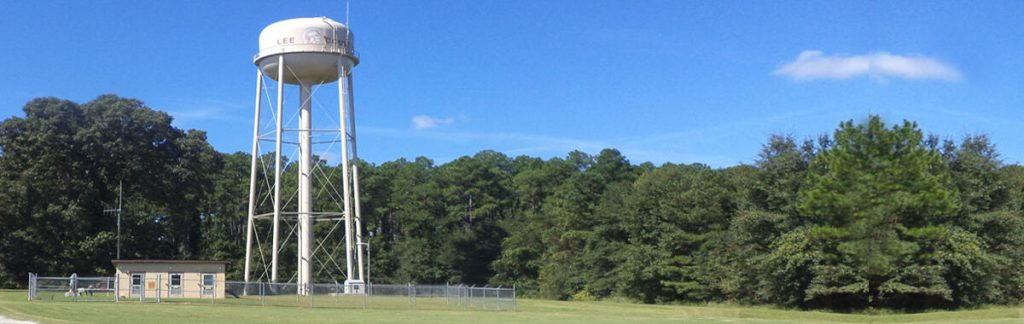
LEESBURG — Billy Mathis wanted to correct the record.
The longtime Lee County commissioner had read an article suggesting the county fell short of the goals it set for itself in its 2005 comprehensive plan, and he came to a July 14 interview with a map, a list and a certain amount of cordial irritation.
“I want to be nice in how I say this,” Mathis said, “but I take exception to the fact that you characterize these as planning failures.”
Asked directly whether the assessments done 20 years ago revealed any failures, his answer was unequivocal.
“I don’t think there have been any planning failures,” he said. “Some things could have turned out a little better. I mean, we could have more industry in Lee County. But that’s something that’s really beyond our control.”
That last clause is where the disagreement actually lives. The 2005 plan did not treat industrial growth as beyond the county’s control. It treated it as the county’s central assignment.
Let’s start with what is not in dispute, because a good deal of it favors Mathis.
The 2005 assessment named specific properties. Most of them were developed. Oakland Meadows Industrial Park had 74 developable acres then; today it has none.
“I am happy to report that there are no available lots,” Lisa Davis, director of the Lee County Development Authority, said. “We sold the last remaining lot about a year ago.”
The roughly 20 commercial acres the plan identified on Ledo Road, near what was then Walmart and Fairway Toyota, are now the Toyota and Kia dealerships and an IHOP, Davis said. About 2 acres remain.
The authority has kept buying. In October it acquired 116 acres at Georgia Highway 133 and Forrester Parkway for a new business and industrial park. Thirty-five acres have been sold. Georgia Power took 25 of them and was the first tenant in, Mathis said.
That location carries an echo. The 2005 assessment reported water and sewer lines going in along Forrester Parkway, Old Leesburg Road and U.S. Highway 19, and warned that utility expansion was a precondition for attracting industry. Two decades later, the county’s newest industrial park sits on that corridor and is selling.
Mathis traces the whole arc to a decision made before any of the issues related to the plan. The county’s total budget was around $9 million, he said, when commissioners decided that growth required getting into the water and sewer business.
“We stepped off a financial cliff and borrowed — I don’t remember — $25 million,” he said. “We bought up all of the private water systems in the county and got into the sewer business. We put together the utility authority where we had no utility authority.”
It was not popular.
“Some people said, ‘Have you lost your minds?'” he recalled. “When you jump off a financial cliff to build a utility authority, the people will come out with pitchforks.”
Asked how it turned out, Mathis said: “It’s worked out just the way we planned.”
Chris Boswell, who has managed the Lee County Utilities Authority since October 1995, agrees with that assessment. Asked whether he agreed with Mathis on whether Lee County’s growth would have been possible without the authority, Boswell said, “He’s right. The utility authority was a smart idea.”
Mathis makes a similar case on emergency services, and it may be his strongest. When he first ran for a seat on the commission in 1999, Mathis said Lee County had an all-volunteer fire department and a single ambulance parked in a mobile home behind the courthouse.
“If your house caught on fire, they had to beep [the person] to go get the fire truck and then come to your house,” he said. “By that time, your house had burned down.”
Today he claims Lee County has one of the finest fire and EMS departments in Georgia, a response time of about 4 1/2 minutes and a department that trains others.
“My thought has always been that if you pay property taxes, you deserve basic, vital services,” he said.
The centerpiece of Mathis’ defense is a zoning decision from 2002, and he asked staff to display a corresponding map during an interview. Facing what he described as growth that “hit us overnight,” commissioners drew a line.
“Leesburg, we said, is going to be the dividing line,” Mathis said. “The subdivision growth is going to be south of Leesburg. We’re not going to allow that kind of growth in the northern part of the county, because we’re going to preserve the agricultural integrity of this county.”
North of that line, only low-density residential development on large lots is permitted. The county also restricted where apartments could be built.
“If we allowed apartments wherever you wanted them to go in Lee County, this whole county would be full of apartment complexes,” he said. “That’s all it would be.”
He considers the results vindication.
“If you look at what’s happened, it’s a planning success,” Mathis said. “If we had not made that decision 24 years ago, what would this county look like? All of this would be all over here, everywhere.”
Looking at the map, he added: “It made me proud. Look at the northern part of the county. It basically looks like what it did 24 years ago.”
The 2005 assessment had noted that residential growth was “charted by developers instead of being planned by the community” and that the future land-use map did not reflect actual development. Mathis’ account describes a county that answered that criticism three years before it was written down, and largely made it stick.
The fiscal tradeoff, however, is real, and Mathis would likely accept it. Preserved agricultural land is assessed at conservation-use values, well below market. Agricultural and conservation categories together cover roughly 200,000 acres in Lee County but contribute about 12.9% of the tax digest. Protecting the north’s rural character has a cost, paid in the tax base.
Here is the part that does not bend.
In 2005, county planners wrote that residential growth was “far exceeding commercial and industrial growth” and eroding the tax base. Twenty years later, residential property makes up a larger share of Lee County’s tax digest than it did when that sentence was written.
Excluding motor vehicles, residential property was 67% of the digest in 2005. In 2025 it is 69.2%. Industrial property — the category the 2005 plan treated as the county’s escape route — is 1.6%, spread across 104 parcels in a county with more than 50,000 residential items. Commercial property is 14.1%, down from 15.9%.
The industrial park was filled. The digest did not move.
Boswell describes the system he built in terms that match that pattern. Asked what Lee County’s water and sewer investment made possible, he named retailers.
“You would never have Walmart and Winn-Dixie and Publix in Lee County without a water system that could also provide fire protection,” Boswell said. “And you have to have wastewater. All three of those big retail facilities have to have sewers.”
Explanations are worth chasing before that comparison is treated as final. Businesses in a business and industrial park are frequently classified as commercial rather than industrial. Development authorities also routinely hold title to industrial property and lease it back under bond arrangements, or grant abatements, keeping value off the taxable digest for years.
What the numbers do establish is narrower: Whatever was built here over 20 years did not move the cost of county government off homeowners.
The digest also contains something that complicates any simple verdict. From 2005 to 2020, the residential share fell, from 67% to 58.7%. Commercial climbed to 18.4%. Industrial hit its high point. That is 15 years of movement in exactly the direction the 2005 plan called for.
Then it reversed. From 2020 to 2025, residential assessed value grew roughly 85%, from $614 million to $1.13 billion. Commercial value grew about 20%. Industrial value barely moved.
Nothing about that required the county to do anything wrong. Home values rose across Georgia. But the 2005 warning was never about a single year’s numbers. It was about structural exposure — what happens to a county that leans on residential property when the housing market moves. Lee County spent 15 years building a buffer and found out in five that it was not thick enough.
That is the machinery behind the current assessment complaints filling commission meetings, and the context for the failed E-SPLOST referendum. When residential property is roughly seven-tenths of the digest, a housing appreciation cycle does not spread across the tax base. It lands on homeowners.
Mathis rejects the premise that any of this reflects on the county.
“Lee County has no control over the value of a home,” he said. “We have none — zero. The value of a home is determined by the market, inflation, all of those things.”
He offered his own bills as evidence, saying he asked the tax commissioner for 10 years of them after the current debate began. Adjusted for inflation, he said, his county taxes this year are 35% lower than a decade ago, even as his home roughly doubled in value.
“So how is that a failure?” he asked. “I think that is a huge success in Lee County, and most people just don’t know that.”
Then he was asked whether planning affects property values. His answer moves the argument onto different ground.
“I think it does impact value, and let me tell you how it has impacted us,” Mathis said. “Home values in this county are almost double what they are in a neighboring county, because people want to live here. Why do they want to live here? Stable government, less taxes, good school system, safety. All of those are done by the county and planned by the county, and we think we’ve done a very good job, and it shows, because people want to live here.”
Both halves of that can be true at once, and that is the difficulty. If county planning helped drive Lee County home values to nearly double a neighboring county’s, then county planning is implicated in the appreciation that shifted the tax burden onto homeowners. The commission cannot claim credit for the demand and disclaim the consequence.
What it can fairly say, and what the record supports, is that it never built the commercial and industrial counterweight that would have absorbed the shock — and that it does not accept that building one was ever within reach.
That last point is Mathis’ real argument, and he makes it seriously.
Recruiting industry to southwest Georgia, he said, is harder than critics allow. He pointed to what neighboring Dougherty County has lost — Merck and Cooper Tire among them — and said he has heard Georgia-Pacific may follow.
“If you talk to people in the economic development business in the state, they will tell you that it’s a waste of your time,” Mathis said. “I don’t agree with that. But it’s not that we don’t try.”
The obstacle, in his telling, is medical.
“The biggest problem with attracting industry to this area is our healthcare landscape,” he said. “If a large business looks at this area to locate and they realize what our healthcare is here, they just pass us right on.”
“We had, for 39 years, two hospitals in this area. Now we have one.”
He pointed to Procter & Gamble’s publicly reported health care costs in the region as evidence. Asked why comparable counties such as Decatur and its thriving county seat Bainbridge have diversified more successfully, his answer was one sentence: “They’re closer to better healthcare.”
There is a second constraint, and it is physical. Boswell said Lee County’s sewer service reaches only two corridors, U.S. 19 South and U.S. 82, and stops at the Oakland Road intersection.
“Palmyra Road doesn’t have sewer,” he said. “It’s south-central and southwest. That’s really the only place you’ve got sewer.”
Asked whether that deters investment from larger companies, his answer was immediate: “Sure. You’ve got to have sewer for large retail, and you have to have sewer for most restaurants.”
Southwest Georgia’s hospital capacity is not something Lee County can build. Sewer lines are. What that would cost, and why the county has not built more of them, is the subject of Part 3.
That explains where a great deal of Lee County’s economic development energy has gone. Asked to define the right kind of development, Mathis reached first for clean industry that does not strain natural resources. He is skeptical of water-hungry data centers. Then he landed somewhere more specific.
“What’s a good industry? The first one on my mind would be a hospital,” he said. “Employs a lot of people, does a lot of good, gives people a choice in health care. But No. 2, the issue that people don’t talk about a lot is it’s a great economic development tool.”
Lee County has been trying to build one since 2016, on the Grand Island property the development authority acquired, in Mathis’ description, “from the previous owner for a nominal sum.” A certificate of need was approved in 2017. Extensions followed. The county built drainage and roads into the site. The project was declared dead on Dec. 15, 2022, revived in late 2024 after the state loosened permitting rules, and in August 2025 the authority redirected the property back to the hospital after a proposed entertainment complex fell through.
Asked about it this month, Mathis said: “We do plan to fully develop the property with a hospital and surrounding planned development.”
Ten years on, the site is graded and empty. Utilities are not what is holding it up. Boswell said the authority could serve a hospital with the capacity it has now, though a new drinking water well and elevated storage tank would have to be installed on the property.
Mathis’ position is internally consistent: Industry will not come without health care, health care has not come, and therefore the industrial shortfall is not a planning failure. Whether 10 years without breaking ground supports that argument or undercuts it is the question residents are entitled to weigh.
On one point Mathis offered a correction worth reporting. The 2005 assessment cited the 1994 flood, after which the county spent millions of dollars buying out homes built in flood-prone areas, as proof of the cost of weak planning.
“Many years ago, we didn’t have the technology to know if a lot would flood,” Mathis said. “Now we do. These people do not let builders build, developers develop lots that we know will flood.”
On out-commuting — the 2005 finding that 85% of residents worked outside the county — Mathis said the picture has changed but conceded ground.
“It’s a lot different, but we’ve still got ways to go,” he said. “I’ll agree with that.”
According to the U.S. Census Bureau’s 2023 OnTheMap commuting data, Lee County has approximately 16,600 employed residents, and nearly seven in 10 — about 11,100 people (67%) — leave the county each day for work. Only about 5,500 residents, or one-third of the workforce, live and work within Lee County, underscoring the county’s longstanding role as a residential community closely tied to the Dougherty County employment market.
Lee County did much of what the 2005 community assessment and plan stated. It borrowed heavily to build utilities. It drew a growth boundary and held it. It filled an industrial park and bought more land. It built a fire department that trains other fire departments.
What it did not do was change who pays. The county still funds itself principally by taxing the homes of people who, in large numbers, work somewhere else — the condition the 2005 plan identified and asked the county to escape.
Mathis says that escape was never in the county’s power. The 2005 plan says it was the entire assignment. Residents arguing about assessments and school funding are, without necessarily knowing it, arguing about which of those is true.
Related Articles
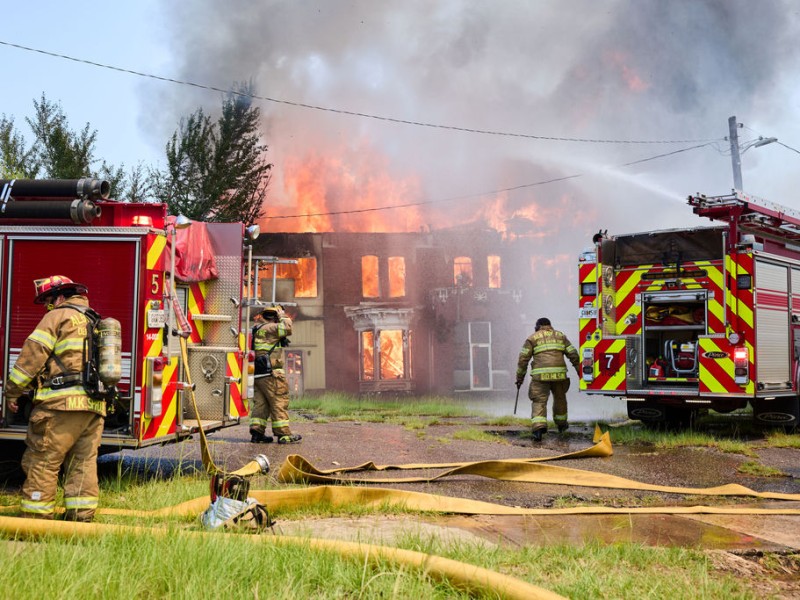
PHOTOS: North Jackson Street fire
Photos by Jim Griffith
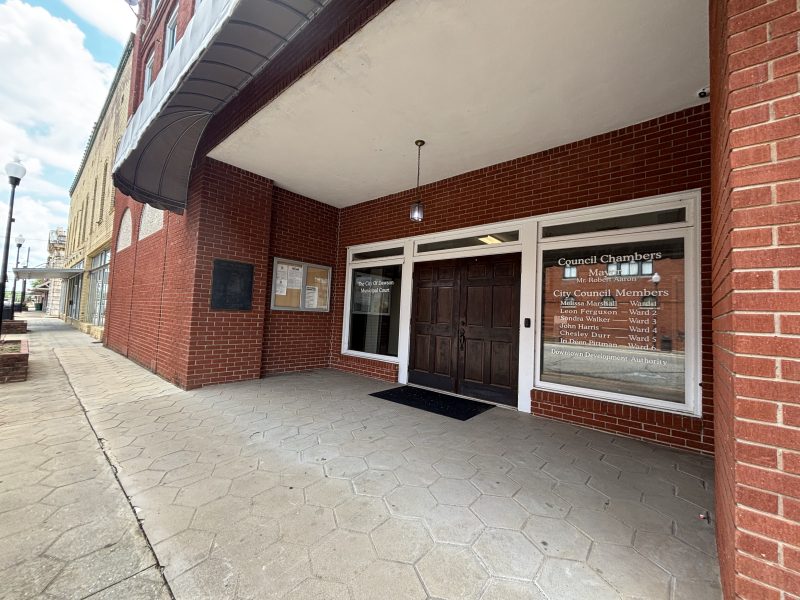
Dawson City Council addresses budget, fire fee, wastewater spending
The City of Dawson will enter new fiscal year without adopted budget as council considers creating a new fire assessment and approves wastewater equipment, K-9 agreement

Dougherty County assistant county manager declines top position in Harris County
“It is a beautiful community. I was thankful that they thought of me. They offered, but it didn’t come through in the end.”
