
Three Dougherty schools post major gains, closing long-standing gaps
District leaders credited a strong emphasis on early literacy as a key driver behind the gains. Investments have included literacy specialists, teacher training, classroom resources and expanded student supports — efforts Davis said are reflected both in test scores and in classrooms.
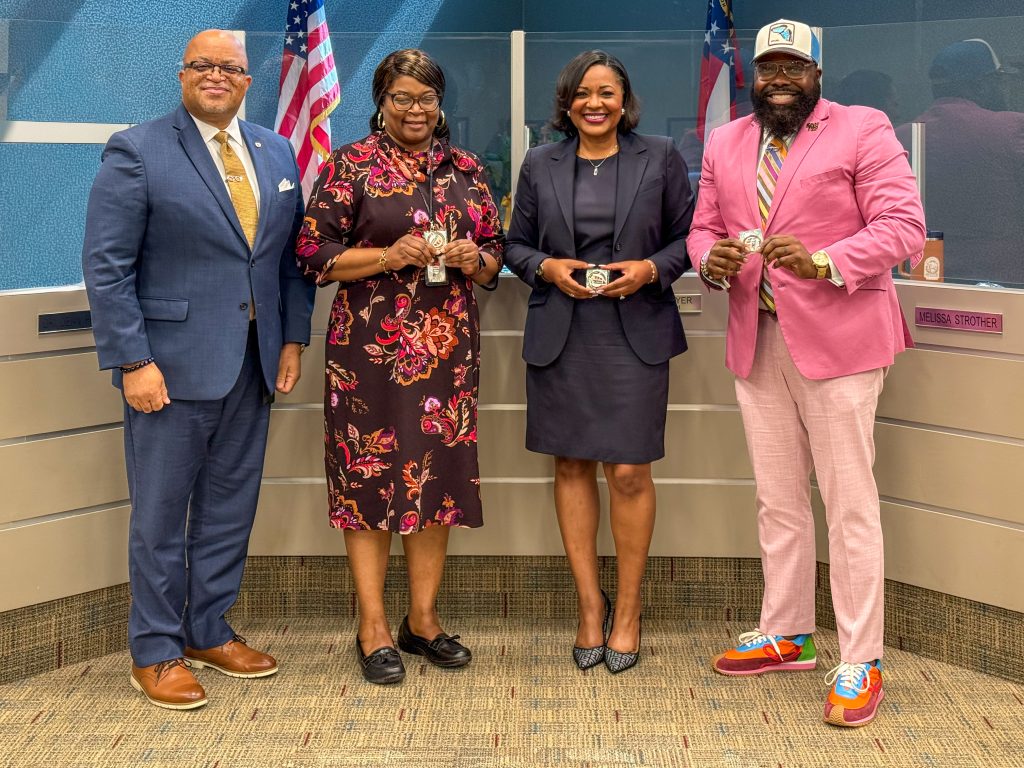
ALBANY — Three Dougherty County schools once among the state’s lowest-performing are showing measurable academic gains, with district leaders pointing to steady progress in student achievement and early literacy as signs of momentum taking hold.
During a recent school board meeting, Deputy Superintendent Vinson Davis presented updated data on Alice Coachman Elementary, Robert H. Harvey Elementary and Turner Elementary, schools that were previously identified for federal or state intervention.
While challenges remain, Davis said the data tell a story of growth.
“You don’t go from A to Z in one step,” he told board members. “There are steps.”
At Alice Coachman Elementary, still designated as a Tier 4 school under state guidelines, academic indicators have improved significantly over the past four years. The school’s overall content mastery score — a measure of student performance across tested subjects — rose from 24.1 in 2022 to 39.4 in 2025. Gains also were seen in math and readiness indicators, including literacy and attendance.
Its College and Career Ready Performance Index score climbed from 57.7 in 2019 to 72.7 in 2025, narrowing the gap with the state average, which slightly declined over the same period.
“That demonstrates they are closing the gap,” Davis said.
At Robert H. Harvey Elementary, the turnaround has been even more dramatic. Once identified as a turnaround-eligible school for multiple years, the campus exited the state’s lowest-performing category in 2022 — a milestone district leaders described as a major achievement.
Since then, performance has continued to rise. Content mastery increased from 31.5 in 2022 to 53.2 in 2025, while the school’s CCRPI score jumped from 50.2 in 2019 to 79.4 in 2025 — just shy of 80.
“When you look at the raw results, it shows the work that’s left to do,” Davis said. “But this progress is undeniable.”
Turner Elementary, which was identified as a turnaround-eligible school in 2017 for one year, also has maintained steady improvement. The school’s content mastery score increased from 31 in 2022 to 46.4 in 2025, while its CCRPI score rose from 64.2 in 2019 to 76.2 in 2025.
Collectively, all three schools have moved from CCRPI scores in the 50s to the 70s — a shift that reflects movement away from the state’s lowest-performing tier.
In Georgia, a turnaround-eligible school is one identified as performing in the bottom 5% statewide based on CCRPI scores over multiple years, while a Tier 4 designation places a school among the lowest-performing under federal accountability rules, requiring sustained intervention. Across the state, many schools with these designations remain in the lowest tiers for extended periods, struggling to produce significant gains. In contrast, these Dougherty County schools have raised scores by double digits and moved into the 70s, reflecting sustained progress driven by classroom instruction and school leadership.
Davis emphasized that school improvement rarely follows a linear path.
“It’s very difficult for improvement to be in a straight line,” he said. “You go up, you go down, then you go up again — that’s the trajectory.”
He noted that even with gains, schools continue to face challenges, including staff turnover and the need to support new groups of students each year.
District leaders credited a strong emphasis on early literacy as a key driver behind the gains. Investments have included literacy specialists, teacher training, classroom resources and expanded student supports — efforts Davis said are reflected both in test scores and in classrooms.
“The numbers matter,” he said, “but where you really see it is in the faces of students when they meet their literacy goals.”
Despite the progress, Davis said the work is ongoing — and demanding.
“Improvement is relentless,” he said. “You never get to a place where you think you’ve got it all together.”
Superintendent Kenneth Dyer, visibly emotional following the presentation, reflected on the demands and purpose of the work, framing it as a continuous, shared effort across educators.
“It’s a race,” Dyer said. “But this race doesn’t have a finish line. It’s a relay race — and when it’s your turn to run, you pick up the baton and run as fast as you can for as long as you can. And when you’re done, you hand it off to someone else.”
His remarks underscored the collective nature of school improvement, where progress is built over time through the sustained efforts of teachers, administrators and staff working toward long-term gains for students.
Related Articles

Judges denies residency challenge; Edward Brown to claim Senate District 12 seat
An email ruling issue this week paves the way for Albany businessman Edward Brown to enter the Georgia Senate next year. A Superior Court judge denied candidate Corey B. Morgan’s challenge to Brown’s residency in the District 12 race.

Dougherty County to mail 2026 property assessment notices this week
Dougherty County will mail 2026 Notices of Assessment to property owners this week.

Albany animal trainer seeking to fulfill dream of establishing a pet food pantry
“(If) you lose a job, you have a healthcare crisis, what do you do with the cat? What do you do with the dog? Now you will at least have someone who can help you with the food.”
