
UNREVIEWED: Ford a fixture in Harlem district
Carlton Fletcher
ALBANY — Connie Ford is an honest-to-God legend, a man of accomplishment whose greatest feat may very well be his refusal to be beaten down by time.
He proudly proclaims himself the “first black man in Albany, Georgia, to work on the floor as a department store salesman,” and he notes that he started managing the clothing/alterations store that now bears his name some 44 years ago.
Ford still comes into Connie’s Corner, which he’s owned outright since “sometime in the ’80s,” five or six days a week, whenever the notion strikes, and three generations of customers wouldn’t have anyone else repair their garments.
“Hell, no, I ain’t ready to quit this place,” Ford says, indignant that anyone would even suggest such a preposterous idea. “What else am I going to do? And, besides, I’m having too much fun around here.”
If you’re the overly sensitive type who’s easily offended by, shall we say, salty language, the suggestion here is that you don’t pay Ford a visit at his 301 S. Jackson St. business. The Recording Industry Association of America would put a parental advisory sticker on the man, who turned 74 Wednesday, if they could. But, as Dougherty County Commissioner John Hayes notes, that’s just Connie being Connie.
“He’s definitely a colorful guy,” Hayes said of Ford with more than a hint of admiration. “Some people are put off by his language, but what you have to understand about Mr. Connie is that he doesn’t change if he’s talking to a preacher or if he’s talking to some guy off the street.
“What you see, that’s him. That’s Connie Ford.”
Born on Aug. 8, 1938 and named by an aunt who liked the name Connie, Connie Vester Ford quickly figured out the way the world worked. He did a bit of everything: sold Albany Herald newspapers, shined shoes, cut hair, worked at a Laundromat. He also discovered that hustling made money a lot quicker than all the other jobs he’d held.
“I could cheat at anything,” he laughed. “If we played cards, I was taking your money. I’d shoot loaded dice, beat you playing pool. I lived pretty well after I figured out how to hustle folks out of their money.”
Ford graduated Monroe High School in 1958, and his most noted accomplishment while there — other than figuring things out easily with his uncommonly quick mind — might have been running what he called a “gambling house” across the street from the school.
“We’d go to school early and gamble before classes started, then we’d gamble at lunch and after school,” he said.
Ford’s brother was cruising through Albany on his way to Miami one day shortly after Ford graduated from Monroe, and he hopped in and headed south.
“It was something to do,” he said. “I really learned how to hustle down there.”
That streetwise education came to an abrupt halt when Ford was drafted and sent to Fort Jackson in South Carolina. He’d transferred to airborne school at Fort Benning near Columbus when he was caught selling marijuana. He was tossed in the brig for a while before spending “three years, nine months and 18 days” in civilian jail.
“They said I was in possession of and selling narcotics,” Ford says. “I was guilty as charged.”
After being released, Ford came back to Albany and worked construction for a short period. He was hired as a salesman — “I could sell to black folks, at least” — at Gibson’s Department Store, and in 1967 he was hired on as a tailor at Askins Clothing Store on Broad Avenue. Soon, he was promoted to salesman, the first African-American in the city to hold such a position in a non-black-owned business.
“I was making $30 a week, and the manager came in and told me they were going to give me a $5 raise and put me on the floor,” Ford said. “They told me if any black person came in the store I should go up and ask if I could help them. If any white folks came in, I was supposed to back up and just fade out of sight.”
Ford was picking up a mullet sandwich at Harlem’s “Nasty Sally’s” one Friday evening when he was approached by someone who told him two widely known businessmen in the city wanted to meet with him at the local Howard Johnson’s. And while he was initially denied entrance into the establishment’s dining room, he finally convinced the staff that he was expected.
“(The two businessmen) were sitting there, waiting for me, and they bought me a nice dinner — chicken, of course, fried chicken,” Ford said. “That’s when I knew they wanted something. It turns out they were going to buy a clothing store in Harlem, and they wanted me to manage it. And, man, it was a hit. We were making $100,000 a year easy.
“Of course, I was just managing it. You didn’t see my name on any papers.”
Ford named the business Doc’s Clothier after well-known radio personality Doc Suttles, and that name stayed until Ford bought the store in the ’80s.
“When I signed the papers, the man I bought the store from said he wanted to give me some sound advice,” Ford said. “He said I should never name a business after myself. I asked him, ‘What about Sears and Roebuck and J.C. Penney?’ When he finished the paperwork and asked me what I was going to call the store, I gave him a look and said, ‘Connie’s Corner’.”
And that’s what it’s been since.
Ford has seen the old Harlem district flourish to the point that “you couldn’t walk down the streets around here for all the black folks on a Friday or Saturday night,” to its current state where Connie’s Corner is the only nonfood retailer in the district still standing.
“Man, I was the tailor for the police department, and I was Mayor James H. Gray’s personal tailor,” Ford said of the skill he picked up from his mother. “I also would make $1,500 suits for the pimps, the hustlers and the dope dealers in this town four or five at a time. The dope boys don’t want to look nice now; they’d rather wear an $800 football jersey and $500 sneakers.
“But we’ve had our time here. Hell, I’m still here. That’s something. I’m here because I love it, I love it, I love it.”
Ford bemoans the fact that rising generations of African-Americans do not support black-owned businesses like his.
“These kids nowadays, they want Hart, Schaffner and Marx suits at Kmart prices,” he said. “You can’t get them to wear a tailor-made suit; they’re more into wearing those name brands created by rich old white men.”
As crass and as sly as ever, the five-times-married Ford acknowledges that the rumors of his early days as a ladies man are not without merit.
“Everyone in town knows I’m a scoundrel,” he laughs.
Lydia Rush, who’s known Ford for decades, says people shouldn’t be fooled by the man’s rough exterior.
“I’ve seen this man give everything he had to people in this neighborhood,” Rush said. “He’s fed folks, given them jobs, helped them out with their problems. Mr. Connie’s been a friend to the poor, the rich and the famous.
“He might cuss you out, but he don’t mean nothing. He’s got a beautiful heart.”
Hayes is leading the current conversation about revitalizing the old Harlem district in downtown Albany. He’s talked with officials at such entities as Phoebe Putney Memorial Hospital, Albany State University and the city of Albany about developing a presence there. Ford said he’s all for the idea, but he’s not sure it will happen.
“I’ve always believed anything’s possible,” he said. “But you can’t convince young black people these days to come together for something that’s put on for them even if it’s free. I’d like to see that change, but I don’t know.”
One thing that won’t change in Harlem, though, is the little shop at 301 South Jackson. As long as Connie Ford’s in the building, sharing his wisdom with any who will listen, all will be right in that little piece of the world.
Related Articles
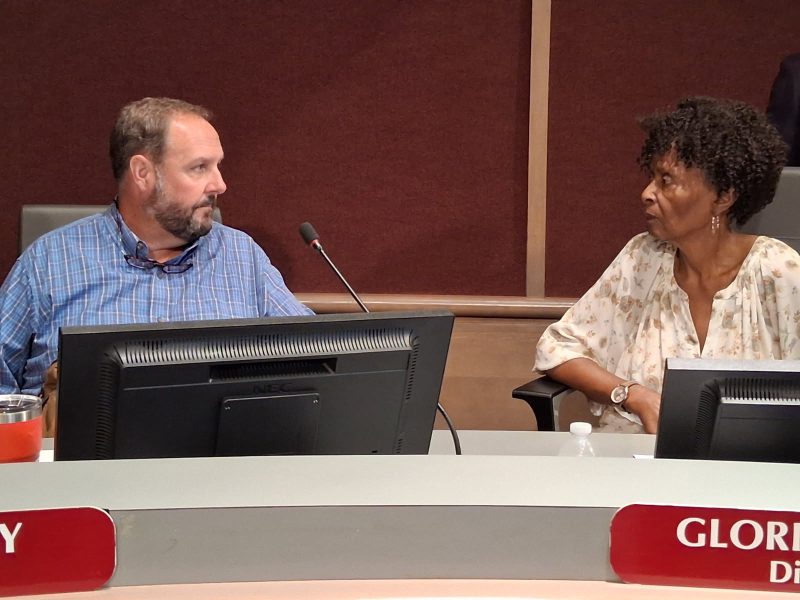
Dougherty Commission considers $104 million budget for 2026-2027 budget year
“The other side of the coin is you could have higher revenues than projected. We’re very conservative in budgeting revenues. That also reduces the need to use fund balance”
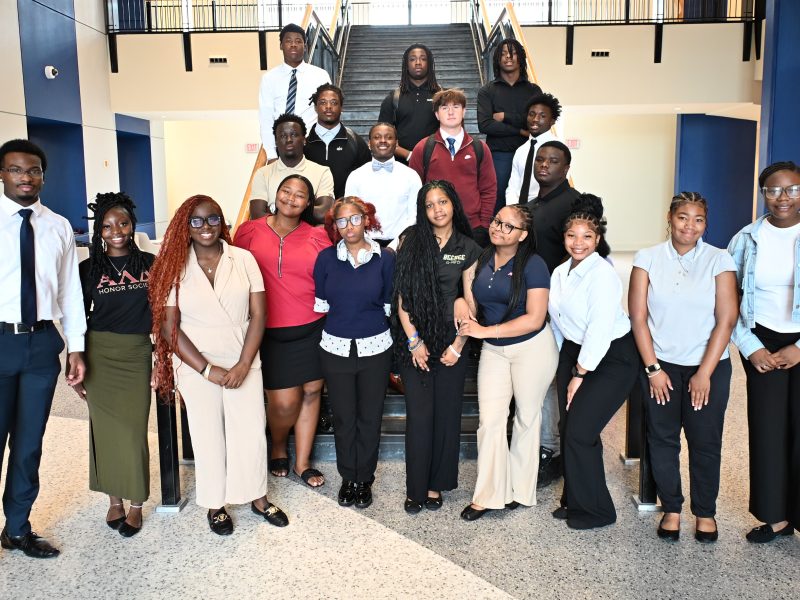
PHOTOS: Albany State Summer Success Academy
Photos by Reginald Christian, Albany State University
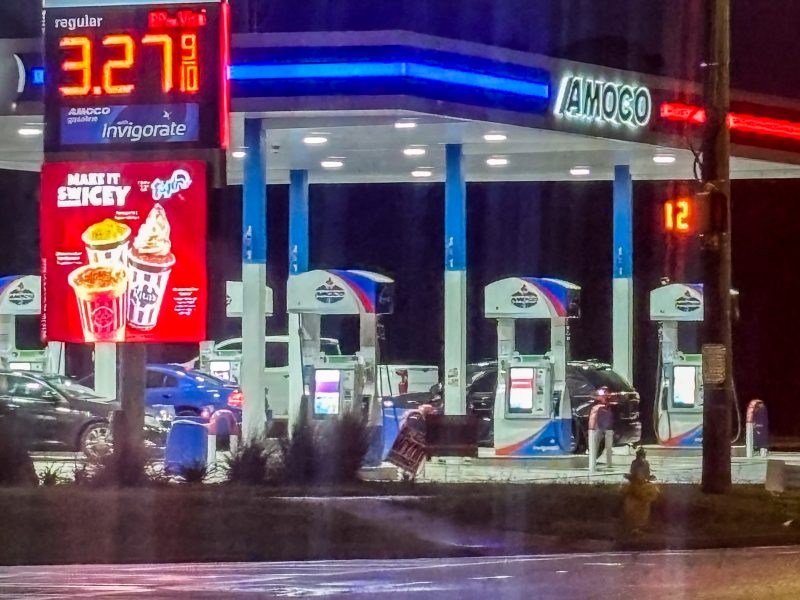
Albany gas prices among Georgia’s lowest as summer fuel costs decline
According to AAA, the average price for a gallon of regular gasoline in the Albany metro area was approximately $3.45 this week, making Albany the second-least expensive metro market in Georgia behind Dalton at $3.41 and slightly ahead of Brunswick at $3.48.
