
USDA previews new revenue loss assistance programs
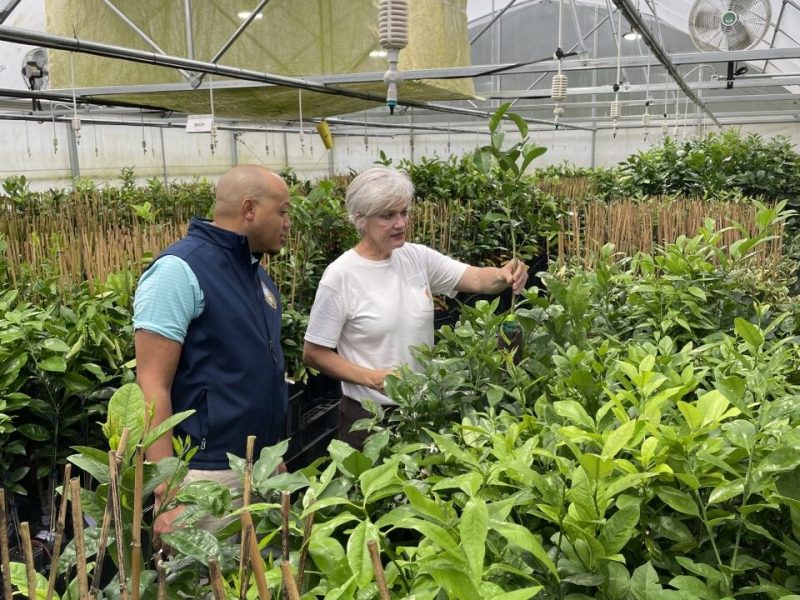
USDA is preparing to roll out its Emergency Relief Program Phase Two, as well as the new Pandemic Assistance Revenue Program, which are two programs to help offset crop and revenue losses for producers.
Special PhotoFrom staff reports
WASHINGTON — Agriculture Secretary Tom Vilsack announced last week plans for additional emergency relief and pandemic assistance from the U.S. Department of Agriculture. USDA is preparing to roll out its Emergency Relief Program Phase Two, as well as the new Pandemic Assistance Revenue Program, which are two programs to help offset crop and revenue losses for producers.
USDA is sharing early information to help producers gather documents and train front-line staff on the new approach.
“We have worked diligently to help agricultural producers bounce back from devastating natural disasters as well as the coronavirus pandemic through an extensive suite of programs,” Vilsack said in a news release. “No matter how well we design these targeted efforts, we often find that some producers fall through the cracks or were harmed more severely than their neighbors.
“These new programs apply a holistic approach to emergency assistance — an approach not focused on any one disaster event or commodity but rather one focused on filling gaps in assistance for agricultural producers who have, over the past few years, suffered losses from natural disasters and the pandemic.”
ERP Phase Two will assist eligible agricultural producers who suffered eligible crop losses, measured through decreases in revenue, due to wild fires, hurricanes, floods, derechos, excessive heat, winter storms, freeze (including a polar vortex), smoke exposure, excessive moisture and qualifying droughts occurring in calendar years 2020 and 2021.
PARP will assist eligible producers of agricultural commodities who experienced revenue decreases in calendar year 2020 compared to 2018 or 2019 due to the COVID-19 pandemic. PARP will help address gaps in previous pandemic assistance, which was targeted at price loss or lack of market access, rather than overall revenue losses.
ERP Phase Two includes producers who suffered eligible losses but may not have received program benefits in Phase One. To be eligible for Phase Two, producers must have suffered a loss in allowable gross revenue as defined in forthcoming program regulations in 2020 or 2021 due to necessary expenses related to losses of eligible crops from a qualifying natural disaster event.
Eligible crops include both traditional insurable commodities and specialty crops that are produced in the United States as part of a farming operation and are intended to be commercially marketed. Like other emergency relief and pandemic assistance programs, USDA’s Farm Service Agency continues to look for ways to simplify the process for both staff and producers while reducing the paperwork burden. The design of ERP Phase Two is part of that effort.
In general, ERP Phase Two payments are expected to be based on the difference in certain farm revenue between a typical year of revenue as will be specified in program regulations for the producer and the disaster year. ERP Phase Two assistance is targeted to the remaining needs of producers impacted by qualifying natural disaster events, while avoiding windfalls or duplicative payments. Details will be available when the rule is published later this year.
Deadline for Emergency Relief Program Phase One producers who are eligible for assistance through ERP Phase One have until Dec. 16 to contact FSA at their local USDA Service Center to receive program benefits. Going forward, if any additional ERP Phase One prefiled applications are generated due to corrections or other circumstances, there will be a 30-day deadline from the date of notification for that particular application.
PARP is authorized and funded by the Consolidated Appropriations Act of 2021. To be eligible for PARP, an agricultural producer must have been in the business of farming during at least part of the 2020 calendar year and had a certain threshold decrease in allowable gross revenue for the 2020 calendar year, as compared to 2018 or 2019. Exact details on the calculations and eligibility will be available when the forthcoming rule is published.
ERP Phase Two and PARP will use revenue information that is readily available from most tax records. FSA encourages producers to have their tax documents from the past few years and supporting materials ready. Producers will need similar documentation to what was needed for the Coronavirus Food Assistance Program Phase Two, where a producer could use 2018 or 2019 as the benchmark year relative to the disaster year.
In the coming weeks, USDA will provide additional information on how to apply for assistance through ERP Phase Two and PARP. In the meantime, producers are encouraged to begin gathering supporting documentation including:
♦ Schedule F (Form 1040);
Profit or Loss from Farming or similar tax documents for tax years 2018, 2019, 2020, 2021 and 2022 for ERP and for calendar years 2018, 2019 and 2020 for PARP. Producers should also have, or be prepared to have, the following forms on file for both ERP and PARP program participation: ♦
♦ Form AD-2047, Customer Data Worksheet (as applicable to the program participant);
♦ Form CCC-902, Farm Operating Plan for an individual or legal entity;
♦ Form CCC-901, Member Information for Legal Entities (if applicable);
♦ Form AD-1026 Highly Erodible Land Conservation (HELC) and Wetland Conservation (WC) Certification.
Most producers, especially those who have previously participated in FSA programs, will likely have these required forms on file. However, those who are uncertain or want to confirm should contact FSA at their local USDA Service Center.
In addition to the forms listed above, underserved producers are encouraged to register their status with FSA, using Form CCC-860, Socially Disadvantaged, Limited Resource, Beginning and Veteran Farmer or Rancher Certification, as certain existing permanent and ad-hoc disaster programs provide increased benefits or reduced fees and premiums.
Through proactive communications and outreach, USDA will keep producers and stakeholders informed as program eligibility, application and implementation details unfold.
Author

Related Articles

Lee County agricultural land values could rise 83% as new assessments near mailing
During a work session Tuesday, Terry McCormick of McCormick Solutions provided the Lee County Board of Commissioners with an update on the county’s 2026 tax digest and ongoing reappraisal efforts.

Residents rally behind Lee schools as accountability questions persist
That argument surfaced repeatedly during a recent meeting of the Lee County Board of Tax Assessors, where officials, citizens and school system representatives discussed the coding error that contributed to incorrect rollback calculations and higher-than-expected tax collections.

‘Support Yourself’: Dawson DDA’s funding crisis exposes structural failures
According to documents obtained through an open records request, the DDA was erroneously billed on at least two occasions in 2025 — once for $2,715.18 and another time for $1,778.80. Both charges were later reversed back to the account without a formal public explanation. Interim City Manager Roxie Powell said she was not serving in the role when the billing problems occurred and was unaware of any documented meter-reading errors during that time.
