
Virtual reality game created at UGA to help students in science classes

Special Photo: UGA
Sydney Elizabeth Barrilleaux
UGA Today
ATHENS – Multilingual students face unique challenges that can hurt their performance in school. New methods of teaching may help close this gap, according to a new study from the University of Georgia.
In the United States, English is the main language used in classrooms. Schools also tend to rely on spoken communication to teach and written exams to assess learning.
That can make it difficult for multilingual students to express themselves. This is especially true in science classes, with their specific terms and complex sentence structures.
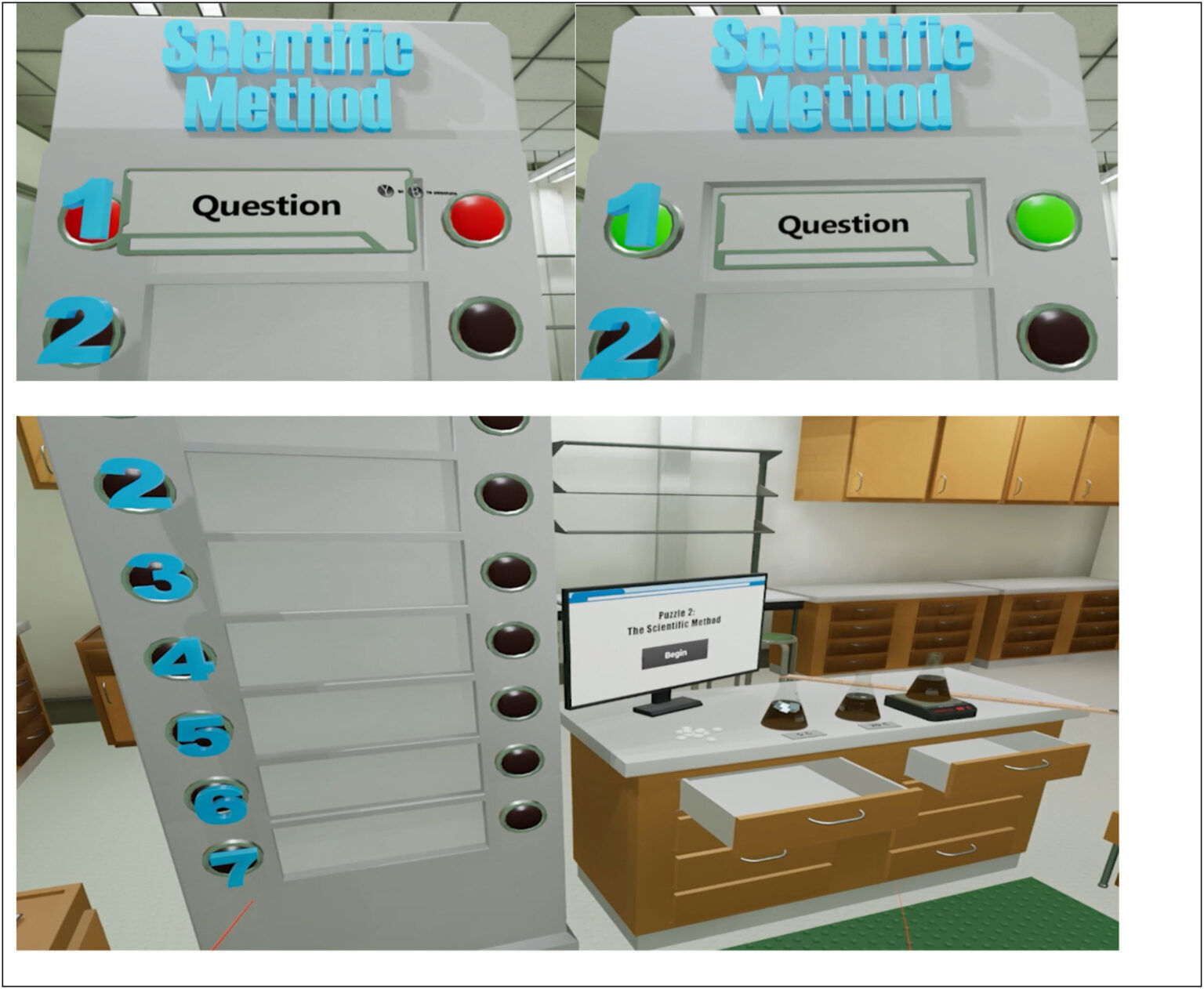
So a UGA researcher developed an immersive virtual reality game to communicate scientific concepts to students in new ways.
“Virtual reality offers meaning-making processes or meaning-making opportunities that go beyond just verbal communications,” Ai-Chu Elisha Ding, lead author of the study and an assistant professor in UGA’s Mary Frances Early College of Education, said.
Ding and her colleagues worked with an Indiana middle school science teacher and English as New Language teacher to develop a virtual reality game featuring content taught in the science classes. The game and the lessons are designed to help seventh-grade students learn science and develop their language skills at the same time.
The researchers developed the game into two modes: one on a virtual reality headset and one on a desktop computer.
The game with the headset focused on visual and audio cues to give feedback and allowed students to interact with the virtual environment around them. The desktop game relied more on text to convey information and was designed to be less immersive.
Students were then tested on their knowledge of the material covered in the games.
All students saw an improvement in their test scores. Multilingual students also performed just as well as students who spoke only English. Additionally, students who played the immersive VR game improved their test scores significantly more than the students who played the desktop game.
“Multilingual learners performed pretty well because they got the support they needed, and they had different ways to express their understanding beyond the typical ways that they did in the science classroom,” Ding said.
While virtual reality games aren’t available in every classroom, Ding emphasized that students can still benefit from teachers branching out into new teaching methods.
“Teachers can do a lot of different things to make this kind of nonverbal-based communications happen more in the classrooms,” Ding said. “One of the key takeaways of the study is that teachers should pay close attention to using visuals and hand gestures to help students process information.”
This study was published in Learning and Instruction and co-authored by Eunkyoung Elaine Cha, a doctoral student of UGA’s Department of Workforce Education and Instructional Technology. The study was funded by Ball State University through the Creative Teaching Grant.
Author

Related Articles
Albany Rescue Mission in recovery but still can use some help
“We can’t do this without the community. We are so grateful for the willing vessels. We just can’t thank them enough. We also appreciate the other ministries that have sown seeds into our ministry.”

Plenty of oil, not enough diesel — and southwest Georgia farmers are paying for it
Sedrick Rowe doesn’t spray herbicides on his 10 acres of organic peanuts. He fights weeds with his tractor instead, which means he runs it more often than most farmers — and burns at least 30 gallons of diesel on a typical day. This harvest season, every one of those gallons costs more than it has at any point on record.
Dougherty schools plan task force as SNAP changes raise concern over free meals
The Dougherty County School System plans to create a task force to help families retain food assistance and navigate new reporting requirements as district officials warn that declining SNAP participation could eventually affect the federal provision that allows every student to eat free at school.
